

Douglas G. Altman
Meta-analysis and systematic reviews
Cancer Research UK
About
Research focus
Meta-analysis and systematic reviews
Impact
967 pubs · 757,075 cites · h-index 255
Affiliations
Publications
Cohort Study
SEP 2014PapageorghiouThe Lancet
International standards for fetal growth based on serial ultrasound measurements: the Fetal Growth Longitudinal Study of the INTERGROWTH-21st Project
BACKGROUND: In 2006, WHO produced international growth standards for infants and children up to age 5 years on the basis of recommendations from a WHO expert committee. Using the same methods and conceptual approach, the Fetal Growth Longitudinal Study (FGLS), part of the INTERGROWTH-21(st) Project, aimed to develop international growth and size standards for fetuses. METHODS: The multicentre, population-based FGLS assessed fetal growth in geographically defined urban populations in eight countries, in which most of the health and nutritional needs of mothers were met and adequate antenatal care was provided. We used ultrasound to take fetal anthropometric measurements prospectively from 14 weeks and 0 days of gestation until birth in a cohort of women with adequate health and nutritional status who were at low risk of intrauterine growth restriction. All women had a reliable estimate of gestational age confirmed by ultrasound measurement of fetal crown-rump length in the first trimester. The five primary ultrasound measures of fetal growth--head circumference, biparietal diameter, occipitofrontal diameter, abdominal circumference, and femur length--were obtained every 5 weeks (within 1 week either side) from 14 weeks to 42 weeks of gestation. The best fitting curves for the five measures were selected using second-degree fractional polynomials and further modelled in a multilevel framework to account for the longitudinal design of the study. FINDINGS: We screened 13,108 women commencing antenatal care at less than 14 weeks and 0 days of gestation, of whom 4607 (35%) were eligible. 4321 (94%) eligible women had pregnancies without major complications and delivered live singletons without congenital malformations (the analysis population). We documented very low maternal and perinatal mortality and morbidity, confirming that the participants were at low risk of adverse outcomes. For each of the five fetal growth measures, the mean differences between the observed and smoothed centiles for the 3rd, 50th, and 97th centiles, respectively, were small: 2·25 mm (SD 3·0), 0·02 mm (3·0), and -2·69 mm (3·2) for head circumference; 0·83 mm (0·9), -0·05 mm (0·8), and -0·84 mm (1·0) for biparietal diameter; 0·63 mm (1·2), 0·04 mm (1·1), and -1·05 mm (1·3) for occipitofrontal diameter; 2·99 mm (3·1), 0·25 mm (3·2), and -4·22 mm (3·7) for abdominal circumference; and 0·62 mm (0·8), 0·03 mm (0·8), and -0·65 mm (0·8) for femur length. We calculated the 3rd, 5th 10th, 50th, 90th, 95th and 97th centile curves according to gestational age for these ultrasound measures, representing the international standards for fetal growth. INTERPRETATION: We recommend these international fetal growth standards for the clinical interpretation of routinely taken ultrasound measurements and for comparisons across populations.
Original Research
JAN 2014GlasziouThe Lancet

Reducing waste from incomplete or unusable reports of biomedical research
Research publication can both communicate and miscommunicate. Unless research is adequately reported, the time and resources invested in the conduct of research is wasted. Reporting guidelines such as CONSORT, STARD, PRISMA, and ARRIVE aim to improve the quality of research reports, but all are much less adopted and adhered to than they should be. Adequate reports of research should clearly describe which questions were addressed and why, what was done, what was shown, and what the findings mean. However, substantial failures occur in each of these elements. For example, studies of published trial reports showed that the poor description of interventions meant that 40-89% were non-replicable; comparisons of protocols with publications showed that most studies had at least one primary outcome changed, introduced, or omitted; and investigators of new trials rarely set their findings in the context of a systematic review, and cited a very small and biased selection of previous relevant trials. Although best documented in reports of controlled trials, inadequate reporting occurs in all types of studies-animal and other preclinical studies, diagnostic studies, epidemiological studies, clinical prediction research, surveys, and qualitative studies. In this report, and in the Series more generally, we point to a waste at all stages in medical research. Although a more nuanced understanding of the complex systems involved in the conduct, writing, and publication of research is desirable, some immediate action can be taken to improve the reporting of research. Evidence for some recommendations is clear: change the current system of research rewards and regulations to encourage better and more complete reporting, and fund the development and maintenance of infrastructure to support better reporting, linkage, and archiving of all elements of research. However, the high amount of waste also warrants future investment in the monitoring of and research into reporting of research, and active implementation of the findings to ensure that research reports better address the needs of the range of research users.
Human Clinical Trial
MAY 2002PocockThe Lancet

Survival plots of time-to-event outcomes in clinical trials: good practice and pitfalls
Survival plots of time-to-event data are a key component for reporting results of many clinical trials (and cohort studies). However, mistakes and distortions often arise in the display and interpretation of survival plots. This article aims to highlight such pitfalls and provide recommendations for future practice. Findings are illustrated by topical examples and also based on a survey of recent clinical trial publications in four major journals. Specific issues are: should plots go up or down (we recommend up), how far in time to extend the plot, showing the extent of follow-up, displaying statistical uncertainty by including SEs or CIS, and exercising caution when interpreting the shape of plots and the time-pattern of treatment difference.
Human Clinical TrialThe Lancet Highlight
JAN 2013ChanThe Lancet
SPIRIT 2013: new guidance for content of clinical trial protocols
meta-analysis · n=18,2548 mentions
SEP 2014KotechaENLIGHTEN (Jurnal Bimbingan dan Konseling Islam)

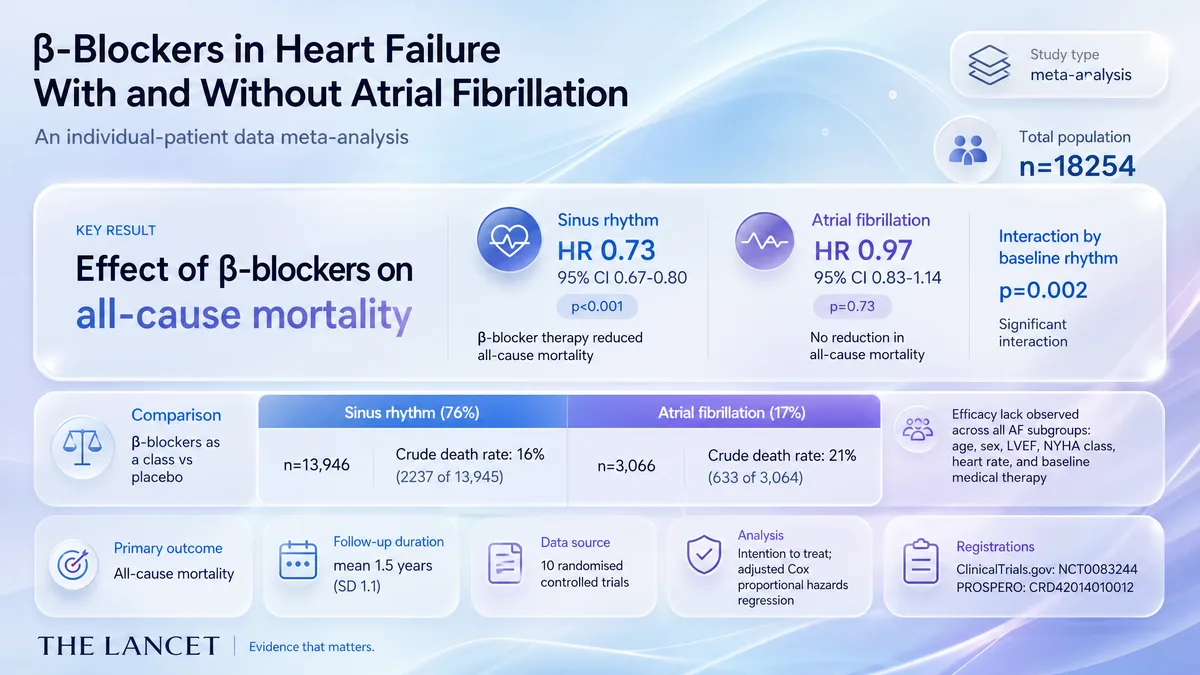
In patients with heart failure and atrial fibrillation, β-blocker therapy did not significantly reduce all-cause mortality compared to placebo (HR 0.97; 95% CI 0.83-1.14; p=0.73).
Beta-blockers do not improve survival in patients with heart failure who have concomitant atrial fibrillation, challenging their use as standard prognostic therapy in this specific subgroup.
Cross-Sectional StudyThe Lancet Highlight
OCT 2007ElmThe Lancet
The Strengthening the Reporting of Observational Studies in Epidemiology (STROBE) statement: guidelines for reporting observational studies
Guidelines enhance transparency and reduce bias in reporting observational studies in epidemiology, suggesting improved research quality.
meta-analysis · n=17,20010 mentionsJACC Highlight
APR 2017KotechaJournal of the American College of Cardiology
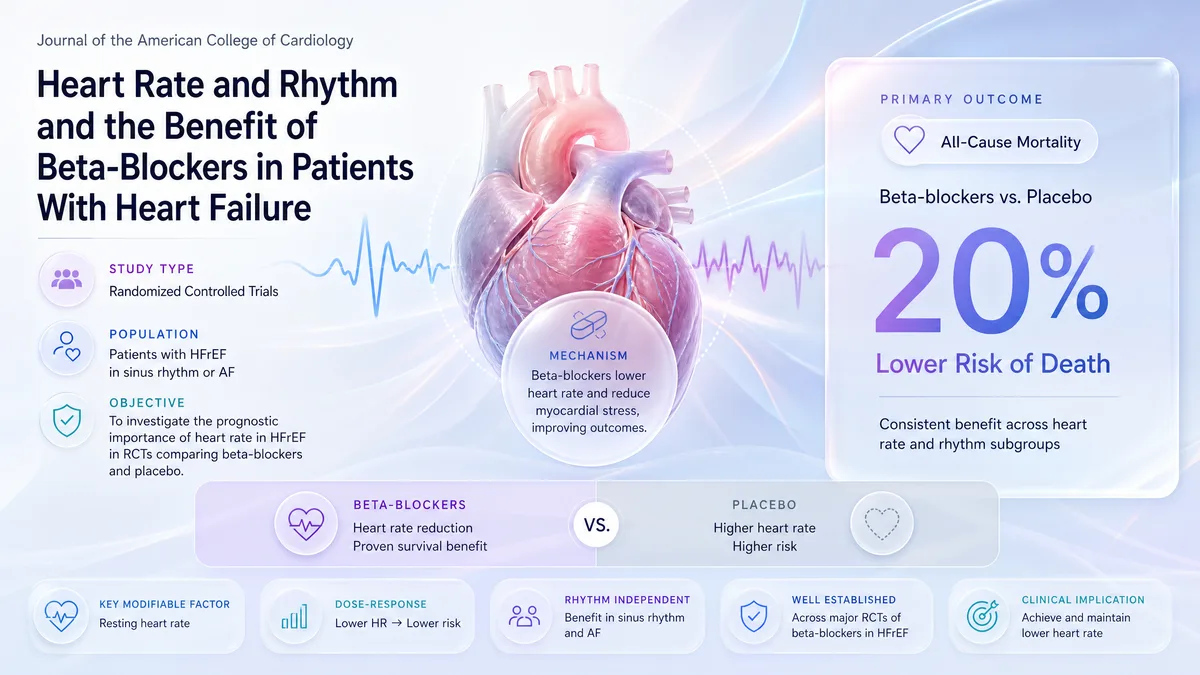
Beta-blockers reduced all-cause mortality by 27% (HR 0.73) compared to placebo in patients with heart failure and reduced ejection fraction in sinus rhythm, but had no effect on mortality in patients with atrial fibrillation.
Supports rhythm-specific beta-blocker decisions in HFrEF; leaves open randomized confirmation in atrial fibrillation.
Original Research
JUN 2025Altman

On polynomial progressions via transference
This research demonstrates reasonable bounds for Szemerédi's theorem in integers, indicating important implications for polynomial progressions.
Original Research
APR 2024VandenbrouckeThe Ewha Medical Journal

Strengthening the Reporting of Observational Studies in Epidemiology (STROBE): explanation and elaboration — a Korean translation
의학 연구의 대부분은 관찰 연구이다. 관찰 연구의 보고는 종종 불충분한 품질을 보이기도 한다. 부실한 보고는 연구의 강점과 약점을 평가하고 연구 결과의 일반화 가능성을 평가하는 데 방해가 된다. 방법론 전문가, 연구자, 편집자 그룹은 경험적 근거와 이론적 고려 사항을 고려하여 관찰 연구 보고의 질을 개선하기 위한 역학 STROBE 권고안을 개발했다. STROBE statement은 논문의 제목, 초록, 서론, 방법, 결과 및 토론 부분에 대한 22개 항목의 체크리스트로 구성되어 있다. 18개 항목은 코호트연구, 환자 대조군 연구, 단면연구에 공통으로 적용되며, 4개 항목은 세 가지 연구설계 각각에 따라 다르다. STROBE statement는 저자에게 관찰 연구에 대한 보고를 개선하는 방법에 대한 지침을 제공하고 심사자, 편집자 및 독자가 연구를 비판적으로 평가하고 해석하는 데 도움이 된다. 이 설명 문서는 STROBE statement의 사용, 이해 및 보급을 향상 시키는 것이 목적이다. 각 체크리스트 항목의 의미와 근거가 제시되어 있다. 각 항목에 대해 하나 또는 여러 개의 출판된 예시 논문과 가능한 경우 관련 경험적 연구 및 방법론 문헌에 대한 내용이 참고사항으로 제공된다. 유용한 흐름도의 예도 포함되어 있다. 본 문서 및 관련 웹사이트(http://www.strobe-statement.org/)는 관찰 연구 보고를 개선하는 데 유용한 자료가 될 것이다.
Systematic Review
MAY 2023MoonsВопросы современной педиатрии

Transparent Reporting of a Multivariable Prediction Model for Individual Prognosis or Diagnosis (TRIPOD): Explanation and Elaboration. Translation into Russian
The TRIPOD (Transparent Reporting of a multivariable prediction model for Individual Prognosis Or Diagnosis) Statement includes a 22-item checklist, which aims to improve the reporting of studies developing, validating, or updating a prediction model, whether for diagnostic or prognostic purposes. The TRIPOD Statement aims to improve the transparency of the reporting of a prediction model study regardless of the study methods used. This explanation and elaboration document describes the rationale; clarifies the meaning of each item; and discusses why transparent reporting is important, with a view to assessing risk of bias and clinical usefulness of the prediction model. Each checklist item of the TRIPOD Statement is explained in detail and accompanied by published examples of good reporting. The document also provides a valuable reference of issues to consider when designing, conducting, and analyzing prediction model studies. To aid the editorial process and help peer reviewers and, ultimately, readers and systematic reviewers of prediction model studies, it is recommended that authors include a completed checklist in their submission. The TRIPOD checklist can also be downloaded from www.tripod-statement.org. This article is the translation in to Russian by Dr. Ruslan Saygitov (ORCID: https://orcid.org/0000-0002-8915-6153) from the original published in [Ann Intern Med. 2015;162:W1-W73. doi: https://doi.org/10.7326/M14-0698 ].
Guideline
MAY 2023RileyВопросы современной педиатрии
CARE Guidelines for Case Reports: Explanation and Elaboration Document. Translation into Russian
Background . Well-written and transparent case reports (1) reveal early signals of potential benefits, harms, and information on the use of resources; (2) provide information for clinical research and clinical practice guidelines, and (3) inform medical education. High-quality case reports are more likely when authors follow reporting guidelines. During 2011–2012, a group of clinicians, researchers, and journal editors developed recommendations for the accurate reporting of information in case reports that resulted in the CARE (CAse REport) Statement and Checklist. They were presented at the 2013 International Congress on Peer Review and Biomedical Publication, have been endorsed by multiple medical journals, and translated into nine languages. Objectives . This explanation and elaboration document has the objective to increase the use and dissemination of the CARE Checklist in writing and publishing case reports. Article design and setting . Each item from the CARE Checklist is explained and accompanied by published examples. The explanations and examples in this document are designed to support the writing of high-quality case reports by authors and their critical appraisal by editors, peer reviewers, and readers. Results and conclusion. This article and the 2013 CARE Statement and Checklist, available from the CARE website [www.care-statement.org] and the EQUATOR Network [www.equator-network.org], are resources for improving the completeness and transparency of case reports. Source . This article is a translation of the original paper «CARE guidelines for case reports: explanation and elaboration document» in the Journal of Clinical Epidemiology (doi: 10.1016/j.jclinepi.2017.04.026), prepared under the permission of the copyright holder (Elsevier Inc.), with supervision from the Scientific Editor by Professor E.G. Starostina, MD, PhD (translator) (Moscow, Russia). Present translation was first published in Digital Diagnostics. doi: 10.17816/DD105291. It is published with minor changes related to the literary editing of the translation itself. Keywords: case report; case study; EQUATOR network; health research reporting guidelines; CARE guideline; timelines; N-of-1 For citation: Riley David S., Barber Melissa S., Kienle Gunver S., Aronson Jeffrey K., von Schoen-Angerer Tido, Tugwell Peter, Kiene Helmut, Helfand Mark, Altman Douglas G., Sox Harold, Werthmann Paul G., Moher David, Rison Richard A., Shamseer Larissa, Koch Christian A., Sun Gordon H., Hanaway Patrick, Sudak Nancy L., Kaszkin-Bettag Marietta, Carpenter James E., Gagnier Joel J. CARE Guidelines for Case Reports: Explanation and Elaboration Document. Translation into Russian. Voprosy sovremennoi pediatrii — Current Pediatrics. 2023;22(2):88–108. (In Russ). doi: https://doi.org/10.15690/vsp.v22i2.2540
Systematic Review
SEP 2022MoonsDigital Diagnostics
Transparent Reporting of a multivariable prediction model for Individual Prognosis Or Diagnosis (TRIPOD): Explanation and Elaboration. Translation in to Russian
The TRIPOD (Transparent Reporting of a multivariable prediction model for Individual Prognosis Or Diagnosis) Statement includes a 22-item checklist, which aims to improve the reporting of studies developing, validating, or updating a prediction model, whether for diagnostic or prognostic purposes. The TRIPOD Statement aims to improve the transparency of the reporting of a prediction model study regardless of the study methods used. This explanation and elaboration document describes the rationale; clarifies the meaning of each item; and discusses why transparent reporting is important, with a view to assessing risk of bias and clinical usefulness of the prediction model. Each checklist item of the TRIPOD Statement is explained in detail and accompanied by published examples of good reporting. The document also provides a valuable reference of issues to consider when designing, conducting, and analyzing prediction model studies. To aid the editorial process and help peer reviewers and, ultimately, readers and systematic reviewers of prediction model studies, it is recommended that authors include a completed checklist in their submission. The TRIPOD checklist can also be downloaded from www.tripod-statement.org. For members of the TRIPOD Group, see the Appendix. This article is the translation in to Russian by Dr. Ruslan Saygitov (ORCID: 0000-0002-8915-6153) from the original published in [Ann Intern Med. 2015; 162:W1-W73. doi: 10.7326/M14-0698 ].
Guideline
JUL 2022SpeichTrials
A longitudinal assessment of trial protocols approved by research ethics committees: The Adherance to SPIrit REcommendations in the UK (ASPIRE-UK) study
BACKGROUND: To assess the quality of reporting of RCT protocols approved by UK research ethics committees before and after the publication of the Standard Protocol Items: Recommendations for Interventional Trials (SPIRIT) guideline. METHODS: We had access to RCT study protocols that received ethical approval in the UK in 2012 (n=103) and 2016 (n=108). From those, we assessed the adherence to the 33 SPIRIT items (i.e. a total of 64 components of the 33 SPIRIT items). We descriptively analysed the adherence to SPIRIT guidelines as proportion of adequately reported items (median and interquartile range [IQR]) and stratified the results by year of approval and sponsor. RESULTS: The proportion of reported SPIRIT items increased from a median of 64.9% (IQR, 57.6-69.2%) in 2012 to a median of 72.5% (IQR, 65.3-78.3%) in 2016. Industry-sponsored RCTs reported more SPIRIT items in 2012 (median 67.4%; IQR, 64.1-69.4%) compared to non-industry-sponsored trials (median 59.8%; IQR, 46.5-67.7%). This gap between industry- and non-industry-sponsored trials increased in 2016 (industry-sponsored: median 75.6%; IQR, 71.2-79.0% vs non-industry-sponsored: median 65.3%; IQR, 51.6-76.3%). CONCLUSIONS: The adherence to SPIRIT guidelines has improved in the UK from 2012 to 2016 but remains on a modest level, especially for non-industry-sponsored RCTs.
Cross-Sectional Study
JUL 2022VandenbrouckeВопросы современной педиатрии
Strengthening the Reporting of Observational Studies in Epidemiology (STROBE): Explanation and Elaboration
Much medical research is observational. The reporting of observational studies is often of insufficient quality. Poor reporting hampers the assessment of the strengths and weaknesses of a study and the generalisability of its results. Taking into account empirical evidence and theoretical considerations, a group of methodologists, researchers, and editors developed the Strengthening the Reporting of Observational Studies in Epidemiology (STROBE) recommendations to improve the quality of reporting of observational studies. The STROBE Statement consists of a checklist of 22 items, which relate to the title, abstract, introduction, methods, results and discussion sections of articles. Eighteen items are common to cohort studies, case-control studies and cross-sectional studies and four are specific to each of the three study designs. The STROBE Statement provides guidance to authors about how to improve the reporting of observational studies and facilitates critical appraisal and interpretation of studies by reviewers, journal editors and readers. This explanatory and elaboration document is intended to enhance the use, understanding, and dissemination of the STROBE Statement. The meaning and rationale for each checklist item are presented. For each item, one or several published examples and, where possible, references to relevant empirical studies and methodological literature are provided. Examples of useful flow diagrams are also included. The STROBE Statement, this document, and the associated Web site (http://www. strobe-statement.org/) should be helpful resources to improve reporting of observational research. Present article is Russian-language translation of the original manuscript edited by Doctor of Medicine R.T. Saygitov. Present translation was first published in Digital Diagnostics. doi: 10.17816/DD70821. It is published with minor changes related to the literary editing of the translation itself.
Review
JUL 2022CohenВопросы современной педиатрии
STARD 2015 guidelines for reporting diagnostic accuracy studies: explanation and elaboration
Reporting guideline demonstrates key standards for diagnostic accuracy studies, highlighting essential criteria to evaluate bias and applicability.
Systematic Review
APR 2022Collins

Systematic Reviews of Prediction Models
Prediction models combine values of multiple predictors to estimate an individual's risk of having a certain outcome or disease (diagnostic models) or developing a future outcome (prognostic models). Systematic reviews are needed to identify existing prediction models for a certain target population or outcome and to summarize their predictive performance and heterogeneity in their performance. Appraising the quality and reporting of a prediction model study is essential. Studies describing the development or validation of a prediction model often do not conform to prevailing methodological standards and key details are often not reported. Meta-analysis of the predictive performance of a specific prediction model from multiple external validation studies of that model is possible, focusing on calibration and discrimination. In this chapter, we describe the types of systematic reviews that can be conducted on prediction model studies and discuss the challenges faced in identifying, appraising, and qualitatively and quantitatively synthesizing these studies.
Systematic Review
APR 2022Riley
Systematic Reviews of Prognostic Factor Studies
Primary studies to identify prognostic factors are abundant, but often have conflicting findings and variable quality. This motivates systematic reviews to identify, evaluate, and summarize prognostic factor studies. Broad search strings are required to identify relevant studies, and the CHARMS-PF checklist guides subsequent data extraction. The QUIPS tool examines each study's risk of bias; unfortunately, many studies will have high risk of bias due to poor design and analysis. Meta-analysis can be used to combine and summarize prognostic effect estimates (such as hazard ratios or odds ratios) across studies, but may not always be sensible. Between-study heterogeneity is expected. Ideally, separate meta-analyses are performed; for example, for each method of prognostic factor measurement, for each cut point (for categorized continuous prognostic factors), and for unadjusted and adjusted prognostic factor estimates. The adjusted prognostic factor estimate is usually more relevant, because prognosis in clinical practice is commonly based on multiple prognostic factors, and so the prognostic information from a particular factor needs to add value over others. Publication bias is also a major threat in reviews of prognosis studies. Availability of individual participant data alleviates many, but not all, of the challenges.
Guideline
APR 2022BarberDigital Diagnostics
CARE guidelines for case reports: explanation and elaboration document. Translation into Russian
BACKGROUND: Well-written and transparent case reports (1) reveal early signals of potential benefits, harms, and information on the use of resources; (2) provide information for clinical research and clinical practice guidelines, and (3) inform medical education. High-quality case reports are more likely when authors follow reporting guidelines. During 20112012, a group of clinicians, researchers, and journal editors developed recommendations for the accurate reporting of information in case reports that resulted in the CARE (CAse REport) Statement and Checklist. They were presented at the 2013 International Congress on Peer Review and Biomedical Publication, have been endorsed by multiple medical journals, and translated into nine languages. OBJECTIVES: This explanation and elaboration document has the objective to increase the use and dissemination of the CARE Checklist in writing and publishing case reports. ARTICLE DESIGN AND SETTING: Each item from the CARE Checklist is explained and accompanied by published examples. The explanations and examples in this document are designed to support the writing of high-quality case reports by authors and their critical appraisal by editors, peer reviewers, and readers. RESULTS AND CONCLUSION: This article and the 2013 CARE Statement and Checklist, available from the CARE website [www.care-statement.org] and the EQUATOR Network [www.equator-network.org], are resources for improving the completeness and transparency of case reports. SOURCE: This article is a translation of the original paper CARE guidelines for case reports: explanation and elaboration document in the Journal of Clinical Epidemiology (doi: 10.1016/j.jclinepi.2017.04.026), prepared under the permission of the copyright holder (Elsevier Inc.), with supervision from the Scientific Editor by Professor E.G. Starostina, MD, PhD (translator) (Moscow, Russia).
Review
MAY 2021CohenDigital Diagnostics
STARD 2015 guidelines for reporting diagnostic accuracy studies: explanation and elaboration. Translation to Russian
Diagnostic accuracy studies are, like other clinical studies, at risk of bias due to shortcomings in design and conduct, and the results of a diagnostic accuracy study may not apply to other patient groups and settings. Readers of study reports need to be informed about study design and conduct, in sufficient detail to judge the trustworthiness and applicability of the study findings. The STARD statement (Standards for Reporting of Diagnostic Accuracy Studies) was developed to improve the completeness and transparency of reports of diagnostic accuracy studies. STARD contains a list of essential items that can be used as a checklist, by authors, reviewers and other readers, to ensure that a report of a diagnostic accuracy study contains the necessary information. STARD was recently updated. All updated STARD materials, including the checklist, are available at http://www.equator-network.org/reporting-guidelines/stard. Here, we present the STARD 2015 explanation and elaboration document. Through commented examples of appropriate reporting, we clarify the rationale for each of the 30 items on the STARD 2015 checklist, and describe what is expected from authors in developing sufficiently informative study reports. This article is the reprint with Russian translation of the original that can be observed here: Cohen JF, Korevaar DA, Altman DG, et al. STARD 2015 guidelines for reporting diagnostic accuracy studies: explanation and elaboration. BMJ Open 2016;6:e012799. doi: 10.1136/bmjopen-2016-012799
Cross-Sectional Study
MAY 2021VandenbrouckeDigital Diagnostics
Strengthening the Reporting of Observational Studies in Epidemiology (STROBE): Explanation and Elaboration. Translation to Russian
Much medical research is observational. The reporting of observational studies is often of insufficient quality. Poor reporting hampers the assessment of the strengths and weaknesses of a study and the generalisability of its results. Taking into account empirical evidence and theoretical considerations, a group of methodologists, researchers, and editors developed the Strengthening the Reporting of Observational Studies in Epidemiology (STROBE) recommendations to improve the quality of reporting of observational studies. The STROBE Statement consists of a checklist of 22 items, which relate to the title, abstract, introduction, methods, results and discussion sections of articles. Eighteen items are common to cohort studies, case-control studies and cross-sectional studies and four are specific to each of the three study designs. The STROBE Statement provides guidance to authors about how to improve the reporting of observational studies and facilitates critical appraisal and interpretation of studies by reviewers, journal editors and readers. This explanatory and elaboration document is intended to enhance the use, understanding, and dissemination of the STROBE Statement. The meaning and rationale for each checklist item are presented. For each item, one or several published examples and, where possible, references to relevant empirical studies and methodological literature are provided. Examples of useful flow diagrams are also included. The STROBE Statement, this document, and the associated Web site (http://www. strobe-statement.org/) should be helpful resources to improve reporting of observational research. This article is the reprint with Russian translation of the original that can be observed here: Vandenbroucke JP, von Elm E, Altman DG, Gotzsche PC, Mulrow CD, et al. Strengthening the Reporting of Observational Studies in Epidemiology (STROBE): Explanation and Elaboration. PLoS Med. 2007;4(10):e297. doi: 10.1371/journal.pmed.0040297.