

Bruce D. Walker
HIV Research and Treatment
Howard Hughes Medical Institute
About
Research focus
HIV Research and Treatment
Impact
944 pubs · 95,491 cites · h-index 159
Affiliations
Publications
Original Research
SEP 23AcklinHarvard University
Fatty acid synthesis restricts HIV-1 infection through regulation of the nuclear envelope in CD4+ T cells
HIV-1 must breach intracellular defenses to establish infection in CD4+ T cells, yet the metabolic activities that sustain these barriers remain poorly understood. Using a metabolically targeted small molecule screen, we identify de novo fatty acid synthesis as an unexpected determinant of resistance to HIV-1 infection in activated CD4+ T cells. Inhibition of acetyl-CoA carboxylase 1 (ACC1) or fatty acid synthase (FASN) increased cellular susceptibility to infection, while fatty acid supplementation restored baseline levels of anti-viral resistance. Saturated fatty acids conferred the strongest protection, revealing that susceptibility depends on both cellular metabolic state and the composition of the extracellular lipid environment. Blocking fatty acid synthesis remodeled the cellular lipid pool, particularly for the membrane lipid phosphatidylcholine, and was accompanied by structural disruption of the nuclear envelope that serves as a physical barrier limiting passage of the HIV-1 capsid into the nucleus. FASN inhibition also selectively altered sensitivity to antiretroviral drugs that target the interaction between capsid and the nuclear pore. Broadly, these findings uncover a previously unrecognized role for cellular fat synthesis in the maintenance of the nuclear envelope and reveal that anti-viral pathways can emerge at the interface between cellular state and exposure.
Original Research
SEP 1TanNature Immunology
Innate immune imprints shape HIV-1 reservoir cell persistence during long-term antiretroviral therapy
Cohort study reveals natural killer cell interactions restrict intact HIV-1 reservoirs during antiretroviral therapy, indicating innate immunity aids viral reservoir clearance.
case-control · n=3206 mentionsJACC Highlight
MAR 2012MannJournal of the American College of Cardiology
Rare cardiac potassium channel variants occur ~4.5x more often in AF patients than controls.
Collective K+ channel variant burden may shape familial AF substrate; leaves open any role in risk stratification or targeted therapy.
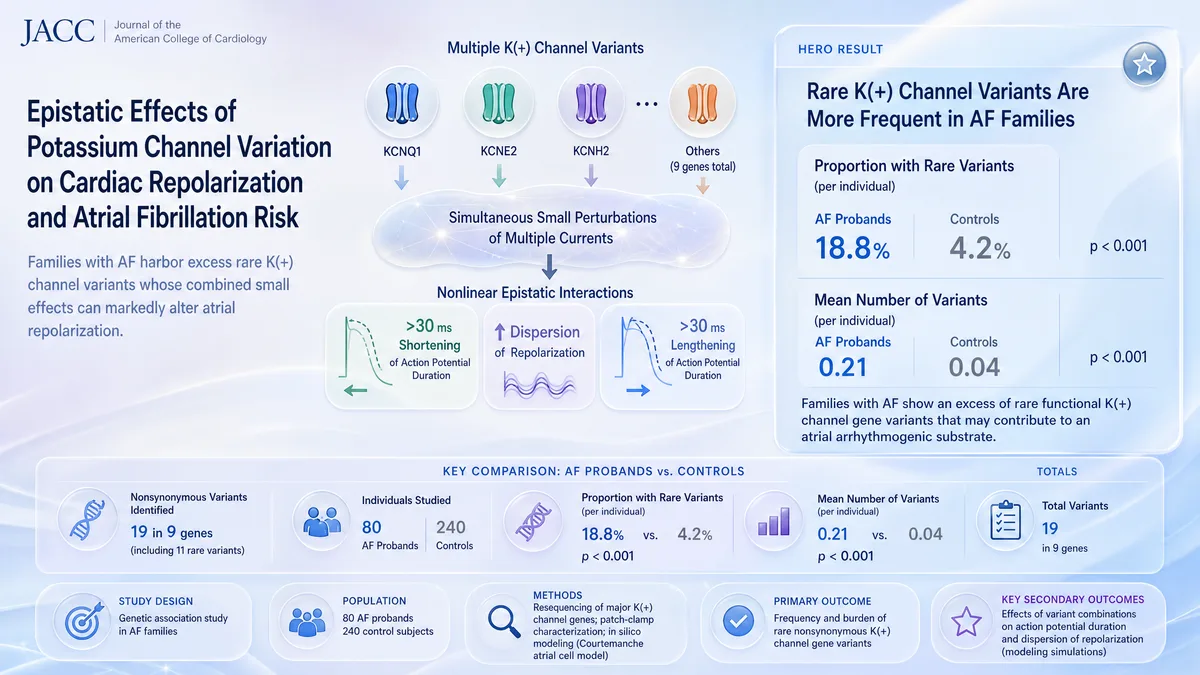
Cohort Study
DEC 2025KianiNature
CD8+ T cell stemness precedes post-intervention control of HIV viraemia
Interventions to induce lasting human immunodeficiency virus (HIV) remission are needed to obviate the requirement for lifelong antiretroviral therapy. Durable post-intervention control (PIC) of viraemia has been achieved in a subset of people following administration of broadly neutralizing anti-HIV-1 antibodies (bNAb) and analytical interruption of treatment 1–4 . Previous studies support a role for CD8 + T cells in PIC 5–9 , but the precise features of CD8 + T cells involved remain unclear. Here we mapped and functionally profiled CD8 + T cell responses to autologous HIV epitopes using longitudinal samples from four analytical treatment interruption trials in bNAb recipients. PIC was associated with superior pre-intervention HIV-specific CD8 + T cell proliferative capacity, stem-cell-like memory phenotype and recall cytotoxicity against autologous HIV peptide-pulsed CD4 + T cells. CD8 + T cell stemness was increased further following bNAb administration without emergence of new clonotypes targeting defined HLA-optimal epitopes. Multi-modal single-cell analyses revealed molecular features associated with PIC and HIV-specific CD8 + T cell stemness, including signatures of metabolic fitness and reduced T cell exhaustion. These results identify immune features that precede subsequent PIC to inform the development of combination immunotherapies that will elicit durable HIV remission.
Original Research
OCT 2025Collins
CD8+ T cell recall cytotoxicity during chronic treated HIV-1 infection is associated with limited reservoir size and activity
Observational analysis shows CD8+ T cell recall cytotoxicity associates with smaller HIV-1 reservoirs, indicating potential HIV control strategies.
Original Research
SEP 2025RossenkhanUniversity of California, Berkeley
Bayesian estimation of HIV acquisition dates for prevention trials.
Bayesian analysis improves HIV acquisition timing estimates in participants, highlighting better antibody projections.
Original Research
JUN 2025NdlovuPLoS Pathogens
Distinct neutralization sensitivity between adult and infant transmitted/founder HIV-1 subtype C viruses to broadly neutralizing monoclonal antibodies
Broadly neutralizing antibodies (bnAbs), passively administered or elicited through vaccination, are a promising strategy for novel HIV prevention, treatment or inducing ART-free remission. However, HIV diversity and evolution are a barrier to the efficacy of bnAbs and there is therefore an urgent need for continuous virus surveillance to identify bnAbs with optimal neutralization breadth and potency against transmitted/founder (TF) viruses, especially in high-burden regions. We determined the neutralization sensitivity of TF viruses isolated within seven days after first detection of heterosexually acquired infection from young women 18-23 years old (n = 39) and within 1 month after birth from in-utero infected infants (n = 21) from FRESH and Baby Cure cohorts respectively, in KwaZulu-Natal, South Africa, where HIV-1 subtype C predominates. Neutralization sensitivities of 47 viruses from FRESH and 21 viruses from Baby Cure were assessed against nine bnAbs targeting different regions on the HIV-1 Env trimer. HIV-1 env sequences within and between bnAb epitopes were compared with database. The bnAbs VRC07-523LS, CAP256-VRC26.25, PGDM1400, 10E8 and PGT151 displayed higher neutralization breadth and potency than other bnAbs against FRESH TF viruses (>70% coverage, starting concentration of 10 μg/ml). Furthermore, VRC07-523LS showed higher neutralization breadth and potency than other bnAbs against Baby Cure TF viruses (p = 0.02). Interestingly, CAP256-VRC26.25 and PGT151 had lower neutralization coverage against infant TF viruses (<60% coverage). Moreover, 40% of infants TF had escape mutations within the V2 loop compared to 28% observed in FRESH and these mutations may explain the observed differences in neutralization sensitivities. However, few mutations were observed in gp120-gp41 interface in both adults and infants. Our findings suggest that intervention studies may have to consider different antibody combinations in adult versus paediatric settings. Moreover, high transmission of escape variants in both vertical and heterosexual transmissions is of concern. This information may be important in the selection of bnAbs that will undergo clinical testing in subtype C settings.
Original Research
MAY 2025BoneSHILAP Revista de lepidopterología
Distinct viral reservoirs and immune signatures in individuals on long-term antiretroviral therapy with perinatally acquired HIV-1
Early initiation of antiretroviral therapy (ART) following HIV-1 infection restricts the size of the latent reservoir, following both horizontal and vertical infections. Here, we comprehensively profile the reservoirs and immunological milieus of nine young adults who acquired HIV-1 perinatally and remained on suppressive long-term ART (median: 20 years) since infancy (LeukoHIV cohort). Genome-intact reservoirs are markedly smaller compared to a cohort of adults on suppressive ART started in adulthood, with some LeukoHIV individuals characterized by an absence or near absence of intact proviruses in up to a billion peripheral blood mononuclear cells (PBMCs). Higher frequencies of functional CD56bright natural killer (NK) cells with increased cytotoxic activity are detectable in the LeukoHIV cohort compared to an adult reference cohort, while one LeukoHIV participant displayed a potent HIV-1-specific CD8⁺ T cell response. Collectively, our data suggest that long-term ART initiated in early life following perinatal transmission may facilitate an immune environment better equipped to restrict the HIV-1 reservoir.
Original Research
FEB 2025ReddyeLife
Differences in HIV-1 reservoir size, landscape characteristics, and decay dynamics in acute and chronic treated HIV-1 Clade C infection
Persisting HIV reservoir viruses in resting CD4 T cells and other cellular subsets are a barrier to cure efforts. Early antiretroviral therapy (ART) enables post-treatment viral control in some cases, but mechanisms remain unclear. We hypothesised that ART initiated before peak viremia impacts HIV-1 subtype C reservoirs. We studied 35 women at high risk of infection from Durban, South Africa, identified with hyperacute HIV by twice-weekly HIV-RNA testing. Participants included 11 starting ART at a median of 456 (297–1203) days post-onset of viremia (DPOV) and 24 at 1 (1–3) DPOV. Peripheral blood mononuclear cells (PBMCs) were used to measured total HIV-1 DNA by droplet digital PCR (ddPCR) and sequence viral reservoir genomes by full-length proviral sequencing (FLIP-seq). ART during hyperacute infection blunted peak viremia (p<0.0001), but contemporaneous total HIV-1 DNA did not differ (p=0.104). Over 1 year, a decline of total HIV-1 DNA was observed in early treated persons (p=0.0004), but not late treated. Among 697 viral genome sequences, the proviral genetic landscape differed between untreated, late treated, and early treated groups. Intact genomes after 1 year were higher in untreated (31%) versus late treated (14%) and early treated (0%). Treatment in both late and early infection caused more rapid decay of intact (13% and 51% per month) versus defective (2% and 35%) viral genomes. However, intact genomes persisted 1 year post chronic treatment but were undetectable with early ART. Early ART also reduced phylogenetic diversity of intact genomes and limited cytotoxic T lymphocyte immune escape variants in the reservoir. Overall, ART initiated in hyperacute HIV-1 subtype C infection did not impact reservoir seeding but was associated with rapid intact viral genome decay, reduced genetic complexity, and limited immune escape, which may accelerate reservoir clearance in combination with other interventional strategies.
Original Research
JAN 2025MonelHarvard University
SLAMF6 enables efficient attachment, synapse formation, and killing of HIV-1-infected CD4 + T cells by virus-specific CD8 + T cells
Efficient recognition and elimination of HIV-1-infected CD4 + T cells by cytotoxic CD8 + T cells (CTLs) require target cell engagement and the formation of a well-organized immunological synapse. Surface proteins belonging to the SLAM family are known to be crucial for stabilizing the immunological synapse and regulating antiviral responses during lymphotropic viral infections. In the context of HIV-1, there have been reports of SLAMF6 down-regulation in HIV-1-infected CD4 + T cells; however, the significance of this modulation for CTL function remains unclear. In this investigation, we used CTL lines from People living with HIV (PLWH) to examine the impact of SLAMF6 blockade on three pivotal processes: (1) the formation of CD8 + -CD4 + T-cell conjugates, (2) the establishment of the immunological synapse, and (3) the killing and cytokine production capacity of HIV-1-specific CTLs during HIV-1 infection. Our findings reveal that the inability to form CD8 + -CD4 + T-cell conjugates following incubation with an anti-SLAMF6 blocking antibody is primarily attributable to a defect in actin ring formation at the immunological synapse. Furthermore, SLAMF6 blockade leads to a reduction in the killing efficiency of HIV-1-infected CD4 + T cells by HIV-1-specific CTLs, underscoring the critical role of SLAMF6 in cytolytic function. This study highlights the importance of SLAMF6 receptors in modulating cytotoxic antiviral responses, shedding light on potential avenues for manipulation and enhancement of this pathway in the context of HIV and other lymphotropic viral infections.
Original Research
NOV 2024ReddyeLife
Differences in HIV-1 reservoir size, landscape characteristics and decay dynamics in acute and chronic treated HIV-1 Clade C infection
Background Persisting HIV reservoir viruses in resting CD4 T cells and other cellular subsets are the main barrier to cure efforts. Antiretroviral therapy (ART) intensification by early initiation has been shown to enable post-treatment viral control in some cases but the underlying mechanisms are not fully understood. We hypothesized that ART initiated during the hyperacute phase of infection before peak will affect the size, decay dynamics and landscape characteristics of HIV-1 subtype C viral reservoirs. Methods We studied 35 women at high risk of infection from Durban, South Africa identified with hyperacute HIV infection by twice weekly testing for plasma HIV-1 RNA. Study participants included 11 who started ART at a median of 456 (297-1203) days post onset of viremia (DPOV), and 24 who started ART at a median of 1 (1-3) DPOV. We used peripheral blood mononuclear cells (PBMC) to measure total HIV-1 DNA by ddPCR and to sequence reservoir viral genomes by full length individual proviral sequencing (FLIP-seq) from onset of detection of HIV up to 1 year post treatment initiation. Results Whereas ART in hyperacute infection blunted peak viremia compared to untreated individuals (p<0.0001), there was no difference in total HIV-1 DNA measured contemporaneously (p=0.104). There was a steady decline of total HIV DNA in early treated persons over 1 year of ART (p=0.0004), with no significant change observed in the late treated group. Total HIV-1 DNA after one year of treatment was lower in the early treated compared to the late treated group (p=0.02). Generation of 697 single viral genome sequences revealed a difference in the longitudinal proviral genetic landscape over one year between untreated, late treated, and early treated infection: the relative contribution of intact genomes to the total pool of HIV-1 DNA after 1 year was higher in untreated infection (31%) compared to late treated (14%) and early treated infection (0%). Treatment initiated in both late and early infection resulted in a more rapid decay of intact (13% and 51% per month) versus defective (2% and 35% per month) viral genomes. However, intact genomes were still observed one year post chronic treatment initiation in contrast to early treatment where intact genomes were no longer detectable. Moreover, early ART reduced phylogenetic diversity of intact genomes and limited the seeding and persistence of cytotoxic T lymphocyte immune escape variants in the reservoir. Conclusions Overall, our results show that whereas ART initiated in hyperacute HIV-1 subtype C infection did not impact reservoir seeding, it was nevertheless associated with more rapid decay of intact viral genomes, decreased genetic complexity and immune escape in reservoirs, which could accelerate reservoir clearance when combined with other interventional strategies.
Original Research
NOV 2024MagombedzeThe Journal of Infectious Diseases
Early Viral Dynamics Predict Human Immunodeficiency Virus Posttreatment Control After Analytic Treatment Interruption
BACKGROUND: A key research priority for developing a human immunodeficiency virus (HIV) cure strategy is to define the viral dynamics and biomarkers associated with sustained posttreatment control. The ability to predict the likelihood of sustained posttreatment control or noncontrol could minimize the time off antiretroviral therapy (ART) for those destined to be controllers and anticipate longer periods off ART for those destined to be controllers. METHODS: Mathematical modeling and machine learning were used to characterize virologic predictors of long-term virologic control, using viral kinetics data from several studies in which participants interrupted ART. Predictors of post-ART outcomes were characterized using data accumulated from the time of treatment interruption, replicating real-time data collection in a clinical study, and classifying outcomes as either posttreatment control (plasma viremia, ≤400 copies/mL at 2 of 3 time points for ≥24 weeks) or noncontrol. RESULTS: Potential predictors of virologic control were the time to rebound, the rate of initial rebound, and the peak plasma viremia. We found that people destined to be noncontrollers could be identified within 3 weeks of rebound (prediction scores: accuracy, 80%; sensitivity, 82%; specificity, 71%). CONCLUSIONS: Given the widespread use of analytic treatment interruption in cure-related trials, these predictors may be useful to increase the safety of analytic treatment interruption through early identification of people who are unlikely to become posttreatment controllers.
Original Research
OCT 2024ReddyeLife
Differences in HIV-1 reservoir size, landscape characteristics and decay dynamics in acute and chronic treated HIV-1 Clade C infection
Background Persisting HIV reservoir viruses in resting CD4 T cells and other cellular subsets are the main barrier to cure efforts. Antiretroviral therapy (ART) intensification by early initiation has been shown to enable post-treatment viral control in some cases but the underlying mechanisms are not fully understood. We hypothesized that ART initiated during the hyperacute phase of infection before peak will affect the size, decay dynamics and landscape characteristics of HIV-1 subtype C viral reservoirs. Methods We studied 35 women at high risk of infection from Durban, South Africa identified with hyperacute HIV infection by twice weekly testing for plasma HIV-1 RNA. Study participants included 11 who started ART at a median of 456 (297-1203) days post onset of viremia (DPOV), and 24 who started ART at a median of 1 (1-3) DPOV. We used peripheral blood mononuclear cells (PBMC) to measure total HIV-1 DNA by ddPCR and to sequence reservoir viral genomes by full length individual proviral sequencing (FLIP-seq) from onset of detection of HIV up to 1 year post treatment initiation. Results Whereas ART in hyperacute infection blunted peak viremia compared to untreated individuals (p<0.0001), there was no difference in total HIV-1 DNA measured contemporaneously (p=0.104). There was a steady decline of total HIV DNA in early treated persons over 1 year of ART (p=0.0004), with no significant change observed in the late treated group. Total HIV-1 DNA after one year of treatment was lower in the early treated compared to the late treated group (p=0.02). Generation of 697 single viral genome sequences revealed a difference in the longitudinal proviral genetic landscape over one year between untreated, late treated, and early treated infection: the relative contribution of intact genomes to the total pool of HIV-1 DNA after 1 year was higher in untreated infection (31%) compared to late treated (14%) and early treated infection (0%). Treatment initiated in both late and early infection resulted in a more rapid decay of intact (13% and 51% per month) versus defective (2% and 35% per month) viral genomes. However, intact genomes were still observed one year post chronic treatment initiation in contrast to early treatment where intact genomes were no longer detectable. Moreover, early ART reduced phylogenetic diversity of intact genomes and limited the seeding and persistence of cytotoxic T lymphocyte immune escape variants in the reservoir. Conclusions Overall, our results show that whereas ART initiated in hyperacute HIV-1 subtype C infection did not impact reservoir seeding, it was nevertheless associated with more rapid decay of intact viral genomes, decreased genetic complexity and immune escape in reservoirs, which could accelerate reservoir clearance when combined with other interventional strategies.
Early-Phase Clinical Trial
JUL 2024NelsonJournal of Virology
Prediction of differential Gag versus Env responses to a mosaic HIV-1 vaccine regimen by HLA class I alleles
HLA class I variation has the strongest effect genome-wide on outcome after HIV infection, and as such, an understanding of the impact of HLA polymorphism on response to HIV vaccination may inform vaccine design. We sought HLA associations with HIV-directed immunogenicity in the phase 1/2a APPROACH vaccine trial, which tested vaccine regimens containing mosaic inserts in Ad26 and MVA vectors, with or without a trimeric gp140 protein. While there were no HLA allelic associations with the overall cellular immune response to the vaccine assessed by ELISpot (Gag, Pol, and Env combined), significant associations with differential response to Gag compared to Env antigens were observed. Notably, HLA class I alleles known to associate with disease susceptibility in HIV natural history cohorts are associated with stronger Env-directed responses, whereas protective alleles are associated with stronger Gag-directed responses. Mean viral loads determined for each HLA allele in untreated individuals correlated negatively with the strength of the Gag response minus the Env response in Black vaccinees based on both ELISpot and CD8 + T cell ICS responses. As the association of T cell responses to conserved Gag epitopes with lower viral load in untreated individuals is well established, our data raise the possibility that the Ad26.Mos.HIV vaccine may induce more effective cellular responses in those with HLA alleles that confer improved virologic control in untreated HIV infection. IMPORTANCE No vaccine tested to date has shown sufficient efficacy against HIV infection. A vaccine that induces robust responses in one individual may fail to do so in another individual due to variation in HLA class I genes, loci central to the immune response. Extensive data have shown the strong effect of HLA variation on outcome after HIV infection, but very little is known about the effect of such variation on HIV vaccine success. Here, we identify a link between the effect of HLA variation on HIV disease outcome and immune responses to an HIV vaccine. HLA variants associated with better HIV control after infection also induce stronger responses against the HIV Gag protein relative to the Env protein after vaccination. Given the virologic control conferred by responses to Gag in natural history of HIV infection, these data suggest that HLA alleles conferring protection after HIV infection may also support a more effective cellular response to HIV vaccination.
Original Research
JUL 2024CollinsCurrent Protocols
Expanded Antigen‐Specific Elimination Assay to Measure Human CD8⁺ T Cell Cytolytic Potential
Durable cellular immunity against pathogens is dependent upon a coordinated recall response to antigen by memory CD8 + T cells, involving their proliferation and the generation of secondary cytotoxic effector cells. Conventional assays measuring ex vivo cytotoxicity fail to capture this secondary cytolytic potential, especially in settings where cells have not been recently exposed to their cognate antigen in vivo . Here we describe the expanded antigen‐specific elimination assay (EASEA), a flow cytometric endpoint assay to measure the capacity of human CD8 + T cells to expand in vitro upon antigen re‐exposure and generate secondary effector cells capable of selectively eliminating autologous antigen‐pulsed target cells across a range of effector‐to‐target ratios. Unlike alternative assays, EASEA avoids the hazards of radioactive labeling and viral infection and can be used to study responses to individual or pooled antigens of interest.
meta-analysis
MAY 2024WengCirculation Genomic and Precision Medicine
Identified gene regions associated with ion channel function, cardiac development, and the sarcomere as potential effectors of supraventricular tachycardia susceptibility, with some loci previously linked to other cardiac phenotypes.
May inform future SVT risk stratification; extends shared genetic loci across cardiac arrhythmias.
Blinded Clinical Trial
MAY 2024Jülgnpj Vaccines
Immunogenicity of 2 therapeutic mosaic HIV-1 vaccine strategies in individuals with HIV-1 on antiretroviral therapy
Mosaic HIV-1 vaccines have been shown to elicit robust humoral and cellular immune responses in people living with HIV-1 (PLWH), that had started antiretroviral therapy (ART) during acute infection. We evaluated the safety and immunogenicity of 2 mosaic vaccine regimens in virologically suppressed individuals that had initiated ART during the chronic phase of infection, exemplifying the majority of PLWH. In this double-blind, placebo-controlled phase 1 trial (IPCAVD013/HTX1002) 25 ART-suppressed PLWH were randomized to receive Ad26.Mos4.HIV/MVA-Mosaic (Ad26/MVA) ( n = 10) or Ad26.Mos4.HIV/Ad26.Mos4.HIV plus adjuvanted gp140 protein (Ad26/Ad26+gp140) ( n = 9) or placebo ( n = 6). Primary endpoints included safety and tolerability and secondary endpoints included HIV-specific binding and neutralizing antibody titers and HIV-specific T cell responses. Both vaccine regimens were well tolerated with pain/tenderness at the injection site and fatigue, myalgia/chills and headache as the most commonly reported solicited local and grade 3 systemic adverse events, respectively. In the Ad26/Ad26+gp140 group, Env-specific IFN-γ T cell responses showed a median 12-fold increase while responses to Gag and Pol increased 1.8 and 2.4-fold, respectively. The breadth of T cell responses to individual peptide subpools increased from 11.0 pre-vaccination to 26.0 in the Ad26/Ad26+gp140 group and from 10.0 to 14.5 in the Ad26/MVA group. Ad26/Ad26+gp140 vaccination increased binding antibody titers against vaccine-matched clade C Env 5.5-fold as well as augmented neutralizing antibody titers against Clade C pseudovirus by 7.2-fold. Both vaccine regimens were immunogenic, while the addition of the protein boost resulted in additional T cell and augmented binding and neutralizing antibody titers. These data suggest that the Ad26/Ad26+gp140 regimen should be tested further.
Original Research
MAY 2024Tano-MenkaStructure
Polymorphic residues in HLA-B that mediate HIV control distinctly modulate peptide interactions with both TCR and KIR molecules
Summary Immunogenetic studies have shown that specific HLA-B residues (67, 70, 97, and 156) mediate the impact of HLA class I on HIV infection, but the molecular basis is not well understood. Here we evaluate the function of these residues within the protective HLA-B∗5701 allele. While mutation of Met67, Ser70, and Leu156 disrupt CD8⁺ T cell recognition, substitution of Val97 had no significant impact. Thermal denaturation of HLA-B∗5701-peptide complexes revealed that Met67 and Leu156 maintain HLA-peptide stability, while Ser70 and Leu156 facilitate T cell receptor (TCR) interactions. Analyses of existing structures and structural models suggested that Val97 mediates HLA-peptide binding to inhibitory KIR3DL1 molecules, which was confirmed by experimental assays. These data thereby demonstrate that the genetic basis by which host immunity impacts HIV outcomes occurs by modulating HLA-B-peptide stability and conformation for interaction with TCR and killer immunoglobulin receptor (KIR) molecules. Moreover, they indicate a key role for epitope specificity and HLA-KIR interactions to HIV control.
Retrospective Study
MAY 2024CherrettEP Europace
Reduction in pacemaker rates post-heart transplantation with use of organ preservation systems
Background Approximately 10% of heart transplant recipients require permanent pacemaker (PPM) implantation. (1) Prolonged graft ischaemic time may contribute to conduction system injury and PPM requirement. (2) Ex-vivo preservation of heart allografts at the time of organ retrieval, using either normothermic or hypothermic organ preservation systems (OPS), allows for the reduction of graft ischaemic time which can facilitate long-distance procurements and use of marginal donors including donation after circulatory death (DCD) donors. (3) Purpose We sought to determine if the use of organ preservation systems reduced PPM implantation in heart transplant recipients. Methods This was a single-centre retrospective study of 405 consecutive heart transplant recipients between July 2014 and March 2023. Baseline demographics, utilisation of organ preservation systems, donor ischaemic times, history of graft dysfunction, rejection and chronic allograft vasculopathy were obtained from the medical records. The primary outcome was PPM implantation. Results Of 405 heart transplants performed, an organ preservation system (OPS) was utilised in 118 (29.1%) patients. Normothermic OPS was used in 93/405 (23%) transplants, 90 of which were DCD transplants. Twenty-five of 405 (6.2%) transplants were performed using a hypothermic OPS to facilitate donation after brain death (DBD). The remaining 287 (70.9%) organs underwent cold ischaemic storage (CIS) from retrieval until transplant. Apart from male sex (81% in OPS group versus 69% in the CIS group), there were no significant differences in baseline demographics between the two groups (table 1). Two of 118 (1.7%) patients in the OPS group required PPM implantation, compared to 27/287 (9.4%) in the cold ischaemic storage group (Chi-Square 7.5, p = 0.006). Kaplan-Meier analysis (figure 1) demonstrates a significantly lower rate of PPM implantation in the OPS arm (Log Rank 6.975, p = 0.008). Of the 29 patients who required pacing, 12/29 (41.4%) had AV block and 17/29 (58.6%) had sinus node dysfunction. Thirteen of 29 patients (44.8%) required PPM implantation within 30 days of transplant. Six of 29 patients (20.7%) were pacing dependent at last follow up. Conclusion Heart transplants performed utilising an organ preservation system were associated with lower PPM rates.
Original Research
APR 2024ReddyeLife
Differences in HIV-1 reservoir size, landscape characteristics and decay dynamics in acute and chronic treated HIV-1 Clade C infection
Persisting HIV reservoir viruses in resting CD4 T cells and other cellular subsets are a barrier to cure efforts. Early antiretroviral therapy (ART) enables post-treatment viral control in some cases, but mechanisms remain unclear. We hypothesised that ART initiated before peak viremia impacts HIV-1 subtype C reservoirs. We studied 35 women at high risk of infection from Durban, South Africa, identified with hyperacute HIV by twice-weekly HIV-RNA testing. Participants included 11 starting ART at a median of 456 (297-1203) days post-onset of viremia (DPOV) and 24 at 1 (1-3) DPOV. Peripheral blood mononuclear cells (PBMCs) were used to measured total HIV-1 DNA by droplet digital PCR (ddPCR) and sequence viral reservoir genomes by full-length proviral sequencing (FLIP-seq). ART during hyperacute infection blunted peak viremia (p<0.0001), but contemporaneous total HIV-1 DNA did not differ (p=0.104). Over 1 year, a decline of total HIV-1 DNA was observed in early treated persons (p=0.0004), but not late treated. Among 697 viral genome sequences, the proviral genetic landscape differed between untreated, late treated, and early treated groups. Intact genomes after 1 year were higher in untreated (31%) versus late treated (14%) and early treated (0%). Treatment in both late and early infection caused more rapid decay of intact (13% and 51% per month) versus defective (2% and 35%) viral genomes. However, intact genomes persisted 1 year post chronic treatment but were undetectable with early ART. Early ART also reduced phylogenetic diversity of intact genomes and limited cytotoxic T lymphocyte immune escape variants in the reservoir. Overall, ART initiated in hyperacute HIV-1 subtype C infection did not impact reservoir seeding but was associated with rapid intact viral genome decay, reduced genetic complexity, and limited immune escape, which may accelerate reservoir clearance in combination with other interventional strategies.