
Open HeartKo et al.Original Research

Emelia J. Benjamin
General / Preventive / Lipids
Boston University
About
Emelia J. Benjamin works in General / Preventive / Lipids affiliated with Boston University.
Emelia J. Benjamin, MD, ScM, is the Jay and Louise Coffman Professor of Vascular Medicine and Professor of Medicine and Epidemiology at Boston University Chobanian & Avedisian School of Medicine, and a cardiologist at Boston Medical Center. She has been a Framingham Heart Study investigator since 1988 and serves as Interim Associate Dean for Faculty Development. Her research addresses the epidemiology, genetics, and prognosis of atrial fibrillation, vascular function, and cardiovascular conditions.
Research focus
Atrial fibrillation epidemiologyVascular functionCardiovascular genetics and epidemiologyCardiovascular disease preventionCardiovascular risk factors
Impact
1,350 pubs · 304,633 cites · h-index 200
Training
AB
Harvard University
MD
Case Western Reserve University School of Medicine
1983
ScM
Harvard T.H. Chan School of Public Health
1990
Affiliations
Work Experience
Jay and Louise Coffman Professor of Vascular Medicine; Professor of Medicine and Epidemiology; Interim Associate Dean for Faculty Development
Boston University Chobanian & Avedisian School of Medicine · 1990 - Present
Cardiologist
Boston Medical Center · 1990 - Present
Investigator
Framingham Heart Study · 1988 - Present
Associate Provost for Faculty Development
Boston University Medical Campus · 2025
Publications
Gao et al.Cross-Sectional Study
Associations of Smartwatch-Derived Step Count and Active Minutes with Patient-Reported Outcomes Collected from Smartphone: electronic Framingham Heart Study (Preprint)
BACKGROUND Higher physical activity levels are associated with better symptoms, functional health, and mobility. However, few studies have examined these relationships using real world data collected by wearable devices in community samples of older adults. OBJECTIVE We sought to investigate the cross-sectional associations between smartwatch-derived physical activity metrics with smartphone-collected patient-reported outcomes and mobility measures. METHODS Among the electronic Framingham Heart Study (eFHS) participants, smartphone survey responses were used to compute life-space assessment (LSA) scores to measure mobility outside the home and to compile T scores for seven patient-reported outcomes measurement information system (PROMIS) domains, including cognitive ability, cognitive function, anxiety, depression, fatigue, sleep, and physical function. Average daily steps and active minutes (steps per minute ≥40) were derived from ≥30 smartwatch days with 8-18 hours of watch wear. Linear regression was used to evaluate the associations of average daily steps and active minutes (independent variables), separately with PROMIS T-scores and LSA scores (dependent variables). Models were adjusted for covariates, including age, sex, body mass index, eFHS cohort membership, and average daily smartwatch wear time. We used the false discovery rate (FDR) < 0.05 to account for multiple testing. We categorized participants by tertile with the lowest group as reference, and calculated adjusted differences in dependent variables. RESULTS Among 392 eFHS participants in the study sample (mean age 73 years, 59% women, 15% non-White), median average daily steps and active minutes were 4,811 and 34. Median PROMIS domain scores ranged from 41-56, and the median LSA was 96 (25th, 75th percentiles, 81, 110). Each 1,000 higher average daily steps was associated with 0.68 lower fatigue T score, 0.97 higher physical function T score, and 1.25 higher LSA scores (all false discovery rate (FDR) <0.05). Each 5-minute higher average daily active minutes was associated with 0.25 lower fatigue, 0.48 higher physical function, 0.23 higher cognitive ability, 0.21 higher cognitive function T scores, and 0.61 higher LSA scores (all FDR <0.05). Participants with medium and high average daily step counts had lower fatigue (adjusted mean difference (95% CI), -3.14 (-5.28, -1.01) and -4.50 (-6.98, -2.02)), higher physical function T scores (4.64 (2.96, 6.33) and 5.74 (3.79, 7.69)) and LSA scores (6.90 (1.50, 12.30) and 8.05 (1.81, 14.29)), compared with the lowest tertile and additional associations were observed with cognitive function, cognitive ability, and anxiety. Associations across active minute tertiles remained consistent with the primary analysis. CONCLUSIONS Our findings add to the growing evidence in older adults supporting the association between higher physical activity levels and improved patient-reported outcomes and mobility. Leveraging wearable and smartwatch technologies provides opportunities to collect real world data on outcomes important to the health of older adults more often and more conveniently outside research and clinical settings.
Truyen et al.cohort
Answers
What are the distinct clinical, electrocardiographic, and echocardiographic sex differences among individuals with sudden cardiac arrest?
Female sex in sudden cardiac arrest is linked to ~3.1-fold higher odds of LVH.
Sex-specific clinical, ECG, and echocardiographic phenotypes in sudden cardiac arrest are reproducible across communities and often inverse to general population sex differences, underscoring the need for sex-specific SCA risk stratification.
CirculationVasan et al.review

Answers
How can emerging technologies, genomics, and social determinants be incorporated into cardiovascular epidemiology to enhance disease prevention?
Modern cardiovascular epidemiology integrates multiomics, digital health, and social determinants to advance population-level prevention.
Supports integration of community, social, and digital factors in CV epidemiology; leaves open validation in prospective trials.
JACCHlatky et al.review

Answers
How can comparative effectiveness research frameworks be structured to resolve major evidence gaps in cardiovascular care?
Workshop report outlines evidence framework and proposes comparative effectiveness studies for 8 priority cardiovascular topics.
This report provides a strategic roadmap for designing future cardiovascular comparative effectiveness trials and clinical registries.
JACCDhingra et al.cross-sectional
Answers
Does electrocardiographic QRS duration correlate with left ventricular dimensions in individuals without heart failure or prior myocardial infarction?
Longer QRS duration is linked to increased LV mass and poorer fractional shortening.
In a community-based sample without clinical heart disease, increasing QRS duration is significantly associated with adverse left ventricular structural remodeling and reduced systolic function.
Arteriosclerosis Thrombosis and Vascular BiologyCooper et al.cross-sectional
Answers
Does higher artificial intelligence-based vascular age associate with worse brain structure and neuropsychological function in adults without dementia or stroke?
Higher AI-derived vascular age is linked to worse cerebral small vessel disease markers.
May flag subclinical cerebral injury risk; hypothesis-generating for AI vascular age as noninvasive stratifier.
Scientific ReportsZhang et al.Cross-Sectional Study
Factors associated with longitudinal survey adherence and smartwatch usage among older adults in the electronic Framingham Heart Study
Identifies key factors governing digital health adherence in older adults, highlighting targets to improve long-term engagement.

Dr. Gary F. Mitchell
Vascular / Pulmonary Vascular · Center For Social Innovation
To our huge surprise, our results suggest that factors other than the timing of the final menstrual period were likely involved in the accelerated increase in pulse pressure in women after midlife. While high blood pressure is the most modifiable risk factor for cardiovascular disease, there is strong evidence that wide pulse pressure is an independent risk factor for various cardiovascular conditions, as well as dementia and kidney disease. However, pulse pressure is currently not included in clinical guidelines for managing blood pressure.
Relations of Menopause Timing With Pressure Pulsatility in the Framingham Study
HypertensionHabib et al.
JACCYao et al.cross-sectional
Answers
Does cigarette smoking increase subclinical markers of cardiovascular harm in adults?
Cigarette smoking is dose-dependently linked to worse subclinical markers of inflammation, thrombosis, and atherosclerosis.
Cigarette smoking exhibits a strong, dose-dependent association with subclinical cardiovascular harm, and some markers like coronary artery calcium remain elevated even 30 years after cessation.
Journal of Alzheimer s DiseaseMulligan et al.Original Research
Answers
Which mid-life plasma protein biomarkers are associated with future vascular brain injury in cognitively healthy adults?
Mid-life candidate vascular plasma biomarkers are associated with MRI markers of vascular brain injury and amyloid- and tau-PET in cognitively healthy adults
Cohort study reveals mid-life vascular plasma biomarkers associate with vascular brain injury and amyloid and tau deposition in healthy adults, suggesting blood-based markers for preclinical dementia.
Vascular MedicineJha et al.cohort
Answers
Does higher habitual physical activity improve arterial stiffness and pulsatility in a community-based cohort?
Highest habitual physical activity linked to lower aortic stiffness, particularly in older adults.
Supports age-specific PA benefits on stiffness; hypothesis-generating, requires prospective confirmation before practice change.

Sidney C. Smith
General / Preventive / Lipids · American Heart Association
Unless improvements are made in behavior and medical therapy, the same blood vessel problem that caused [the] first heart attack or stroke can occur again –and may result in death –so long-term changes need to be initiated to get the vascular disease under control.
AHA/ACCF Secondary Prevention and Risk Reduction Therapy for Patients With Coronary and Other Atherosclerotic Vascular Disease: 2011 Update
Journal of the American College of CardiologySmith et al.
IJC Heart & VasculatureKornej et al.cohort
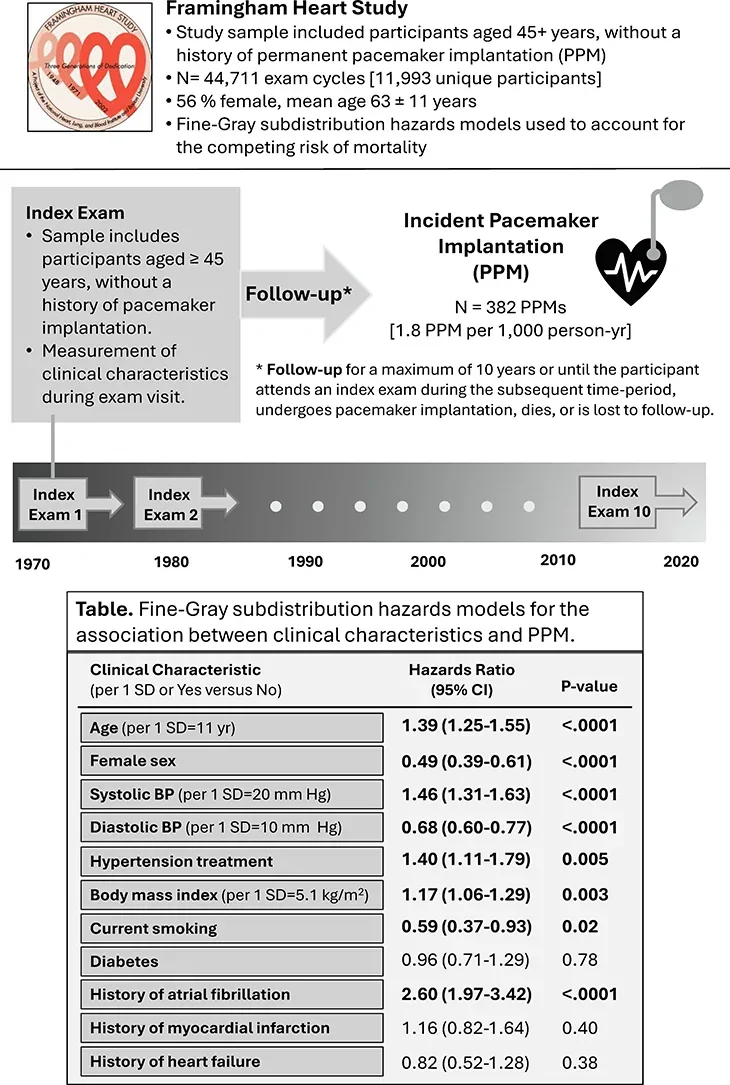
History of AF is linked to a ~160% higher risk of incident PPM implantation.
In a large community-based cohort, advancing age, higher BMI, elevated systolic blood pressure, and a history of atrial fibrillation were identified as significant independent risk factors for permanent pacemaker implantation.
Nephrology Dialysis TransplantationZoccali et al.review

Answers
Are conventional risk scores like CHA2DS2-VASc and HAS-BLED accurate for patients with concurrent atrial fibrillation and advanced chronic kidney disease?
CHA₂DS₂-VASc and HAS-BLED fail to capture CKD-specific modifiers and competing mortality in patients with AF.
Standard scores may underperform in advanced CKD; leaves open need for CKD-specific validation of thromboembolic and bleeding risk tools.
JACCBenjamin et al.Guideline

Answers
What clinical performance and quality metrics best operationalize evidence-based care for atrial fibrillation?
2026 AHA/ACC Clinical Performance and Quality Measures for Patients With Atrial Fibrillation
This document provides 5 performance and 16 quality measures to ensure evidence-based, equitable care for patients with atrial fibrillation.
Circulation Population Health and OutcomesBenjamin et al.Guideline

Answers
What performance and quality metrics best assess adherence to guideline-directed care in atrial fibrillation?
2026 AHA/ACC Clinical Performance and Quality Measures for Patients With Atrial Fibrillation: A Report of the American College of Cardiology/American Heart Association Joint Committee on Performance Measures
These 5 measures enable standardized, equitable AF quality assessment; extends guidelines into actionable public reporting and pay-for-performance standards.
JACCHaimovich et al.Original Research

Answers
What are the long-term recurrence and adverse event rates associated with stressor-associated atrial fibrillation?
Stressor-associated AF carries long-term recurrence and adverse event rates approaching those of unprovoked AF.
Investigates outcomes of stressor-associated atrial fibrillation, implying effective management strategies.

Philip Greenland
General / Preventive / Lipids · Northwestern University
Generally speaking, we haven't seen much evidence of improvement of risk prediction with the new markers when you look at the whole picture. The one exception, I would say, is measurement of coronary artery calcium. I came to this as a major skeptic about coronary calcium, and only after seeing some data did I come to believe that coronary calcium might actually have clinical impact. But even with coronary calcium, I think we're too early in the evaluation process to recommend routine use beyond standard risk measurement.
2010 ACCF/AHA Guideline for Assessment of Cardiovascular Risk in Asymptomatic Adults: Executive Summary
CirculationGreenland et al.
EHJLieb et al.cohort
Answers
What are the clinical and genetic correlates of circulating VEGF, sFlt-1, and HGF in the general population?
Circulating VEGF and HGF demonstrated high heritabilities and strong positive associations with metabolic syndrome, but were not related to flow-mediated dilation.
Circulating VEGF and HGF demonstrate high heritability and sexual dimorphism, and are associated with metabolic syndrome and smoking, but not independently with brachial artery function.