The American Journal of CardiologySabahizadeh et al.Original Research
Beyond Composite Outcomes: Reassessing Left Atrial Appendage Occlusion Versus Oral Anticoagulation


Gregory Y.H. Lip works in Electrophysiology affiliated with University of Birmingham.
Gregory Y.H. Lip is Price-Evans Chair of Cardiovascular Medicine at the University of Liverpool and Honorary Consultant Cardiologist at Liverpool Heart & Chest Hospital. He is Distinguished Professor at Aalborg University, Denmark, and Adjunct Professor at Seoul National University and Yonsei University in Korea. He spends half his time as a clinical cardiologist leading atrial fibrillation and hypertension specialist services.
5,513 pubs · 276,014 cites · h-index 203
MB ChB
University of Glasgow
1988
MD
University of Glasgow
1994
Price-Evans Chair of Cardiovascular Medicine
University of Liverpool · 2019 - Present
Honorary Consultant Cardiologist
Liverpool Heart & Chest Hospital · 2019 - Present
Distinguished Professor
Aalborg University · 2018 - Present
Professor of Cardiovascular Medicine
University of Birmingham · 2009 - 2019
Honorary Consultant Cardiologist
Sandwell and West Birmingham Hospitals NHS Trust · 1996 - 2019
The American Journal of CardiologySabahizadeh et al.Original Research
Ultrasound in Obstetrics and GynecologyAnand et al.cohort
Fetal growth restriction in a first pregnancy is associated with a roughly 30% higher risk of maternal heart failure, myocardial infarction, and ischemic stroke within 5 years postpartum, highlighting FGR as an early marker of maternal cardiovascular vulnerability.
JACC AsiaChao et al.Original Research
Progress in Cardiovascular DiseasesBanach et al.cohort
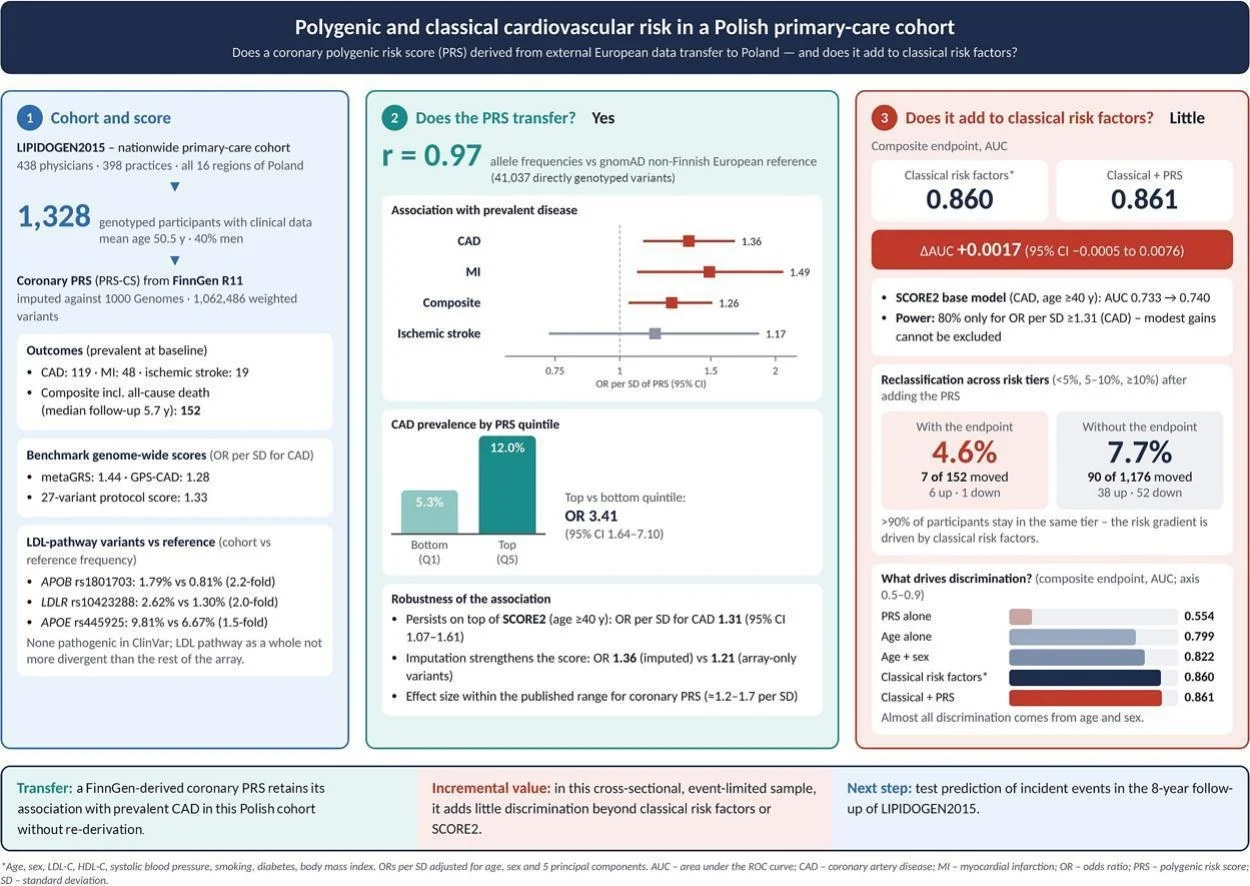
LIPIDOGEN2015 tested whether an external genetic risk score for coronary disease added value beyond standard risk factors in 1,328 primary care patients in Poland. While the genetic score tracked with existing coronary disease, adding it to standard risk factors nudged discrimination for the combined outcome of coronary disease, heart attack, stroke or death during follow up from 0.860 to 0.861. The catch: this was a cross sectional study with limited events, and its value for predicting future events remains untested.
JACCApostolakis et al.cohort
An analysis of the AMADEUS trial compared the HAS-BLED, HEMORR2HAGES, and ATRIA scores in AFib patients taking blood thinners. HAS-BLED was best at predicting major or clinically relevant nonmajor bleeding, improving risk classification by 10.3% over HEMORR2HAGES and 13% over ATRIA, and was the only score that predicted brain bleeds. The catch: all three scores had only modest accuracy overall. Given its simplicity, HAS-BLED is an attractive choice for clinical practice.
JACCPotpara et al.Original Research
Heart RhythmLi et al.Original Research
Contemporary AF care emphasizes an integrated approach focused on stroke prevention, symptom management, and optimization of cardiovascular risk factors and comorbidities.
Nature Reviews CardiologyLip
CHEST JournalLi et al.cohort
May support C2HEST for AF prediction in Asians; leaves open external validation before clinical use.
Archives of Medical ScienceElsheikh et al.Original Research
Does not support routine calcification assessment for recurrence risk; hypothesis-generating for prospective validation in larger cohorts.
NutrientsSurma et al.Original Research
Obesity is a chronic, recurrent, and heterogeneous disease whose effective treatment requires an approach that goes beyond assessment of body mass index and short-term weight loss. Contemporary management should integrate assessment of adipose tissue distribution and function, obesity phenotype, complications, and cardiometabolic risk with individualized nutritional, behavioral, pharmacological, and—if appropriate—surgical interventions. This paper presents the ADIPO–CARE Plan, a practical, structured model for the comprehensive assessment and long-term treatment of people living with obesity. The model comprises two interconnected stages. The ADIPO defines a comprehensive clinical assessment process: A—Assess adiposity, which includes assessing the degree and distribution of excess adipose tissue; D—Define obesity phenotype, which aims to identify the clinical phenotype of obesity; I—Identify complications, which includes detecting obesity-related diseases and complications; P—Profile cardiometabolic risk, which serves to determine global cardiometabolic risk and disease severity; and O—Overall treatment goals, defining individual, realistic therapeutic goals that go beyond weight loss. The second phase, CARE, organizes the treatment and long-term follow-up strategy: C—Comprehensive lifestyle intervention, with particular emphasis on nutritional therapy, physical activity, behavioral interventions, and lifestyle modifications; A—Anti-obesity pharmacotherapy, encompassing the rational use of pharmacotherapy as a complement to lifestyle interventions; R—Response-guided treatment optimization, involving systematic assessment of response and intensification or modification of therapy; and E—Evaluate long-term effectiveness, focusing on maintenance of effects, safety, adherence, relapse prevention, and long-term disease control. The ADIPO–CARE Plan proposes a shift from an approach focused primarily on body weight to a model focused on phenotype, risks, complications, and long-term health benefits. This framework can facilitate the systematization of clinical decisions and the integration of nutritional therapy with other elements of modern, personalized obesity therapy.
LabMedMbeta et al.cohort
NT-proBNP elevation signals higher MACE risk; extends biomarker prognostication beyond HF yet leaves clinical adoption open.
EP EuropaceBoriani et al.review
This review weighs the arguments for and against stopping blood thinners after catheter ablation in patients with AFib at low or intermediate stroke risk. While blood thinners cut stroke and deaths, they raise the risk of major bleeding, including bleeding into the brain. Recent trials and observational studies have sparked debate on whether blood thinners can be routinely stopped after successful ablation without raising the risk of clots, though no numbers are reported in the abstract.

Electrophysiology · Seoul National University
AF increases the risk for thromboembolism (TE) or mortality, with the risk reduced by OACs. If we “cure” AF with CA, OACs may no longer be needed. The meta-analysis of 3 RCTs by Kaisaier and colleagues suggests that discontinuing OAC does not increase the risk for TE or mortality but reduces bleeding.
Annals of Internal MedicineLip
Heart RhythmChen et al.RCT
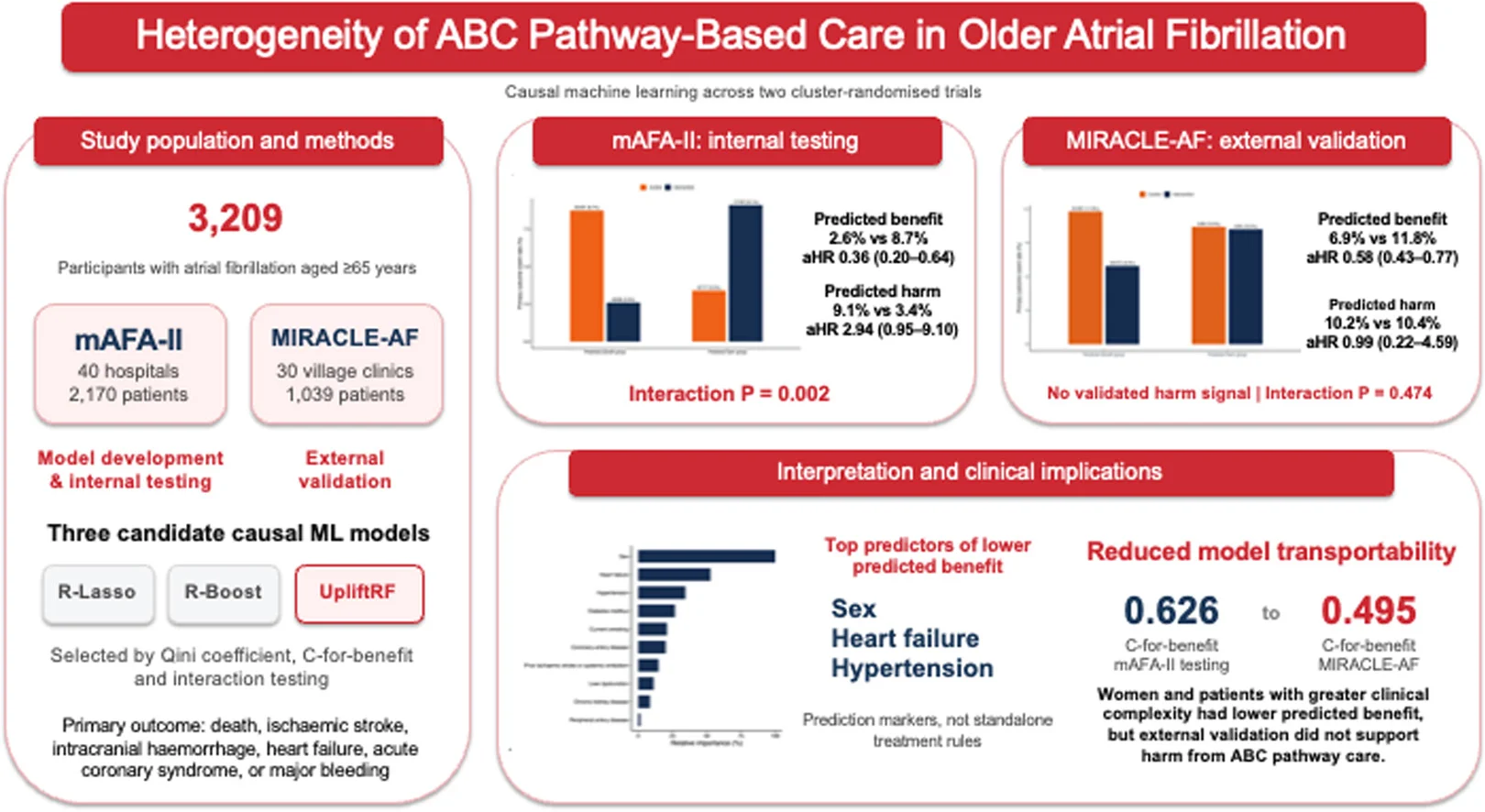
May support individualized ABC care in older AF patients; leaves open optimal transportability across settings.
DrugsZhang et al.meta-analysis
Network meta-analysis ranks relative benefits of SGLT2i, GLP-1RA, nsMRA, and sGC in HFmrEF/HFpEF; extends indirect evidence for therapy selection.
Current Opinion in Clinical Nutrition & Metabolic CareKaşkal et al.Narrative Review
Narrative review demonstrates weight and cardiovascular benefits of GLP-1 agonists in older adults, highlighting safety concerns including sarcopenia and drug interactions.
HeartWang et al.Cohort Study
Current Problems in CardiologyElsheikh et al.cohort
This study tracked 2,175 adults who had coronary calcium scoring at a local hospital across four score categories. Over about 10 years, 1.9% had an ischemic stroke, 6.4% developed AFib and 5.8% died. Unadjusted analyses found no link between calcium scores and any outcome, while adjusted analysis linked only the moderate calcium category to higher stroke risk, with no link to AFib or death.
JACC AsiaChoi et al.review
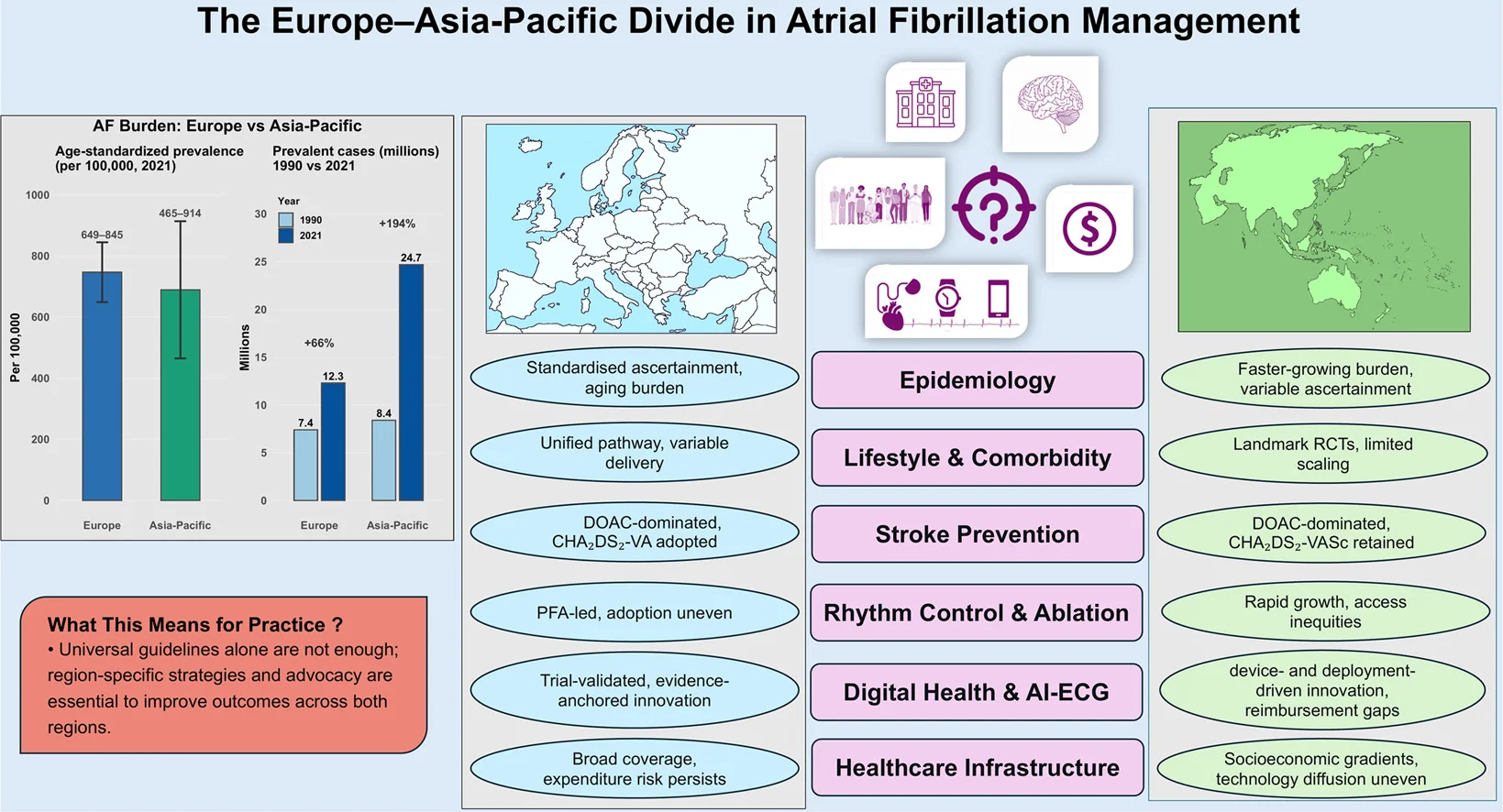
This review compares AFib care in Europe and the Asia Pacific region, which together hold most of the world's 60 million patients. Practice splits in all six areas: risk factors, lifestyle and other conditions, stroke prevention, rhythm control and ablation, digital tools and health systems. Blood thinner gaps have shrunk, yet gaps in funding, procedure capacity and digital access remain, and differences inside each region rival those between them. Closing these gaps will take resource adapted plans and sharing evidence across both regions.