
The Journals of Gerontology Series BOng et al.Original Research

Andrew Steptoe
Health disparities and outcomes
University College London
About
Research focus
Health disparities and outcomes
Impact
1,615 pubs · 112,503 cites · h-index 165
Affiliations
Publications
JAMA Network OpenQin et al.Cohort Study
Cultural Engagement and Hospital-Treated Mental Disorders in Older Adults
Importance Cultural engagement is associated longitudinally with better mental health and reduced depression incidence, but evidence has largely relied on self-reported symptoms and diagnoses, leaving uncertainty about clinically recorded disorders, and residual confounding remains a concern. Objective To examine whether cultural engagement is associated with incident hospital-treated mental disorders. Design, Setting, and Participants This prospective cohort study included adults aged 50 years and older from the English Longitudinal Study of Aging (wave 4, May 2008 to July 2009), with follow-up through March 2024. Data were analyzed from November 2025 to March 2026. Exposures Frequency of engagement with any of the receptive arts activities (ie, watching or consuming performances or exhibitions) was categorized as never, infrequent (less than once a year up to once or twice a year), or frequent (every few months up to monthly or more). Main Outcomes and Measures Participant records were linked to diagnostic codes in Hospital Episode Statistics and mortality records with follow-up of up to 20 years. The primary outcomes were mental disorders overall and 4 main mental disorders (dementia, substance misuse, mood disorders, and neurotic disorders). Cox proportional hazard regression models were used to estimate the hazard ratios (HRs) and 95% CIs, with a false discovery rate (FDR) approach for significance. To further probe causality, eye disease, ear disease, and traumatic brain injury—which share similar sociodemographic profiles to mental disorders—were prespecified as negative control outcomes. Results This study included 8274 adults (mean [SD] age, 65.4 [9.6] years; 4672 female [55.2%]). After fully adjusting for sociodemographic, lifestyle, and social factors and multiple testing, frequent cultural engagement was associated with lower risk of any mental disorders (HR, 0.71; 95% CI, 0.62-0.82; P FDR < .001), dementia (HR, 0.71; 95% CI, 0.56-0.89; FDR-adjusted P = .01), substance misuse (HR, 0.75; 95% CI, 0.59-0.95; FDR-adjusted P = .04), and mood disorders (HR, 0.73; 95% CI, 0.56-0.95; FDR-adjusted P = .04), but not neurotic disorders. Associations persisted after excluding early incident cases and adjusting for baseline depressive symptoms and cognition and showed robustness to unmeasured confounders. Cultural engagement was not associated with any negative control outcomes. Conclusions and Relevance In this nationally representative cohort of older adults, cultural engagement was associated with a lower hazard of subsequent hospital-treated mental disorders, with particularly consistent associations for dementia, substance misuse, and mood disorders. These findings provide triangulated statistical data to suggest that cultural engagement is associated with reduced risk of several clinically recorded mental disorders and support further testing of cultural engagement as a population mental health strategy.
LancetChen et al.Original Research
The path to healthy ageing in China: a Peking University–Lancet Commission
UNLABELLED: Around the world, populations are ageing at a faster pace than in the past and this demographic transition will have impacts on all aspects of societies. In May 2020, the UN General Assembly declared 2021–2030 the Decade of Healthy Ageing, highlighting the importance for policymakers across the world to focus policy on improving the lives of older people, both today and in the future. While rapid population ageing poses challenges, China’s rapid economic growth over the last forty years has created space for policy to assist older persons and families in their efforts to improve health and well-being at older ages. As China is home to 1/5 of the world’s older people, China is often held up as an example for other middle-income countries. This Commission Report aims to help readers to understand the process of healthy ageing in China as a means of drawing lessons from the China experience. In addition, with the purpose of informing the ongoing policy dialogue within China, the Commission Report highlights the policy challenges on the horizon and draws lessons from international experience. THE UNIQUENESS OF CHINA’S AGEING SOCIETY: From a global perspective, China shares some of the economic and social challenges faced by other countries with rapidly ageing populations. China stands out, however, as it already has the world’s largest older population, and China’s ageing burdens will increase further as the ‘second baby boomers’ (those born between 1962 and 1975) start to enter retirement in 2022. In addition, China’s rapid demographic transition over the last four decades will lead to a dramatic decline in the number of living children for each older person in China and bring substantial challenges for both family-based care and social care. Compounding demographic changes, personnel planning in geriatric and rehabilitation medicine has not kept pace with the growth of the older age population, and there is a shortage of medical resources targeted at the ageing population. In Section 1, the report stresses the importance of achieving “healthy ageing” in light of socio-economic progress, urbanization and migration, and China’s demographic transition. HEALTH COMPLEXITY AND INEQUALITIES AMONG CHINA’S OLDER POPULATION: China completed its epidemiological transition from infectious diseases to non-communicable diseases (NCDs) during the past three decades. As in many other ageing countries, the upward trend in the incidence of NCDs and the presence of multimorbidity pose special challenges for China’s healthcare sector. Even as some older Chinese continue to suffer from such communicable diseases as hepatitis, tuberculosis, and sexually transmitted diseases, chronic conditions, such as cognitive impairments, mental disorders, and frailty, are becoming much more prominent. These chronic conditions are complex to treat and manage and are associated with more functional disability and greater care needs. Along with the emergence of NCDs, substantial gaps in health are apparent by gender, rural versus urban residence, ethnicity, and socio-economic status. Investments in healthy ageing, from promoting education in health literacy to improving access to health care, are promising means of improving the well-being of older adults and reducing the gaps in health across socioeconomic groups in China. Even as China’s population ages, investments in healthy ageing offer a path for older Chinese to play meaningful and productive social roles in society, while limiting burdens on their families. The latest facts on health status and health inequities among China’s older adults are presented in Section 2 of the report. MODIFIABLE FACTORS OF HEALTHY AGEING: EVIDENCE FROM CHINA.: Current evidence on the determinants of health and functioning status of China’s older population is summarized in Section 3. In China, as elsewhere, health at older ages results from the cumulative effects of behaviours and events that occur across the life cycle. These include exposures to unhealthy environments and parental decisions influencing in-utero and childhood health, later health behaviours as teenagers and adults (including decisions on educational investments, smoking, drinking, and physical activity), and decisions over food consumption which influence diet and nutritional status. Many of these decisions and behaviors are influenced by health literacy and socio-economic conditions, but they may also be influenced by policy (Section 5). Finally, Section 3 highlights the health benefits of social connections and participating in leisure activities such as square dancing and promoting age-friendly environments in China. INTEGRATING MEDICAL AND SOCIAL CARE FOR CHINESE OLDER PEOPLE.: Older people require access to high-quality health services that include prevention, promotion, curative, rehabilitative, palliative and end-of-life care. An update on China’s policy initiatives regarding healthcare and social care relevant to the ageing population is provided in Section 4. In addition to achieving universal health insurance coverage, China has invested heavily in public health promotion and the consolidation of the primary healthcare system. Further, as the role of the family in providing care for older people is eroded by dwindling family size and changing living arrangements, especially with the outmigration of adult children, China is taking steps to build up institutional and community care infrastructure as both a substitute for, and complement to, family care. Furthermore, long-term care insurance (LTCI) has been piloted in many cities as a financing mechanism. China’s experience with the LTCI pilots suggests that it will be difficult to sustain LTCI under the current pay-as-you-go framework, and that there will be a considerable public financial risk as the population ages. Although China’s government has placed the integration of health care with long-term care (LTC) at the forefront of its policy agenda, the progress for the integration has been slow. LESSONS LEARNED FROM CHINA AND IMPLICATIONS FOR THE FUTURE.: An overview of the evidence presented earlier in the report is presented in Section 5, followed by policy recommendations for supporting healthy ageing in China. Policy recommendations outlined here can be generalized to other countries, especially low- and middle-income countries (LMICs). First, health promotion initiatives should focus on changing people’s behavior, especially smoking cessation, weight control, and health literacy education to reduce the incidence of NCDs and care burdens. Second, there is an urgent need to move away from disease-centred care to person-centred care and to increase the supply of health care workers, particularly in geriatric medicine, rehabilitation medicine, and hospice care. Third, innovative measures should be taken to remove obstacles to upgrading community and home environments and thus facilitate mobility and social engagement among older people. There are several other policy areas that should be addressed, given China’s unique institutional environment. These include regional segmentation of health insurance systems and the regulatory environment for healthcare delivery. Specifically, the report suggests that policy in China should focus on: (1) national integration of the health insurance system to eliminate the current segmentation across regions and occupations; (2) capping regionally segmented LTCI initiatives, and striving for a national scheme that is independently funded; (3) switching government subsidies in the aged care sector from subsidising providers to subsidising consumers to facilitate market competition and to help existing care facilities to meet safety regulations; (4) strengthing the capacity to regulate medical service providers, especially in screening for fraud against the national medical insurance schemes and reforming the healthcare delivery sector by lowering barriers to entry and facilitating choice. Older people are an important part of a family and an invaluable asset to society. Healthy ageing will not only enable older people to enjoy their later life to the fullest but has the potential to unleash the intellectual and vocational capacities of society as a whole. Recognizing that China’s older population will continue to grow, it is important to take their needs into account and prepare well in advance by creating an age-friendly environment for the ageing population. As China’s “second baby boomers” start to reach retirement age in 2022, it is imperative to take the window of opportunity afforded by China’s economic growth to make coordinated efforts across sectors to address the concerns of an ageing nation.
Neves et al.cohort
Answers
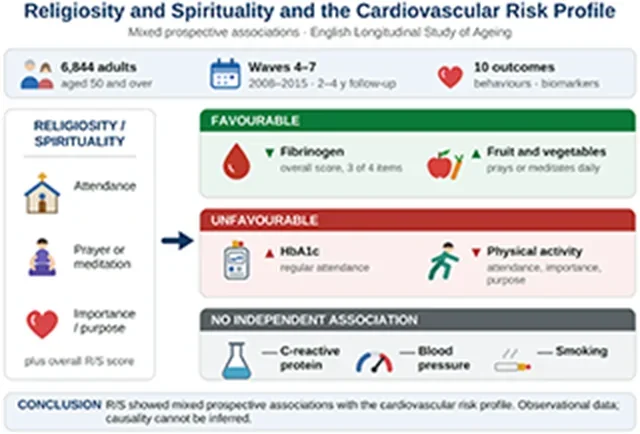
Does higher religiosity and spirituality improve future behavioural and biological components of the cardiovascular risk profile in English adults aged ≥50?
Greater religiosity is linked to ~15% lower odds of meeting physical activity recommendations.
Mixed religiosity-CV risk associations in older adults should not change practice; leaves open causal effects on fibrinogen versus activity.
Brain Behavior & Immunity - HealthGao et al.Longitudinal Study
Severe infections, domain-specific cognitive vulnerability, and future infection risk in older adults
Objective Severe infections have been implicated in dementia risk, but their associations with specific cognitive domains and whether poorer cognition predicts subsequent infection remain unclear. We examined these associations in both temporal directions among older adults. Methods We analysed data from the English Longitudinal Study of Ageing Harmonised Cognitive Assessment Protocol (ELSA-HCAP), conducted in 2018 and linked to national inpatient records. Pre-HCAP hospital-treated infections were identified from 1997 to 2018; post-HCAP incident infections were ascertained from 2018 to 2024. Cognitive performance was assessed at HCAP using 21 standardised neuropsychological tests summarised into general and four domain-specific scores (executive function, memory, language, and visuospatial ability). Linear regression assessed associations between pre-HCAP hospital-treated infections and cognitive performance at HCAP; Cox models estimated associations between cognition at HCAP and risk of incident hospital-treated infections. All models were adjusted for sociodemographic, lifestyle, and health covariates. Results Of 1,159 participants aged ≥65 at HCAP (631 [54.1%] female; mean [SD] age, 75.6 [7.2] years), 351 (30.3%) had a hospital-treated infection before HCAP. Prior hospitalisation for any infection was associated with lower general cognition (β = –0.11 SD, 95% CI –0.21 to –0.02) and poorer executive function (β = –0.19, –0.28 to –0.09), with similar patterns across infection types. Lower respiratory tract infections were additionally associated with poorer memory (β = –0.20, –0.36 to –0.04). Cognitive scores were progressively lower among individuals with more frequent or prolonged infection-related hospitalisations, sepsis, or cardiovascular disease. Prospectively, over a mean (SD) 4.8 (1.9) years of follow-up, 271 incident hospital-treated infections occurred. Each 1-SD higher general cognition was associated with a 36% lower risk of any subsequent hospital-treated infection (HR 0.64, 0.53 to 0.78). Poorer performance across cognitive domains was associated with all-cause and bacterial infections, whereas only executive function was associated with viral infections, largely reflecting COVID-19 (HR 0.54, 0.34 to 0.85). Conclusion Severe infections were primarily associated with poorer executive function. Conversely, cognitive vulnerability across multiple domains was associated with subsequent infections requiring hospital care. These findings support a reinforcing infection–cognition cycle in later life and cognitively tailored infection-prevention strategies.
BMC Public HealthConway et al.Original Research
Answers
What are the barriers and facilitators for parents in reducing their children's intake of high-sugar commercial baby foods?
Could using sugar warning labels on commercial baby foods reduce intake of free sugars? A qualitative study
Qualitative study shows sugar warning labels on commercial baby food help parents reduce children's sugar intake, suggesting policy regulations on labelling and marketing are needed.
Scientific ReportsPiot et al.Original Research
Loneliness and social isolation as predictors of pain medication use transitions in older adults
Finds loneliness increases pain medication use in older adults, suggesting crucial social considerations for treatment.
Archives of Gerontology and GeriatricsSpexoto et al.Longitudinal Study
Do muscle strength cut-offs used to define sarcopenia affect trajectories of disability progression in basic activities of daily living in older adults?
OBJECTIVE: This study aims to analyse trajectories of disability progression in basic activities of daily living (BADLs) as a function of sarcopenia, using different cut-off points for defining low muscle strength (LMS). METHODS: A longitudinal study included 3,328 participants from the English Longitudinal Study of Ageing (ELSA), aged 60 years or older, with no BADL disability at baseline. Sarcopenia was defined according to the EWGSOP2 criteria, using various LMS cut-offs (grip strength: <36/23; <32/21; <30/20; <27/16; <26/16 kg for men/women). Trajectories of disability progression in BADLs were analysed over twelve years using generalised linear mixed models, adjusted for sociodemographic, behavioural, clinical, and anthropometric characteristics. RESULTS: Probable sarcopenia was associated with worse trajectories of disability progression in BADLs only when LMS was defined by higher cut-offs: <30/20 kg (β = 0.013; 95%CI: 0.007-0.020); <32/21 kg (β = 0.012; 95%CI: 0.006-0.018); and <36/23 kg (β = 0.016; 95%CI: 0.011-0.022). Sarcopenia and severe sarcopenia were associated with worse trajectories of disability progression in BADLs, regardless of the LMS cut-off point used, with a modest effect size for severe sarcopenia when LMS was defined as <36/23 kg (β = 0.021; 95%CI: 0.011-0.031). CONCLUSION: Probable sarcopenia was associated with worse trajectories of disability progression in BADLs when higher cut-off points were used to define low muscle strength (LMS), whereas sarcopenia and severe sarcopenia were associated with BADLs disability progression regardless of the cut-off point applied.
Johan Denollet
Preventive Cardiology · University of Minnesota
This review provides further evidence that psychological factors do matter in the development and progression of CHD. Clinicians should take symptoms of anger and hostility seriously, and may consider referring their patient for behavioral intervention. We need to closely monitor and study these personality traits in order to do a better job at identifying high-risk patients who are more liable to future fatal and non-fatal coronary events.
The Association of Anger and Hostility With Future Coronary Heart Disease
Journal of the American College of CardiologyChida et al.
The Journals of Gerontology Series BZaninotto et al.Cohort Study
Growth mindset and grit as psychological resources in later life: age, socioeconomic status, and health patterning in the English Longitudinal Study of Ageing
OBJECTIVES: Growth Mindset and Grit have been proposed as key psychological resources for resilience and adaptation, yet their manifestation and social distribution in later life remain underexplored. This study examines the structure, distribution, and correlates of proxy indicators of Growth Mindset and Grit using the English Longitudinal Study of Ageing (ELSA). METHODS: Proxy indicators reflecting learning behavior, personality traits, affect, and beliefs were used to derive 3 components of Growth Mindset (education-, personality-, and belief-based) and 2 components of Grit (affective- and personality-based). Multinomial logistic regression models were used to examine the correlates of Growth Mindset and Grit components, including age, socioeconomic status, health, and cognitive functioning. RESULTS: Distinct distributional patterns emerged across components. Education-based Growth Mindset was concentrated in lower categories, whereas personality-, belief-, and affect-based components showed greater variability. Older age was associated with lower Growth Mindset, particularly in education- and belief-based domains, while associations with Grit were more nuanced, including a lower likelihood of low affect-based Grit among older adults. Higher educational attainment, employment, wealth, and better memory performance were associated with more favorable profiles across selected domains. Living alone and limiting longstanding illness were consistently associated with less favorable profiles. DISCUSSION: Growth Mindset and Grit-related proxy indicators were socially patterned and showed distinct associations across belief, personality, affective, and behavioral domains in later life. The differing distributions observed across these domains highlight the importance of distinguishing between opportunity-constrained behavioral indicators, such as formal learning, and more dispositional characteristics when studying psychological resources in older populations.
Age and AgeingSilveira et al.Cohort Study
Are there sex differences in the influence of insomnia symptoms and sleep duration on the trajectory of neuromuscular strength decline?
Longitudinal study examines how insomnia and sleep duration impact neuromuscular strength decline by sex, indicating different effects for men and women.
Age and AgeingMeier et al.Qualitative Study
Answers
To what extent are social, psychological, and spiritual needs met in the last months of life?
How social, psychological, and spiritual needs are supported in the last months of life: evidence from the English Longitudinal Study of Ageing end-of-life interviews
BACKGROUND: End-of-life care includes social, psychological, and spiritual support in addition to medical care. Population-level evidence on whether these non-medical needs are met in the last months of life, who provides such support, and how it is perceived remains limited. METHODS: We analysed end-of-life proxy interviews from deceased participants aged 55 years and older in the English Longitudinal Study of Ageing (n = 507). Outcomes included whether social, psychological, and spiritual needs were met in the last three months of life, and how support was provided and perceived. Analyses included multivariate probit models adjusted for sociodemographic and end-of-life factors. FINDINGS: Individuals died at a mean age of 83 years (range 55-105). Social and psychological needs were met for most individuals (81.8% and 77.8%); among those with spiritual needs (n = 227), 74.4% had these needs met. Support was provided predominantly by family members, with limited involvement of formal services, and was generally rated as good or excellent and helpful. Living alone was associated with lower probabilities of having social, psychological, and spiritual needs met, while dementia was associated with lower probabilities of having social and psychological needs met (P < .05-.01). Higher educational attainment was associated with a higher probability of having spiritual needs met (P < .05-.01). CONCLUSIONS: Reliance on informal networks creates inequities in non-medical end-of-life support, particularly for older adults living alone or with dementia, underscoring the need for more integrated public health approaches.
BMJ OpenSteptoe et al.Cohort Study

Adherence to the Mediterranean diet and psychological wellbeing before and during the COVID-19 pandemic: a prospective analysis of the English Longitudinal Study of Ageing
Prospective analysis shows adherence to the Mediterranean diet improves well-being in older adults, indicating important dietary strategies during stress.
Diabetes Obesity and MetabolismMilliati et al.Original Research
Does the Combination of Abdominal Obesity and Vitamin D Deficiency Increase the Risk of Death in Individuals Aged 50 or Older? Evidence From the ELSA Study
Investigates increased risk of death with abdominal obesity and vitamin D deficiency in older individuals, suggesting the need for early intervention.
The Journals of Gerontology Series BPark et al.Longitudinal Study
Whose Health Matters? Longitudinal Analyses of Older Romantic Couples’ Health, Physical Capabilities, and Sexual Experiences
Longitudinal analyses examine how health affects sexual experiences in older couples, suggesting important implications.
CancerTuijl et al.Original Research
Psychosocial factors and the risk of cancer: An individual‐participant data meta‐analysis
Meta-analysis evaluates how psychosocial factors influence cancer risk, showing an association with lung cancer under certain conditions.
Annals of the New York Academy of SciencesFancourt et al.Cohort Study
Cultural Engagement Is Related to Decelerated Physiological Age: Doubly Robust Estimations in a National Cohort Study
A national cohort study demonstrates that regular cultural engagement slows physiological aging among older adults, suggesting potential health benefits.
American Journal of EpidemiologyWang et al.Longitudinal Study
Answers
Do hypothetical interventions reducing social isolation and loneliness narrow socioeconomic and racial disparities in cognitive functioning among older adults?
Reducing social isolation is projected to narrow socioeconomic and racial cognitive disparities among older adults.
Hypothesis-generating for targeting isolation to narrow cognitive disparities; prospective randomized trials needed before practice change.
The Lancet PsychiatryFrank et al.Cohort Study
Specific midlife depressive symptoms and long-term dementia risk: a 23-year UK prospective cohort study
BACKGROUND: Midlife depression has been associated with an increased risk of dementia, but it remains unclear whether this risk is attributable to specific symptoms. We aimed to identify the midlife depressive symptoms most strongly linked to subsequent dementia and to ascertain whether these associations were independent of established dementia risk factors. METHODS: In this prospective, observational cohort study based on the UK Whitehall II study, participants (aged 35-55 years at study inception [1985-88]) were eligible for analysis if they had complete depression data and successful linkage to national health records; individuals with prevalent dementia at baseline were excluded. In 1997-99, the baseline for this analysis, participants underwent a clinical examination and completed the 30-item version of the General Health Questionnaire (GHQ-30, a validated screening instrument for detecting clinically significant psychiatric distress in the general population). Threshold-level depression was defined as a GHQ-30 score of 5 or higher. The primary outcome was incident dementia, ascertained via linkage to UK National Health Service (NHS) Hospital Episode Statistics for inpatient admissions, the Mental Health Services Data Set, or the NHS Central Registry for mortality from April 24, 1997, to March 1, 2023. Analyses were conducted using a series of multivariable-adjusted Cox proportional hazards regression models. Hazard ratios (HRs) and accompanying 95% CIs were adjusted for age, sex, and ethnicity in the basic model. People with lived experience were not involved in the study design or writing process. FINDINGS: Of 6511 participants in the Whitehall II study who completed the GHQ-30 between April 24, 1997, and Jan 8, 1999, 5811 were eligible for this analysis. The mean age of participants was 55·7 years (SD 6·0; range 45-69); 1646 (28·3%) participants were women, 4165 (71·7%) were men, 5356 (92·2%) reported their ethnicity as White, and 455 (7·8%) reported their ethnicity as non-White. During a mean follow-up of 22·6 years (SD 5·0), 586 participants (10·1%) developed dementia. Six depressive symptoms emerged as robust midlife indicators of increased dementia risk: "Losing confidence in myself" (HR 1·51, 95% CI 1·16-1·96), "Not able to face up to problems" (1·49, 1·09-2·04), "Not feeling warmth and affection for others" (1·44, 1·06-1·95), "Nervous and strung-up all the time" (1·34, 1·03-1·72), "Not satisfied with the way tasks are carried out" (1·33, 1·05-1·69), and "Difficulties concentrating" (1·29, 1·01-1·65). Associations were independent of established dementia risk factors, including APOEε4 status, cardiometabolic conditions, and lifestyle factors. In individuals younger than 60 years at baseline, the six symptoms fully accounted for the association between midlife depression and dementia risk. INTERPRETATION: A distinct set of midlife depressive symptoms was associated with an increased risk of dementia, suggesting that these symptoms might be early markers of underlying neurodegenerative processes. These findings could inform earlier identification and more targeted interventions for individuals with depression who are at risk of dementia.
Molecular PsychiatryGong et al.Cross-Sectional Study
Associations between plasma proteins and psychological wellbeing: evidence from over 20 years of the English Longitudinal Study of Ageing
A deeper understanding of the molecular processes involved in psychological wellbeing in older adults is essential for advancing knowledge of underlying biological mechanisms. Leveraging proteomics data from 3,262 older adults (mean age = 63.5 years, 55% female) of the English Longitudinal Study of Ageing (ELSA), we investigated the cross-sectional and longitudinal associations (before and after protein measurement) between 276 proteins and eudaimonic wellbeing, hedonic wellbeing, life satisfaction, and depressive symptoms, over 20-year span. For positive wellbeing, two proteins (DEFB4A and ECE1) were longitudinally associated with subsequent eudaimonic wellbeing trajectory. We further identified higher concentrations of 7, 8, and 2 proteins were linked to subsequent lower eudaimonic wellbeing, hedonic wellbeing, and life satisfaction, respectively. Sex differences in XCL1 and SLAMF7 were observed, associated with subsequent lower eudaimonic and hedonic wellbeing in males. These findings link human psychological wellbeing to regulation of several biological pathways, particularly involving cytokine regulation, neurotrophic signaling, inflammatory and immune systems.