

Xiaogang Wang
Particle physics theoretical and experimental studies
Peking University
About
Research focus
Particle physics theoretical and experimental studies
Impact
4,119 pubs · 255,862 cites · h-index 209
Affiliations
Publications
Original Research
SEP 24LvAnimals
Seasonal Fish Passage Patterns Through an Estuarine Fishway in Relation to Tidal Hydraulics
Fish passage through estuarine fishways varies with tides and seasons, but their associations remain poorly understood. At the Cao’e River Sluice fishway, sonar monitoring quantified the timing and intensity of crossing events at a section near the freshwater-side exit over 961 half-hour intervals on 30 monitoring days, while numerical simulations characterized hydraulic conditions. Lower seaward levels reduced entrance depth, with local connectivity loss simulated at a seaward level of 0.20 m. At a seaward water level of 1.16 m, entrance depth averaged 0.55 m, and this screening reference was met for 5.7–6.2 h per 12 h cycle. Total passage intensities reached 371 and 344 ind/h during late flood and early ebb in March–June, compared with 43 and 57 ind/h during late ebb and subsequent early flood in September–November. Adjusted upstream intensity was lower in September–November than in March–June across tidal stages (ratios 0.03–0.18, p < 0.001), while daytime upstream intensity was 3.0–5.5 times that during 00:00–06:00 (p < 0.001). Elevated upstream crossing intensity at the exit section showed season-specific, non-monotonic associations with concurrent head difference (ΔH), occurring at ΔH = 2.25–3.75 m during rapid ebb in March–June and under small positive to reversed heads during flood or large positive heads during ebb in September–November. Mean target lengths in selected subsamples were 17.6 ± 3.4 and 26.8 ± 6.7 cm, respectively. Upstream movement predominated in both periods, and upstream intensity was somewhat higher during spring tides. These findings support maintaining entrance connectivity and considering seasonal passage timing and tidal conditions in fishway operation.
Cross-Sectional Study
SEP 1LvAnimals
Effects of Test-Section Length and Cross-Sectional Blockage on the Swimming Performance of Juvenile Grass Carp: Implications for Standardized Testing and Fish-Passage Design
Experimental flume study reveals that restricted length and high blockage impair swimming performance in juvenile grass carp, highlighting the need for standardized fish-passage design metrics.
Original Research
SEP 1LiFrontiers in Psychology
The influence of college students’ AI literacy on perceived usefulness: a moderated mediation model with AI anxiety and trust across disciplinary backgrounds
Background To investigate how AI literacy influences perceived usefulness among university students from different disciplinary backgrounds, this study examines the roles of AI anxiety and trust. Methods Based on 563 valid samples collected from university students, a moderated mediation model was utilized to explore AI anxiety as a mediator and trust as a moderator across various disciplinary backgrounds. Results Results indicate that: (1) AI literacy significantly and positively predicted perceived usefulness, whereas AI anxiety negatively predicted perceived usefulness; (2) AI anxiety mediated the relationship between AI literacy and perceived usefulness; (3) Trust significantly moderated the relationship between AI literacy and AI anxiety, with high levels of trust buffering anxiety arising from low AI literacy; (4) Students from different disciplinary backgrounds exhibited differences in AI literacy, AI anxiety, trust, and perceived usefulness, yet trust’s moderating effect remained consistent across disciplines. Discussion This study extends the Technology Acceptance Model (TAM) within an AI context, revealing the synergistic mechanisms of cognitive, affective, and socio-psychological factors in university students’ AI adoption processes. The findings provide actionable guidance for AI education in higher education by emphasizing the need for discipline-specific curricula alongside targeted interventions that enhance trust and reduce AI anxiety, thereby improving students’ perceived usefulness and engagement with AI technologies.
Original Research
AUG 27OvsyannikovThe Journal of Chemical Physics
Assignment of H2O–HF rotational lines via ab initio calculations
Theoretical modeling study demonstrates new rotational line assignments in the water–hydrogen fluoride dimer, indicating the accuracy of full-dimensional calculations.
Original Research
AUG 7XiangGlobalization and Health
Organising cross-border care after arrival: receiving-system challenges in a China–Vietnam border region
Qualitative study reveals receiving-system challenges in cross-border care for Vietnamese patients in Guangxi, highlighting the need for better coordination.
Cohort Study
JUL 27WangBMC Emergency Medicine

Association of hypothermic temperature-control duration at 33 °C with coagulation parameters after out-of-hospital cardiac arrest: a single-center retrospective cohort study
Retrospective cohort study evaluates coagulation effects of hypothermic temperature control in cardiac arrest survivors, indicating potential safety concerns.
Original Research
JUL 24WangBMC Palliative Care
Palliative care training for healthcare professionals in ethnic minority regions of China: a qualitative study of training needs, barriers and practice translation
Qualitative study explores barriers and training needs in healthcare professionals from diverse regions.
Original Research
JUL 16SunThe Astrophysical Journal
A Diffusion-based Deep Learning Approach for the Super-resolution of SDO/HMI Magnetograms Using Hinode/SOT Data
Solar magnetograms are essential for probing the physical mechanisms of solar activity. The Helioseismic and Magnetic Imager (HMI) on board the Solar Dynamics Observatory provides full-disk observations but cannot resolve fine-scale magnetic structures, whereas the Solar Optical Telescope (SOT) on board Hinode provides such high-resolution (HR) details only within a limited field of view. To super-resolve full-disk HMI line-of-sight magnetograms to achieve the same spatial resolution as SOT, we developed Magnetogram Stable Super-resolution (MagSSR), a diffusion-based deep learning model. We began by constructing a dataset of precisely co-aligned SOT–HMI magnetogram pairs to provide high-quality supervised training data. Subsequently, we fine-tuned the pretrained Stable Diffusion backbone with the DreamBooth technique, thereby incorporating domain-specific priors. We then introduced several key improvements upon StableSR to develop MagSSR, enabling the model to more effectively learn the cross-instrument mapping from low-resolution HMI magnetograms to the HR SOT observations. Ablation results demonstrate that both DreamBooth fine-tuning and prompt mechanism contribute significantly to the model’s performance, and comparative studies further show that MagSSR exhibits superior visual fidelity compared to bicubic interpolation and the super-resolution (SR) convolutional neural network. Moreover, it attains the best RMSE, PSNR, SSIM, and Pearson correlation coefficient values, confirming the effectiveness of the proposed model in magnetogram SR reconstruction.
Original Research
JUL 6ShangEcological Indicators
Deciphering the complex drivers of vegetation change in arid regions using an interpretable machine learning framework across multiple scales
Examines vegetation dynamics across arid basins, indicating localized impacts of climate and human activities.
Original Research
JUN 24WangAdvanced Energy Materials
Chiral Molecular Configuration‐Mediated Crystallization of Perovskites for High‐Performance Solar Cells
Demonstrates improved crystallization and efficiency in solar cells using chiral additives, suggesting new control methods.
Original Research
JUN 19YangJBI Evidence Implementation
Breakthrough pain assessment and management among adult patients in an orthopedic ward: a best practice implementation project
Study improves pain assessment and reduces breakthrough pain in orthopedic patients, suggesting effective strategies for recovery.
Human Clinical Trial
JUN 1WangStatistics in Medicine
WMRNN: Weighted Modal Regression Neural Networks for Right Censored Data
Demonstrates improved predictive accuracy in right-censored data, suggesting greater adaptability for survival analysis.
Original Research
MAY 22WangBMC Medicine
Addressing the critical palliative care gaps in ethnic minority regions of low- and middle-income countries: a focus group study
Focus group study identifies barriers to palliative care in ethnic minority regions, suggesting actionable improvements.
Original Research
MAY 11RenAdvanced Energy Materials
Mn‐Mediated Reduction Coupling Mechanism Stabilizes Anion Redox Chemistry Toward High‐Performance P2‐Type Na‐Layered Oxide Cathodes
preclinical2 mentions
APR 11JinClinical Epigenetics
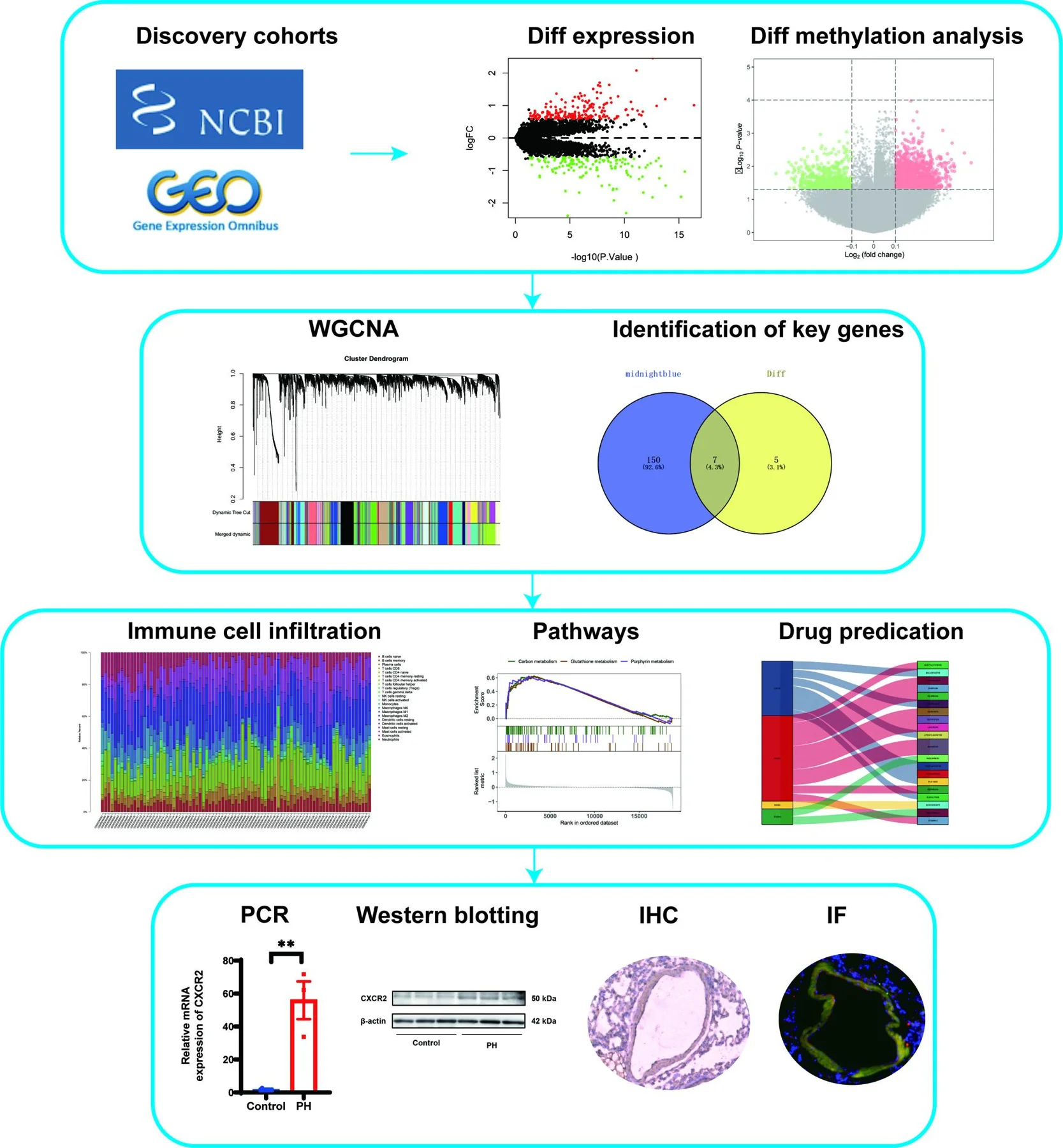
Seven key genes were identified, with CXCR2 significantly upregulated in both PH patients and animal models, driving pulmonary vascular remodeling via multiple pathways.
Multi-omics integration and experimental validation identified CXCR2 as a key driver of pulmonary vascular remodeling and a potential therapeutic target for pulmonary hypertension.
Case Report
APR 13ZhangFrontiers in Pediatrics
Case Report: Possible improvement of near-adult height with PEG-rhGH and letrozole in a late-puberty boy with atypical Noonan syndrome and bone age/height age discrepancy: a novel therapy
Background Noonan syndrome (NS) is a rare congenital disorder predominantly characterized by short stature, with recombinant human growth hormone (rhGH) as the primary treatment. This study aimed to investigate the effects of a novel therapy involving pegylated (PEG)-rhGH and letrozole on near-adult height (NAH) improvement in a boy with NS who was undergoing late-puberty and presented with higher bone age (BA) than height age (HA). Case presentation We reported a 13-year-old boy with NS presented with subtle NS facial features, notable short stature and a higher BA than HA. His predicted adult height (PAH) was 163.3 cm (genetic target height: 178 cm). Following a therapeutic regimen of PEG-rhGH (2.3 years) and letrozole (1.7 years), his height increased by 9.7 cm in the first year, achieving an average growth rate of approximately 8.04 cm over a period of 2.3 years. The BA minus chronological age (CA) decreased from −0.33 to −1.50, indicating that letrozole slowed BA progression and prolonged the growth period. Ultimately, his NAH reached 172.1 cm, the PAH increased by 8.8 cm, and the height standard deviation score based on CA (HtSDS CA ) improved by 1.62. Additionally, there were no significant changes in thyroid function, blood glucose, uric acid, and IGF-1 levels during the treatment period, which fluctuated within the normal range. The patient had a transient slight elevation in testosterone, but normalized spontaneously, and the patient reported no discomfort. Besides, he experienced mild facial acne, but resolved without additional intervention after letrozole discontinuation. No other obvious adverse reactions were observed. Conclusion The novel therapy of PEG-rhGH and letrozole demonstrated promising potential in improving NAH, while adhering to safety profiles. This case represented the first attempt to use this dual therapy for NAH enhancement in an adolescent boy with NS and a higher BA than HA.
Original Research
APR 1WangMedComm
Ipriflavone From Aquilaria malaccensis Lam. Exosome‐Like Nanoparticles Targets Prolyl Hydroxylase Domain Protein 2 (PHD2) to Enhance Hypoxia‐Inducible Factor‐α (HIF‐α) Hydroxylation Thereby Alleviating Hypoxia‐Induced Gastrointestinal Mucosal Ferroptosis
Reveals ipriflavone from exosome-like nanoparticles improves mucosal health under hypoxia, suggesting therapeutic potential.
Original Research
APR 10HuangAnimal Cognition
Social communicative characteristics of adolescent police dogs: Acquired experience plays a crucial role
Explores how acquired experience influences social cognition in adolescent police dogs, highlighting significant cognitive differences among dog populations.
Case Report
APR 9ZhangJAMA Ophthalmology
Multimodal Imaging Insights Into Iatrogenic Cataract After Laser Vitreolysis
Case report evaluates lens lesions post-laser vitreolysis using advanced imaging, highlighting clinical implications.
Original Research
APR 7WangAdvanced Science
Cryo‐EM Structure Guided Engineering of Botulinum Neurotoxin A With Advanced Receptor Binding Affinity and Therapeutical Benefits
Open active conformation of BoNT/A increases binding affinity in engineered toxins, suggesting therapeutic benefits.