CM
Chris McIntyre
Dialysis and Renal Disease Management
Western University
About
Research focus
Dialysis and Renal Disease Management
Impact
70 pubs · 1,651 cites · h-index 21
Affiliations
Publications
Original Research
FEB 28Bagby
Discriminant Validity of the 20-Item Toronto Alexithymia Scale and the Perth Alexithymia Questionnaire in Relation to Psychological Distress
Evaluations reveal distinct constructs of alexithymia and psychological distress in a community sample, suggesting important analytical insights.
Original Research
SEP 2025BagbyJournal of Personality Assessment
Does the Perth Alexithymia Questionnaire Offer a Multidimensional Measurement of the Alexithymia Construct?
Evaluation reveals PAQ does not effectively measure multidimensional alexithymia in student and community samples, suggesting a unidimensional approach instead.
RCT
AUG 2023HullCurrent Opinion in Nephrology & Hypertension
Does cooled dialysate still have a role in reducing intradialytic stress? Implications of the MyTEMP trial
PURPOSE OF REVIEW: There is an excess of cardiovascular morbidity and mortality in the maintenance haemodialysis population. Targeting traditional risk factors (e.g. hypercholesterolaemia) do not improve cardiovascular outcomes. Repeated myocardial stunning during haemodialysis is an important nontraditional risk, resulting in pathological cardiac remodelling and fibrosis. This review explores dialysate cooling as a management strategy to promote haemodynamic stability, reduce myocardial injury, and improve cardiovascular disease outcomes for individuals receiving maintenance haemodialysis. RECENT FINDINGS: Observational data and small interventional studies demonstrate dialysate cooling has the potential to reduce end-organ damage and provide cardioprotection, renal protection and neuroprotection compared with standard care. These data are limited by the small sample sizes, short follow-up times and lack of long-term patient important outcomes. The MyTEMP study, a multicentre pragmatic randomized controlled trial, demonstrated cooled dialysate (0.5°C below body temperature) vs. standard care did not improve cardiovascular outcomes for prevalent haemodialysis patients. SUMMARY: Dialysate cooling has been widely adopted into routine clinical practice; the MyTEMP study challenges the unit-level approach to implementing dialysate cooling. Due to methodological limitations, the absence of other important patient outcome measures, and lack of granularity of patient-level data, dialysate cooling should not be hastily removed from all dialysis care and warrants further research.
preclinical
MAR 2022JosephWestern University
A mathematical model of human coronary blood flow demonstrated that the presence of microvascular disease and large vessel stenosis deleteriously affect fractional flow reserve.
May enable non-invasive FFR estimation; leaves open prospective validation before clinical use.
Cross-Sectional Study
AUG 2020FraserBMJ Open
Health-related quality of life, functional impairment and comorbidity in people with mild-to-moderate chronic kidney disease: a cross-sectional study
Objectives To determine the associations between comorbidities, health-related quality of life (HRQoL) and functional impairment in people with mild-to-moderate chronic kidney disease (CKD) in primary care. Design Cross-sectional analysis at 5-year follow-up in a prospective cohort study. Setting Thirty-two general practitioner surgeries in England. Participants 1008 participants with CKD stage 3 (of 1741 people recruited at baseline in the Renal Risk in Derby study) who survived to 5 years and had complete follow-up data for HRQoL and functional status (FS). Primary and secondary outcome measures HRQoL assessed using the 5-level EQ-5D version (EQ-5D-5L, with domains of mobility, self-care, usual activities, pain/discomfort and anxiety/depression and index value using utility scores calculated from the English general population), and FS using the Karnofsky Performance Status scale (functional impairment defined as Karnofksy score ≤70). Comorbidity was defined by self-reported or doctor-diagnosed condition, disease-specific medication or blood result. Results Mean age was 75.8 years. The numbers reporting some problems in EQ-5D-5L domains were: 582 (57.7%) for mobility, 166 (16.5%) for self-care, 466 (46.2%) for usual activities, 712 (70.6%) for pain/discomfort and 319 (31.6%) for anxiety/depression. Only 191 (18.9%) reported no problems in any domain. HRQoL index values showed greater variation among those with lower FS (eg, for those with Karnofsky score of 60, the median (IQR) EQ-5D index value was 0.45 (0.24 to 0.68) compared with 0.94 (0.86 to 1) for those with Karnofsky score of 90). Overall, 234 (23.2%) had functional impairment. In multivariable logistic regression models, functional impairment was independently associated with experiencing problems for all EQ-5D-5L domains (mobility: OR 16.87 (95% CI 8.70 to 32.79, p<0.001, self-care: OR 13.08 (95% CI 8.46 to 20.22), p<0.001, usual activities: OR 8.27 (95% CI 5.43 to 12.58), p<0.001, pain/discomfort: OR 2.94 (95% CI 1.86 to 4.67), p<0.001, anxiety/depression: 3.08 (95% CI 2.23 to 4.27), p<0.001). Higher comorbidity count and obesity were independently associated with problems in mobility, self-care, usual activities and pain/discomfort: for three or more comorbidities versus none: (mobility: OR 2.10 (95% CI 1.08 to 4.10, p for trend 0.002), self-care: OR 2.64 (95% CI 0.72 to 9.67, p for trend 0.05), usual activities: OR 4.20 (95% CI 2.02 to 8.74, p for trend <0.001), pain/discomfort: OR 3.06 (95% CI 1.63 to 5.73, p for trend <0.001)), and for obese (body mass index (BMI) ≥30 kg/m 2 ) versus BMI <25 kg/m 2 : (mobility: OR 2.44 (95% CI 1.61 to 3.69, p for trend <0.001), self-care: OR 1.98 (95% CI 1.06 to 3.71, p for trend 0.003), usual activities: OR 1.82 (95% CI 1.19 to 2.76, p for trend 0.019), pain/discomfort: OR 2.37 (95% CI 1.58 to 3.55, p for trend <0.001)). Female sex, lower FS and lower educational attainment were independently associated with anxiety/depression (ORs 1.60 (95% CI 1.18 to 2.16, p 0.002), 3.08 (95% CI 2.23 to 4.27, p<0.001) and 1.67 (95% CI 1.10 to 2.52, p 0.009), respectively). Older age, higher comorbidity count, albuminuria (≥30 mg/mmol vs <3 mg/mmol), lower educational attainment (no formal qualifications vs degree level) and obesity were independently associated with functional impairment (ORs 1.07 (95% CI 1.04 to 1.09, p<0.001), 2.18 (95% CI 0.80 to 5.96, p for trend <0.001), 1.74 (95% CI 0.82 to 3.68, p for trend 0.005), 2.08 (95% CI 1.26 to 3.41, p for trend <0.001) and 4.23 (95% CI 2.48 to 7.20), respectively). Conclusions The majority of persons with mild-to-moderate CKD reported reductions in at least one HRQoL domain, which were independently associated with comorbidities, obesity and functional impairment. Trial registration number National Institute for Health Research Clinical Research Portfolio Study Number 6632.
cohort · n=15
JAN 2020MarinovichBMC Nephrology
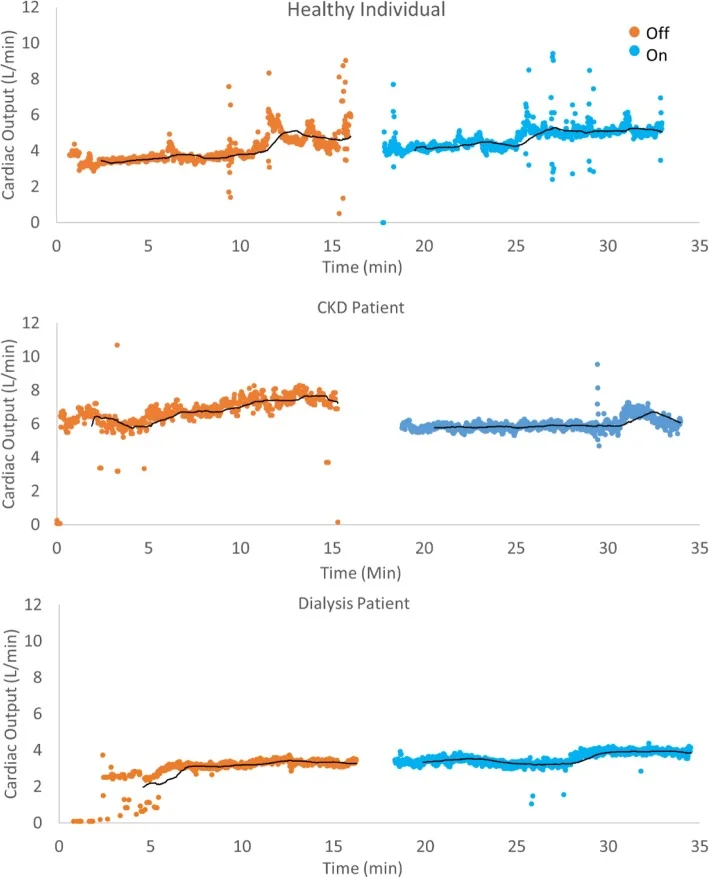
Non-pneumatic compression garments are well-tolerated in renal dysfunction but yield inconsistent hemodynamic responses.
Does not support routine hemodynamic use in renal dysfunction; leaves open need for controlled trials to resolve inconsistent responses.
Original Research
APR 2019GrantSeminars in Dialysis
Hepato‐splanchnic circulatory stress: An important effect of hemodialysis
The gastro-intestinal tract is being increasingly recognized as the site of key pathophysiological processes in the hemodialysis patient. Intestinal dysbiosis, increased intraluminal toxin production, and increased intestinal permeability are commonly observed processes which contribute to the pathogenesis of cardiovascular disease and thus elevated mortality. The acute circulatory effects of dialysis itself may contribute significantly to the development of gastrointestinal dysfunction as a result of both local and distant effects. Additionally, the liver, a relatively unknown entity in this process, has a substantial role as a functional barrier between the portal and systemic circulation and in the metabolism of pathogenic gut-derived uremic toxins. Here we summarize the evidence for acute gastro-intestinal and hepatic effects of hemodialysis and identify gaps in knowledge to date which require further study.
RCT
NOV 2016BuchananJournal of the American Society of Nephrology
There was no significant difference in the cardiovascular response to HDF or HD with cooled dialysate as assessed with intradialytic MRI.
HDF and cooled HD may be used interchangeably without differential CV effects; confirms their equivalence on intradialytic responses.
Cross-Sectional Study
SEP 2016PittmanHemodialysis International
Collection of daily patient reported outcomes is feasible and demonstrates differential patient experience in chronic kidney disease
INTRODUCTION: Patient reported outcomes (PROs) are a critical metric documenting the impact of disease and treatment from the patient's perspective. A variety of generic and disease specific PRO measures (PROMs) are used in chronic kidney disease (CKD) but studies are primarily cross-sectional. None of the available PROMs are designed for frequent iterative application. METHODS: An online PROM for daily use in dialysis and CKD 4/5 patients was developed. The custom website utilised visual analogue scales to capture 6 PROs (general well being (GWB), pain, sleep, breathing, energy, and appetite). Outcomes of interest were uptake, response rates, intermodality variation, and change in PRO corresponding to predefined events. FINDINGS: Forty-three patients submitted at least once and 34 submitted beyond 30 days. Median follow-up was 247 days, 64% male, age 62 ± 12 years. In individuals submitting for >30 days, dialysis patients had significantly worse median scores compared to CKD for sleep (47[32-80], 97[76-99], P = 0.003), appetite (66[50-96], 97[88-100], P = 0.008), energy (47[40-89], 84[67-96], P = 0.031), and GWB (63[49-94], 93[71-98], P = 0.026). Patients demonstrated a variety of stable bandwidths of response, deviations from this were associated with specific events e.g., acute admission, vascular procedures, disturbed fluid status, and dialysis start. DISCUSSION: We successfully introduced an online, patient acceptable, iterative PROM that discriminates symptom burden, cross-sectionally, and longitudinally. Further work will prospectively examine the predictive power of changes in PRO and more rigorously investigate the potential use of these methods to optimise patient care.
Guideline
JUL 2015WangPeritoneal Dialysis International
ISPD Cardiovascular and Metabolic Guidelines in Adult Peritoneal Dialysis Patients Part I – Assessment and Management of Various Cardiovascular Risk Factors
Adopt updated ISPD guidelines for CV and metabolic risk management in adult PD patients; extends prior recommendations with current evidence synthesis.
Guideline
JUL 2015WangPeritoneal Dialysis International
ISPD Cardiovascular and Metabolic Guidelines in Adult Peritoneal Dialysis Patients Part II – Management of Various Cardiovascular Complications
Standardizes CV assessment and management in peritoneal dialysis; extends consensus while leaving key evidence gaps open for targeted trials.
Case-Control Study
JUL 2015AssiPLoS ONE
The Association between Polyclonal Combined Serum Free Light Chain Concentration and Mortality in Individuals with Early Chronic Kidney Disease
A major component of increased mortality risk in people with chronic kidney disease (CKD) is associated with non-traditional cardiovascular risk factors including markers of inflammation. We studied whether a novel marker of systemic inflammation, elevated serum combined polyclonal immunoglobulin free light chains (cFLC), was an independent risk factor for increased all-cause mortality in people with CKD stage 3. In a prospective community based cohort study, 1695 participants with stage 3 CKD and no cases of monoclonal gammopathy had cFLC concentrations measured. cFLC levels were determined using the summation of Freelite kappa and lambda assays. All other bioclinical variables were collected at the time of sample collection. Kaplan-Meier plots and Cox proportional hazards analysis was used to assess the relationship between high cFLC levels (>43.3 mg/L) and mortality. There were 167 deaths (10%) after a median of 1375 days. cFLC levels at recruitment were higher in participants who died compared with those who were alive at the end of the study; median: 46.5 mg/L (IQR: 36.1-65.4 mg/L) and 35.4 mg/L (28.1-46.6 mg/L) respectively, P <0.001. Kaplan-Meier survival analysis demonstrated participants with cFLC >43.3 mg/L levels had an increased risk of mortality compared to people with normal cFLC levels (P <0.001). Elevated cFLC levels were independently associated with worse survival (Hazard ratio: 1.50; 95% confidence interval: 1.04-2.16; P=0.03). Other independent risk factors for worse survival were: older age, male gender, previous cardiovascular event, lower eGFR and higher high sensitivity C-reactive protein (hsCRP). To conclude, high cFLC levels predict increased mortality in people with stage 3 CKD, independent of established risk factors and other markers of inflammation.
cohort · n=9,343
JAN 2015WeirBlood Purification
No significant difference in all-cause mortality between low and high dialyzability ACE inhibitors (relative risk 1.1, 95% CI 0.9-1.3, p = 0.6).
Findings do not support ACE inhibitor selection by dialyzability in hemodialysis; leaves open need for randomized confirmation.
Original Research
OCT 2014HuangSeminars in Dialysis
Euvolemia in Hemodialysis Patients: A Potentially Dangerous Goal?
Dialysis patients have high mortality rate and the leading cause of death is cardiovascular disease. Uremic cardiomyopathy differs from that due to conventional atherosclerosis, where cardiovascular changes result in ineffective circulation and lead to tissue ischemia. Modern dialysis has significant limitations with fluid management probably the most challenging. Current evidence suggests that both volume overload and aggressive fluid removal can induce circulatory stress and multi-organ injury. Furthermore, we do not have accurate volume assessment tools. As a result, targeting euvolemia might result in more harm than benefit with conventional hemodialysis therapy. Therefore, it might be time to consider a degree of permissive over-hydration until we have better tools to both determine ideal weight and improve current renal replacement therapy so that the process of achieving it is not so fraught with the current dangers.
Original Research
AUG 2013KorsheedNephron Clinical Practice
Creation of an Arteriovenous Fistula Is Associated with Significant Acute Local and Systemic Changes in Microvascular Function
BACKGROUND: Native arteriovenous fistulae (AVF) are the vascular access of choice for haemodialysis. The consequences of AVF formation on microvascular function, locally or systemically, are unknown. METHODS: We recruited 43 predialysis patients undergoing AVF formation. Patients were studied 2 weeks prior to the planned AVF operation and 2 weeks postoperatively. Thirteen patients with failed AVF were subsequently utilised as sham controls. Laser Doppler perfusion imaging was used to measure subcutaneous microvascular blood flow. Microvascular function was assessed as an increase in perfusion in response to iontophoretic administration of vasodilatory stimuli assessing endothelial-dependent (ED) and non-endothelial-dependent (NED) vasodilatation. RESULTS: Patients with successful AVF formation had a significantly reduced ED vasodilatation in the fistula arm (-36 ± 46%, p < 0.001). Only NED vasodilatation was significantly reduced in the non-fistula arm (23 ± 40%, p = 0.01). Patients who had an unsuccessful AVF operation exhibited no recordable changes. CONCLUSIONS: Formation of an AVF was associated with local and remote changes in microcirculation. Further assessments are underway to examine the contributions of local shear stress, vasoreactive substances and the autonomic responses. Although the clinical significance of these findings is not yet clear, it is intriguing that AVF formation is associated with such widespread and profound changes in microperfusion.
Risk Assessment
JUN 2013GameNephron Clinical Practice
Chronic Kidney Disease and the Foot in Diabetes - Is Inflammation the Missing Link?
Diabetes is commonly complicated by the development of chronic kidney disease (CKD). Equally prevalent is the development of diabetic foot disease and it is now recognised that there is a higher risk of the development of foot disease and major amputation in those patients with CKD. This is particularly marked in those patients with end-stage kidney disease receiving renal replacement therapy for which there are many possible mechanisms, including the effect of dialysis on tissue hypoxia. What has been recognised recently is that the risk of the development of foot disease appears to start prior to the onset of renal replacement therapy. Whilst this may be due to the fact that the emphasis of care shifts towards the requirements of the patients' renal disease, here we discuss the possibility that the presence of a foot ulcer itself may contribute to the development or progression of CKD through repeated episodes of sepsis or chronic inflammation, or both.
Original Research
APR 2013ScottFrontline Gastroenterology
Acute kidney injury is independently associated with death in patients with cirrhosis
BACKGROUND AND AIMS: Current creatine-based criteria for defining acute kidney injury (AKI) are validated in general hospitalised patients but their application to cirrhotics (who are younger and have reduced muscle mass) is less certain. We aimed to evaluate current definitions of AKI (acute kidney injury network (AKIN) criteria) in a population of cirrhotic patients and correlate this with outcomes. METHODS: We prospectively identified patients with AKI and clinical, radiological or histological evidence of cirrhosis. We compared them with a control group with evidence of cirrhosis and no AKI. RESULTS: 162 cirrhotic patients were studied with a mean age of 56.8±14 years. They were predominantly male (65.4%) with alcoholic liver disease (78.4%). 110 patients had AKI: 44 stage 1, 32 stage 2 and 34 stage 3. They were well matched in age, sex and liver disease severity with 52 cirrhotics without AKI. AKI was associated with increased mortality (31.8% vs 3.8%, p<0.001). Mortality increased with each AKI stage; 3.8% in cirrhotics without AKI, 13.5% stage 1, 37.8% stage 2 and 43.2% stage 3 (p<0.001 for trend). Worsening liver disease (Child-Pugh class) correlated with increased mortality: 3.1% class A, 23.6% class B and 32.8% class C (p=0.006 for trend). AKI was associated with increased length of stay: median 6.0 days (IQR 4.0-8.75) versus 16.0 days (IQR 6.0-27.5), p<0.001. Multivariate analysis identified AKI and Child-Pugh classes B and C as independent factors associated with mortality. CONCLUSIONS: The utility of AKIN criteria is maintained in cirrhotic patients. Decompensated liver disease and AKI appear to be independent variables predicting death in cirrhotics.
Cross-Sectional Study
MAR 2012McIntyreBritish Journal of General Practice
Treatment needs and diagnosis awareness in primary care patients with chronic kidney disease
BACKGROUND: GPs in England are required to keep a register of patients with chronic kidney disease (CKD). National Institute for Health and Clinical Excellence (NICE) guidelines recommend regular follow-up, but patients are perceived to be low risk and not requiring active management. AIM: To assess treatment needs of CKD stage 3 patients in primary care, as well as their awareness of CKD. DESIGN AND SETTING: A cross-sectional analysis from a longitudinal prospective study in 32 general practices. METHOD: A total of 1741 participants underwent clinical assessment including urine and blood tests. Participants were asked about awareness of their CKD. Results were reviewed and a letter recommending treatment in line with NICE guidelines was sent to their GP. RESULTS: The mean age of participants was 73 ± 9 years; 60% (n = 1052) were female and diabetes was present in 17%; 67% of participants required further intervention. Most required improved control of hypertension (n = 1576; 33.1% of cohort). Other recommendations included advice to investigate anaemia (n = 1142; 8.2%) or stop nephrotoxic drugs (n = 1120; 7.5%). Less than 6% of participants met NICE criteria for referral to nephrology services and 41% were unaware of their CKD diagnosis. Multivariable analysis identified subjects with formal educational qualifications, age <75 years, estimated glomerular filtration rate (eGFR) 30-44 ml/min/1.73 m(2), and significant albuminuria as more likely to be aware of their diagnosis. CONCLUSION: The study data show that the majority of patients required at least one intervention to improve the management of their CKD. Most interventions could be delivered in primary care and only a minority required nephrology referral. Many patients were unaware of their CKD diagnosis, and efforts should be made to improve this to facilitate involvement in their care.
Cohort Study
FEB 2011KorsheedNephrology Dialysis Transplantation
Arteriovenous fistula creation is linked to a ~1.1 m/s reduction in arterial stiffness.
BACKGROUND: Native arteriovenous fistula (AVF) is the vascular access of choice and its use cf. catheters is associated with sustained reduction in mortality. This may be due to factors beyond dialysis catheter-associated sepsis. This study aimed to investigate the impact of AVF formation on the spectrum of cardiovascular factors that might be important in the pathophysiology of cardiovascular diseases in chronic kidney disease (CKD) patients. METHODS: We recruited 43 pre-dialysis patients who underwent AVF formation. Patients were studied 2 weeks prior to AVF operation and 2 weeks and 3 months post-operatively. Haemodynamic variables were measured using pulse wave analysis, carotid femoral pulse wave velocity (CF-PWV) by applanation tonometry and AVF blood flow by Doppler ultrasound. Bioimpedence analysis was performed and patients underwent serial transthoracic echocardiography. RESULTS: AVF formation was successful in 30/43 patients. Two weeks post-operatively, total peripheral resistance decreased (-17 ± 18%, P = 0.001), stroke volume tended to rise (12 ± 30 mL, P = 0.053) and both heart rate (4 ± 8 bpm, P = 0.01) and cardiac output (1.1 ± 1.5 L/min, P = 0.001) increased. Systolic and diastolic blood pressures (BPs) reduced (-9 ± 18 mmHg; -9 ± 10 mmHg; ≤ P = 0.006) and CF-PWV reduced (-1.1 ± 1.5 m/s, P = 0.004). Left ventricular ejection fraction (LVEF) increased (6 ± 8%, P < 0.001). All the observed changes were largely maintained after 3 months. No change in hydration status/body composition was observed. CONCLUSIONS: AVF formation resulted in a sustained reduction in arterial stiffness and BP as well as an increase in LVEF. Overall, post-AVF adaptations might be characterized as potentially beneficial in these patients and supports the widespread use of native vascular access, including older or cardiovascular compromised individuals.
review
MAY 2010OduduJournal of Renal Care
Haemodialysis and peritoneal dialysis may contribute to the development of heart failure and sudden cardiac death by inducing repetitive myocardial ischaemia and altering cardiovascular performance.
Dialysis modifications should not yet alter practice; leaves open whether they reduce cardiovascular morbidity or mortality in CKD.