JACCXu et al.Original Research
JZ
Jason Zhensheng Qu
Intensive Care Unit Cognitive Disorders
Massachusetts General Hospital
About
Research focus
Intensive Care Unit Cognitive Disorders
Impact
85 pubs · 866 cites · h-index 14
Affiliations
Publications
JACCXu et al.Original Research
Hemodynamic Patterns During Veno-Arterial Extracorporeal Membrane Oxygen Flow Ramp Testing in Cardiogenic Shock
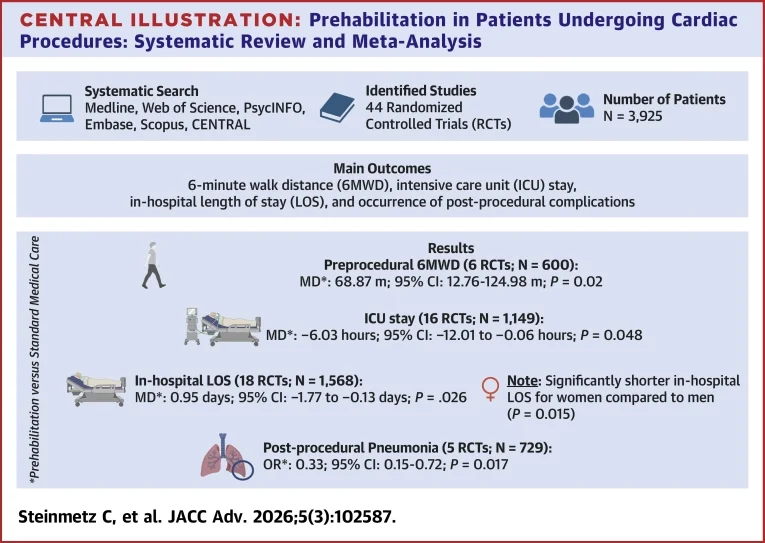
JACC AdvancesSteinmetz et al.meta-analysis
Prehabilitation before cardiac procedures may enhance functional capacity and recovery, especially in women.
Should not yet change practice; leaves open need for multicenter RCTs to confirm benefits.
Journal of Lipid ResearchWiredu et al.Original Research
Long-chain polyunsaturated fatty acid lipid and oxylipin alterations in postoperative delirium after cardiac surgery
Lipids play a crucial role in signaling, membrane dynamics, and inflammatory regulation, yet their involvement in postoperative delirium pathogenesis remains unclear. This study examined serum lipidomic alterations in postoperative delirium and assessed the effects of dexmedetomidine treatment on these changes. Lipidomic profiling was conducted at baseline and postoperative day 1 in two independent cohorts of cardiac surgery patients. Mass spectrometry-based shotgun lipidomics and targeted lipid analyses were used to assess lipidomes and oxylipins, respectively. Cardiac surgery was associated with decreased serum lysophospholipids. Postoperative delirium was associated with increased long-chain polyunsaturated fatty acid phospholipids, particularly phosphatidylethanolamines, and elevated oxylipins. Dexmedetomidine, a potential delirium-mitigating medication, reduced long-chain polyunsaturated fatty acid phospholipids. These findings highlight lipid modulation as a potential target for postoperative delirium prevention.
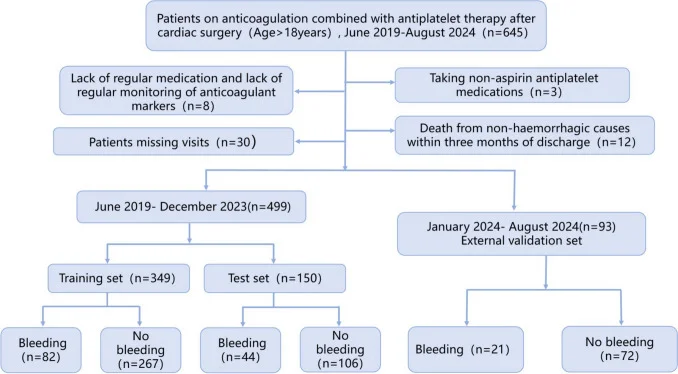
International Journal of Clinical PharmacyHan et al.cohort
The Random Forest model demonstrated the best performance for predicting 3-month bleeding risk, achieving an AUC of 0.85 in internal validation and 0.82 in external validation.
May inform individualized bleeding risk assessment post-CABG/valve surgery on dual therapy; leaves open prospective outcome validation.
Einalou et al.Original Research
Noninvasive continuous blood pressure prediction using FlexNIRS and machine learning during carotid endarterectomy.
Observational analysis predicts mean arterial pressure in patients, highlighting a noninvasive alternative for BP monitoring.
Cheong et al.Review
Styletubation-The Ultimate Holy Grail for Endotracheal Intubation?
Review highlights that styletubation improves intubation time and success rates in various airway scenarios, indicating its potential as standard care.
Journal of Clinical MedicineWiredu et al.Original Research
Systemic Inflammation and Metabolic Changes After Cardiac Surgery and Postoperative Delirium Risk
Introduction: Postoperative delirium (POD) remains a major complication in geriatric surgical care, with poorly understood molecular mechanisms. Emerging evidence links cardiac surgery to elevated markers of neurologic injury, even in cognitively intact individuals. While neuroinflammation is the prevailing model, a more detailed characterization of the systemic inflammatory and metabolic response to surgery may offer deeper insights into POD pathogenesis. Methods: We used the 7K SomaLogic proteomic platform to analyze preoperative and postoperative day-one serum samples from 78 patients undergoing cardiac surgery with cardiopulmonary bypass. We compared proteomic profiles within individuals (pre- vs. post-surgery) and between those who developed POD and those who did not. Functional analyses were performed to identify relevant biological pathways. A composite metabo-inflammatory score (MIF) was derived to quantify systemic derangement. We modeled the association between POD and age, sex, baseline cognition, and MIF score. Results: Cardiac surgery with CPB was associated with marked inflammatory responses across all subjects, including increased IL-6, CRP, and serum amyloid A. Compared to controls, POD cases showed greater metabo-inflammatory shifts from baseline (average logFC = 2.56, p < 0.001). Lower baseline cognitive scores (OR = 0.74, p = 0.019) and higher MIF scores (OR = 1.03, p = 0.013) were independently associated with increased POD risk. Conclusions: Cardiac surgery with CPB elicits a significant metabo-inflammatory response in all patients. However, those who develop POD exhibit disproportionately greater dysregulation.
International Journal of SurgeryWang et al.Cohort Study
Developing predictive nomogram models using quantitative electroencephalography for brain function in type a aortic dissection: a prospective observational study
BACKGROUND: Type A aortic dissection (TAAD) remains a significant challenge in cardiac surgery, presenting high risks of adverse outcomes such as permanent neurological dysfunction and mortality despite advances in medical technology and surgical techniques. This study investigates the use of quantitative electroencephalography (QEEG) to monitor and predict neurological outcomes during the perioperative period in TAAD patients. METHODS: This prospective observational study was conducted at the hospital, involving patients undergoing TAAD surgery from February 2022 to January 2023. QEEG parameters, including the dynamic amplitude-integrated electroencephalography (aEEG) grade, which assesses changes in brain function over time, alongside aEEG and relative band power (RBP), were monitored and analyzed to assess brain function preoperatively, intraoperatively, and within 2 hours postoperatively. A predictive nomogram model was developed using these QEEG metrics along with other clinical variables to forecast neurological outcomes. RESULTS: In this study, we analyzed the factors contributing to adverse outcomes (AO) and transient neurological dysfunction (TND) following TAAD surgery. For AO, multivariable analysis identified pre-mental status (odds ratio [OR] = 4.652, 95% confidence interval [CI] = 2.316-10.074, P < 0.001), cardiopulmonary bypass time (OR = 1.014, 95% CI = 1.006-1.023, P = 0.001), and dynamic aEEG grade (OR = 9.926, 95% CI = 4.493-25.268, P < 0.001) as independent risk factors. The AO model showed high discriminative ability with an area under the curve of 0.888 (95% CI = 0.818-0.960) and good calibration (Brier score = 0.0728). For TND, significant preoperative differences included dynamic aEEG grade ( P < 0.001) and Log(Post-RBP Alpha%) (6.00 vs. 4.00, P < 0.001). Multivariable analysis identified cardiopulmonary bypass time (OR = 1.014, 95% CI = 1.006-1.023, P = 0.001), Post-RBP Alpha% (OR = 0.263, 95% CI = 0.121-0.532, P < 0.001), and dynamic aEEG grade (OR = 12.444, 95% CI = 5.337-30.814, P < 0.001) as independent risk factors. The TND model had an area under the curve of 0.893 (95% CI = 0.844-0.941) and good calibration (Brier score = 0.125). These findings highlight the role of QEEG in predicting postoperative neurological dysfunction in TAAD patients. CONCLUSION: Through perioperative QEEG monitoring of TAAD patients, combined with clinical indicators such as cardiopulmonary bypass time and preoperative mental status, we developed clinical predictive models for AO and TND after surgery. These models allow for early detection of postoperative brain function impairment, as assessed by QEEG parameters monitored intraoperatively and during the first 2 hours after surgery, a period chosen based on clinical definitions of delayed awakening and supported by the findings of this study. This study provides evidence supporting postoperative brain function monitoring in TAAD patients, with potential clinical implications for improved outcomes.
Frontiers in AnesthesiologyNamirembe et al.RCT
Longitudinal impact of cross-clamp duration on postoperative sleep disturbance and quality of life in elderly cardiac surgery patients: a secondary analysis of the MINDDS trial
Objectives This study aimed to assess the enduring impact of cross-clamp duration on postoperative sleep disturbance and functional outcomes (up to 180 days) in cardiac surgery patients. Design This is a secondary analysis of data from a randomized, double-blind trial comparing dexmedetomidine to placebo for delirium prevention (Minimizing ICU Neurological Dysfunction with Dexmedetomidine-induced Sleep). Setting Data from patients recruited at a tertiary medical center in Boston, Massachusetts, between March 2017 and February 2022 were analyzed in January 2024. Participants The study included 394 patients aged ≥60 who underwent cardiac surgery with cardiopulmonary bypass. Interventions The primary exposure was cross-clamp time, while secondary exposures included surgical type [isolated coronary artery bypass graft (CABG) or not] and dexmedetomidine randomization. Measurements and main results The primary outcome was sleep quality, assessed using the PROMIS Sleep Disturbance questionnaire at 30, 90, and 180 days postoperatively. Secondary outcomes encompassed cognitive function and health-related quality of life in various domains. Sleep quality, measured by PROMIS scores, showed improvement over time, and did not differ based on cross-clamp duration (MD 0.74 points, 95% CI: −0.57, 2.07), procedure type (MD 2.14 points, 95% CI: 0.29, 3.99), or dexmedetomidine (MD 0.9 points, 95% CI: −1.33, 1.5). However, isolated CABG patients reported sleep disturbance at all time points. Notably, extended cross-clamp time (>90 min) significantly worsened the trajectories of mental health (90-day: MD −2.37 points, 95% CI: −4.35, −0.39; 180-day: MD −2.68 points, 95% CI: −4.62, −0.73) and applied cognition (180-day: MD: −2.59 points, 95% CI: −4.49, −0.68). Conclusion Regardless of the duration of the cross-clamp, sleep quality tends to improve over time following cardiac surgery. However, cross-clamp times that last longer than 90 min have been identified as a risk factor for self-reported declines in mental health and applied cognition.
Brain and BehaviorWang et al.Early-Phase Clinical Trial
Quantitative Electroencephalography Monitoring in Type A Aortic Dissection Surgery: A Clinical Case Review and Prospective Applications
PURPOSE: This review explores advanced methods for assessing perioperative cerebral function in Type A aortic dissection (TAAD) patients, with a focus on quantitative electroencephalography (QEEG). It highlights the critical issue of cerebral malperfusion, which is associated with higher mortality and poor prognosis during the perioperative phase in TAAD patients. METHOD: The review centers on the utilization of QEEG as a pivotal tool for the extensive monitoring of brain function at various stages: preoperatively, intraoperatively, and postoperatively. It elaborates on the foundational principles of QEEG, including the mathematical and computational analysis of electroencephalographic signals, enriched with intuitive graphical representations of cerebral functional states. FINDING: QEEG is presented as an innovative approach for the real-time, noninvasive, and reliable assessment of cerebral function. The review details the application of QEEG in monitoring conditions such as preoperative cerebral malperfusion, intraoperative deep hypothermic circulatory arrest, and postoperative recovery of cerebral function in patients undergoing TAAD treatment. CONCLUSION: Although QEEG is still in an exploratory phase for TAAD patients, it has shown efficacy in other domains, suggesting its potential in multimodal brain function monitoring. However, its broader application requires further research and technological advancements.
Journal of the American Heart AssociationWang et al.Observational Study
Quantitative Electroencephalography for Predication of Neurological Dysfunction in Type A Aortic Dissection: A Prospective Observational Study
Type A aortic dissection presents challenges with postoperative cerebral complications, and this study evaluates the predictive value of quantitative electroencephalography for perioperative brain function prognosis.
Anesthesia & AnalgesiaWiredu et al.Original Research
Evaluating Neurological Biomarkers in Serum After Major Cardiac Surgery: A Study of Tau, Neurofilament Light Chain, Glial Fibrillary Acidic Protein, and Ubiquitin C-terminal Hydrolase L1
HealthcareLee et al.Case Report
Structured Routine Use of Styletubation for Oro-Tracheal Intubation in Obese Patients Undergoing Bariatric Surgeries—A Case Series Report
The aim of this case series report is to provide a new topical view of styletubation (video intubating stylet technique) in obese patients undergoing bariatric surgeries. In contrast to various conventional direct laryngoscopes (DLs), videolaryngoscopes (VLs) have been applied in such obese populations with potentially difficult airway complications. The safety and effectiveness of VLs have been repeatedly studied, and the superiority of VLs has then been observed in and advocated for routine use. In this article, among our vast use experiences with styletubation (more than 54,998 patients since 2016) for first-line routine tracheal intubation, we present the unique experience to apply the styletubation technique in obese patients undergoing bariatric surgery. Consistent with the experiences applied in other patient populations, we found the styletubation technique itself to be swift (the time to intubate from 5 s to 24 s), smooth (first-attempt success rate: 100%), safe (no airway complications), and easy (high subjective satisfaction). The learning curve is steep, but competency can be enhanced if technical pitfalls can be avoided. We, therefore, propose that the styletubation technique can be feasibly and routinely applied as a first-line airway modality in obese patients undergoing bariatric surgery.
Lee et al.Case Report
Routine Use of Styletubation for Oro-Tracheal Intubation in Obese Patients Undergoing Bariatric Surgeries-A Case Series Report
The aim of this case-series report article is to provide a new topical view of the styletubation (video intubating stylet technique) in obese patients undergoing bariatric surgeries. In contrast to various conventional direct laryngoscopes (DLs), videolaryngoscopes (VLs) have been applied in such obese population with potentially difficult airway populations. The safety and effectiveness of VLs have been repeatedly studied and the superiority of VLs then has been observed and is advocated as a routine use. In this article, among our vast use experiences of the styletubation (more than 54,998 patients since 2016) for routine tracheal intubation, we present such unique experience to apply such intubating technique in obese patient undergoing bariatric surgery. Consistent with the experiences applied in other patient populations, we found the styletubation technique to be swift (the time to intubate from 5 s to 24 s), smooth (first-attempt success rate: 100%), safe (no airway complications), and easy (high subjective satisfaction). The learning curve can be steep but is easily overcome if technical pitfalls are avoided. We, therefore, propose that the styletubation technique can be feasibly applied for tracheal intubation in obese patients undergoing bariatric surgery.
SurgeriesLuk et al.Review
Styletubation versus Laryngoscopy: A New Paradigm for Routine Tracheal Intubation
Laryngoscopy for tracheal intubation has been developed for many decades. Among various conventional laryngoscopes, videolaryngoscopes (VLs) have been applied in different patient populations, including difficult airways. The safety and effectiveness of VLs have been repeatedly studied in both normal and difficult airways. The superiority of VLs then has been observed and is advocated as the standard of care. In contrast to laryngoscopy, the development of video-assisted intubating stylet (VS, also named as styletubation) was noticed two decades ago. Since then, sporadic clinical experiences of use have appeared in the literature. In this review article, we presented our vast use experiences of the styletubation (more than 55,000 patients since 2016). We found this technique to be swift (the time to intubate from 3 s to 10 s), smooth (first-attempt success rate: 100%), safe (no airway complications), and easy (high subjective satisfaction and fast learning curve for the novice trainees) in both normal and difficult airway scenarios. We, therefore, propose that the styletubation technique can be feasibly applied as universal routine use for tracheal intubation.
Luk et al.Original Research
Styletubation versus Laryngoscopy: A New Paradigm for Routine Tracheal Intubation
Laryngoscopy for tracheal intubation has been developed for many decades. Among various conventional laryngoscopes, videolaryngoscopes (VL) have been applied in different patient populations, including difficult airways. The safety and effectiveness of VL have been repeatedly studied in both normal and difficult airways. The superiority of VL then has been observed and is advocated as the standard of care. In contrast to laryngoscopy, the development of video-assisted intubating stylet (VS, also named as styletubation) has been noticed two dec-ades ago. Since then, sporadic clinical experiences of use have appeared in literature. In this re-view article, we presented our vast use experiences of the styletubation (more than 55,000 pa-tients since 2016). We found this technique is swift (the time to intubate: from 3 s to 10 s), smooth (first-attempt success rate: 100%), safe (no airway complications), and easy (high subjective satis-faction and fast learning curve for the novice trainees) in both normal and difficult airway sce-narios. We therefore propose styletubation technique can be feasibly applied as universal rou-tine use for tracheal intubation.
Wang et al.Cohort Study
The impact of age in acute type A aortic dissection
Retrospective study shows increased mortality and postoperative complications with advancing age in acute type A aortic dissection, indicating high surgical risks for older adults.
Brain CommunicationsBoncompte et al.Original Research
Cognitive function mediates the relationship between age and anaesthesia-induced oscillatory-specific alpha power
Cognitive decline is common among older individuals, and although the underlying brain mechanisms are not entirely understood, researchers have suggested using EEG frontal alpha activity during general anaesthesia as a potential biomarker for cognitive decline. This is because frontal alpha activity associated with GABAergic general anaesthetics has been linked to cognitive function. However, oscillatory-specific alpha power has also been linked with chronological age. We hypothesize that cognitive function mediates the association between chronological age and (oscillatory-specific) alpha power. We analysed data from 380 participants (aged over 60) with baseline screening assessments and intraoperative EEG. We utilized the telephonic Montreal Cognitive Assessment to assess cognitive function. We computed total band power, oscillatory-specific alpha power, and aperiodics to measure anaesthesia-induced alpha activity. To test our mediation hypotheses, we employed structural equation modelling. Pairwise correlations between age, cognitive function and alpha activity were significant. Cognitive function mediated the association between age and classical alpha power [age → cognitive function → classical alpha; β = −0.0168 (95% confidence interval: −0.0313 to −0.00521); P = 0.0016] as well as the association between age and oscillatory-specific alpha power [age → cognitive function → oscillatory-specific alpha power; β = −0.00711 (95% confidence interval: −0.0154 to −0.000842); P = 0.028]. However, cognitive function did not mediate the association between age and aperiodic activity (1/f slope, P = 0.43; offset, P = 0.0996). This study is expected to provide valuable insights for anaesthesiologists, enabling them to make informed inferences about a patient’s age and cognitive function from an analysis of anaesthetic-induced EEG signals in the operating room. To ensure generalizability, further studies across different populations are needed.
HealthcareWu et al.Case Report
Styletubation in Bariatric Surgery: A Case Report
Direct laryngoscopes and videolaryngoscopes are the dominant endotracheal intubation tools. The styletubation technique (using a video-assisted intubating stylet) has shown its advantages in terms of short intubation time, high success rate, less required stimulation, and operator satisfaction. The learning curve can be steep but is easily overcome if technical pitfalls are avoided. Conditions that make styletubation challenging include secretions/blood, short/stiff neck, restricted mouth opening and cervical spine mobility, anatomical abnormalities over head and neck regions, obesity, etc. In this clinical report, we present the effectiveness and efficiency of the routine use of the styletubation for tracheal intubation in a super-super-obese patient (BMI 103 kg/m2) undergoing bariatric surgery with laparoscopic sleeve gastrectomy.