GW
Gavin Wood
Orthopaedic implants and arthroplasty
Queen's University
About
Research focus
Orthopaedic implants and arthroplasty
Impact
64 pubs · 1,621 cites · h-index 15
Affiliations
Publications
Review
JUN 25DiazJournal of Personalized Medicine
Patellofemoral Joint Replacement for Isolated Patellofemoral Osteoarthritis: Mid- to Long-Term Survivorship and Functional Outcomes
Retrospectively evaluated implant survivorship and outcomes in patients with isolated patellofemoral osteoarthritis, indicating positive results.
Case Report
DEC 2025MalhotraJournal of Orthopaedic Reports
A novel approach to medial acetabular wall reconstruction in revision total hip arthroplasty using screwless porous metal augments: A report of two cases
Background Medial acetabular wall defects present unique reconstruction challenges in revision total hip arthroplasty (rTHA). Traditional approaches using bone grafts risk failure due to reabsorption due to poor vascular supply or minimal loading, while metal augments typically require screw fixation that poses neurovascular risks in the medial wall. We present a novel technique using screwless porous metal augments in medial acetabular reconstruction. Case report Two patients underwent rTHA for medial acetabular defects. Case 1 involved a 63-year-old woman with acetabular fracture and progressive protrusion after initial revision. Case 2 was an 85-year-old man with component loosening and medial migration. Both were reconstructed using free-floating trabecular metal augments placed within medial defects, supported by cancellous allograft and overlying porous metal cups. Short-term follow-up (3–6 months) demonstrated stable component positioning without migration in both cases. Conclusion Screwless porous metal augments represent a promising alternative for medial acetabular reconstruction, avoiding neurovascular risks while potentially providing an osteoconductive scaffold for bone restoration. Longer-term studies are needed to confirm biological integration and clinical durability.
Registry Study
OCT 2025RigholtActa Orthopaedica
Trends and predictors of cemented fixation in arthroplasty for patients with a hip fracture: a Canadian Joint Replacement Registry study
BACKGROUND AND PURPOSE: Cemented fixation is widely recommended during arthroplasty for hip fractures, yet it has not been universally adopted by all surgeons and hospitals. We aimed to identify which factors were associated with a higher likelihood of cemented fixation. METHODS: We identified patients ≥ 55 years old with hip fractures treated with primary arthroplasty in Canada between 2012 and 2022. We determined fixation method along with several surgeon and hospital characteristics from the Canadian Joint Replacement Registry and other Canadian databases. We used logistic regression to estimate the odds ratios (ORs) of the association between these covariates and cemented fixation. RESULTS: We identified 65,823 patients who underwent arthroplasty for hip fractures. The proportion of cases with cemented fixation for hemiarthroplasty increased by 30 percentage points over the study period; the proportion for total hip arthroplasty (THA) remained relatively stable. High-volume hospitals (≥ 500 annual hip arthroplasties with ≥ 25% of these for fractures) were least likely to cement, OR = 0.30; 95% confidence interval (CI) 0.27-0.34 vs low-volume hospitals (< 500 cases/< 25% for fractures). High volume surgeons (≥ 50 hips/year, ≥ 16/year for fractures) had an OR of 0.80 (CI 0.75-0.84) compared with < 50 hips/year surgeons. Teaching hospitals were more likely to cement, OR = 1.16 (CI 1.10-1.22). The OR of cemented fixation for hemiarthroplasty (vs THA) rose from 1.13 (CI 0.99-1.29) at the start of the study period to 2.17 (CI 2.02-2.33) at the end. CONCLUSION: The use of cemented fixation in hip fracture arthroplasty has increased across Canada over the last decade. However, surgeons and hospitals that treat more hip fracture patients are less likely to cement. The proportion of cemented fixation increases with patient age. Cement use is more common in hemiarthroplasty than in THA.
Original Research
AUG 2025DiazJournal of Clinical Medicine
High Variability in the Use of Cement for Femoral Stem Fixation in Hip Fractures—An Analysis of the Canadian Joint Replacement Registry
National survey reveals only 53% of orthopaedic surgeons use cement for femoral fixation, indicating substantial variability.
Randomized Controlled Trial
AUG 2025RigholtClinical Orthopaedics and Related Research
Cemented Fixation in Arthroplasty for Hip Fractures Does Not Increase Cardiopulmonary Complications: A Secondary Analysis of the HIP ATTACK Trial
Secondary analysis reveals no increase in cardiopulmonary events with cemented fixation in hip arthroplasty, suggesting reinforced recommendations for its use.
Original Research
MAR 2025CalderoneGait & Posture
Measuring static and dynamic lower limb alignment in patients with advanced knee osteoarthritis using markerless motion capture
PURPOSE: Marked lower limb malalignment is associated with the progression of knee osteoarthritis (OA). Markerless motion capture is a computer-vision tool that can measure lower limb alignment throughout both static and dynamic tasks. RESEARCH QUESTIONS: The primary objective of the study was to quantify static and dynamic lower limb alignment for patients diagnosed with advanced medial and lateral knee OA. This analysis also explored sex differences in alignment from the static and dynamic tasks. The secondary objective was to investigate if the mean knee adduction angle during quiet standing and the peak knee adduction angle during the first half of stance of gait were associated. METHODS: Ninety-two patients (37 male, 55 female) diagnosed with advanced knee OA (83 with predominantly medial knee OA, and 9 with predominantly lateral knee OA) completed a quiet standing task and a gait task for markerless motion capture using Theia3D software. Two-way analysis of variance tests were used to investigate sex differences and unpaired t-tests were computed to compare knee OA groups. RESULTS: Statistically significant differences in the knee adduction angle were found between medial and lateral knee OA groups during quiet standing (p < 0.001) and the first half of stance of gait (p < 0.0001). A strong correlation was found (Spearman's ρ = 0.86, p < 0.0001) in lower limb alignment between the static and gait tasks. SIGNIFICANCE: These results show how markerless technology was able to quantify lower limb alignment and demonstrates potential for integration into clinic to assess musculoskeletal diseases.
Randomized Controlled Trial
AUG 2024YanJournal of ISAKOS Joint Disorders & Orthopaedic Sports Medicine
Osteochondroplasty with or without Labral Repair is more Cost-Effective Compared to Arthroscopic Lavage with or without Labral Repair for Treatment of Young Adults with Femoroacetabular Impingement: A Cost-Utility Analysis based on Data From a Randomized Controlled Trial
The objective of this study was to conduct a cost-utility analysis of osteochondroplasty with or without labral repair compared to arthroscopic lavage with or without labral repair for femoroacetabular impingement (FAI) from a Canadian public payer perspective.
Original Research
JUN 2024RigholtArthroplasty Today
Trends in Cemented Fixation in Hemiarthroplasty for Hip Fractures in Canada
Bacground: The use of cemented fixation is widely recommended in hip arthroplasty for hip fractures, although it is not used universally. Methods: We describe the trends in cementing prevalence in hemiarthroplasty for hip fractures in Canada for patients ≥55 years old between April 2017 and March 2022. Results: The national prevalence of cemented fixation increased from 43% in 2017/18 to 58% in 2021/22, but there was a large variety of both the baseline prevalence and the trends across the country and between individual hospitals. The proportion of surgeons only performing cementless fixation fell from 30% to 21% between 2018/19 and 2021/22. Conclusions: As cemented fixation is now universally recommended, more coordination is needed to track these trends and to help drive implementation of this evidence-based practice across Canada.
RCT
NOV 2022KhojaClinical Orthopaedics and Related Research
The Supercapsular Percutaneously Assisted Total Hip Approach Does Not Provide Any Clinical Advantage Over the Conventional Posterior Approach for THA in a Randomized Clinical Trial
BACKGROUND: The supercapsular percutaneously assisted total hip (SuperPATH) approach was designed to be a less-invasive surgical approach to THA. This approach may have advantages, including less pain, more rapid mobilization, and shorter hospital length of stay. However, few published studies have compared the SuperPATH technique to existing standard approaches in a randomized, controlled manner. QUESTIONS/PURPOSES: In this study, we asked: (1) Do patients with SuperPATH demonstrate improved early function, using the timed up and go (TUG) and timed stair climbing (TSC) tests as instruments for assessment during the first 100 days postoperatively? (2) Are patient-reported outcomes, in the form of Oxford Hip Scores, better for the SuperPATH group during the first 3 months postoperatively? (3) Are opioid consumption and pain score in the first month postoperatively different between patients undergoing SuperPATH and patients undergoing a standard posterior approach? (4) Are patients with SuperPATH able to discontinue using mobility aids and return to work more quickly? METHODS: Between February 2017 and May 2019, 46% (46 of 101) of patients were recruited among 101 patients who met our inclusion criteria. Those 46 patients were randomized into two groups on the day of surgery; 54% (25 of 46) were assigned to the study group (SuperPATH approach) and 46% (21 of 46) were assigned to the control group (posterior approach). The SuperPATH technique uses the plane between the gluteus medius and the external rotators while preserving the piriformis and the superior aspect of the capsule. A percutaneous accessory portal is required for acetabular reaming and cup insertion. The posterior approach involves releasing short rotators and partially releasing the quadratus femoris while retaining the gluteus maximus's insertion site. The two groups did not differ in BMI, gender, American Society of Anesthesiologists class, surgical side, or diagnosis. The length of stay, component position, and blood loss were similar between the groups, but the operative time was longer in the SuperPATH group than in the group with the posterior approach. One patient from the control group was lost to follow-up and was excluded. Three patients in the study group had complications. The TUG and TSC tests are timed tasks for the patient. In the TUG test, patients stand from sitting, walk 3 meters and turn, walk back, and sit down. The TSC test measures the time taken to ascend and descend 10 steps. Patients were followed for 24 months for any complications. RESULTS: The TUG time at 100 days was 8.9 ± 2.6 seconds in the SuperPATH group and 8.7 ± 2.2 seconds in the posterior group (mean difference -0.2 seconds [95% CI -1.8 to 1.4]; p = 0.98); results were similar at other timepoints. The TSC time at 100 days was 11.6 ± 4.7 seconds in the SuperPATH group and 10.8 ± 3.6 seconds in the posterior group (mean difference -0.7 seconds [95% CI -3.5 to 2.1]; p = 0.88), and there were no differences between the two groups at all timepoints. The Oxford Hip Score showed no difference at any point postoperatively. At 6 weeks, it was 36 ± 5.9 points in the SuperPATH group and 38 ± 8.6 in the posterior group (mean difference 1.7 points [95% CI -2.7 to 6.1]; p = 0.51). At 3 months, it was 42± 6.7 points in the SuperPATH group and 41 ± 10.2 points in the posterior group (mean difference 0.7 points [95% CI -6.2 to 4.9]; p = 0.34). Patients' pain scores did not show any differences at all tested timepoints (mean difference 1 [95% CI -0.2 to 2.2]; p = 0.102). Total opioid consumption in the posterior group was higher in the first 2 weeks than that in the SuperPATH group (mean difference 6 [95% CI 2.3 to 9.9]; p = 0.001), but there was no difference in either group by week 4 (mean difference 0.4 [95% CI -0.5 to 1.4]; p = 0.36). There was no difference in return to work between the SuperPATH group and the posterior approach group (mean difference 6 days [95% CI -29 to 41]; p = 0.74). Discontinuation of mobility aids was similar between the two groups (mean difference 0.9 days [95% CI -25 to 27]; p = 0.94). CONCLUSION: The SuperPATH approach had no clinical advantages over the posterior approach, resulted in more complications, and only showed a short-term reduction in pain. The results of our small randomized controlled trial can be used to calculate future sample sizes, but our data suggest that any differences favoring the SuperPATH approach are likely to be small and transient. This approach should not be used routinely in clinical practice until an adequately powered trial shows clinically important differences in patient-relevant endpoints. The improved postoperative recovery is likely multifactorial and not dependent on the invasiveness of the approach. LEVEL OF EVIDENCE: Level II, therapeutic study.
RCT
APR 2022KayOrthopaedic Journal of Sports Medicine
Effect of Osteochondroplasty on Time to Reoperation After Arthroscopic Management of Femoroacetabular Impingement: Analysis of a Randomized Controlled Trial
Background: A subset of patients with femoroacetabular impingement (FAI) fail arthroscopic management. It is not clear which patients will fail surgical management; however, several surgical and patient factors, such as type of procedure and age, are thought to be important predictors. Purpose: This time-to-event analysis with a 27-month follow-up analysis compared the effect of (1) arthroscopic osteochondroplasty with or without labral repair versus (2) arthroscopic lavage with or without labral repair on the time to reoperation in adults aged 18 to 50 years with FAI. Study Design: Randomized controlled trial; Level of evidence, 1. Methods: Eligible participants had been randomized in a previous study trial to a treatment of arthroscopic osteochondroplasty or arthroscopic lavage with or without labral repair. Using the comprehensive data set from the Multinational Femoroacetabular Impingement Randomized controlled Trial, all reoperations until 27 months after surgery were identified. The analysis was conducted using a Cox proportional hazards model, with percentage of patients with a reoperation evaluated in a time-to-event analysis as the outcome. The independent variable was the procedure, with age and impingement subtype explored as potential covariates. The effects from the Cox model were expressed as the hazard ratio (HR). All tests were 2-sided, with an alpha level of .05. Results: A total of 108 patients in the osteochondroplasty group and 106 patients in the lavage group were included. The mean age of the patients included in the study was 36 ± 8.5 years. Overall, 27 incident reoperations were identified within the 27-month follow-up, with an incidence rate of 6 per 100 person-years. Within the osteochondroplasty group, 8 incident reoperations were identified (incidence rate, 3.4 per 100 person-years), while within the lavage group, 19 incident reoperations were identified (incidence rate, 8.7 per 100 person-years). The hazard of reoperation for patients undergoing osteochondroplasty was 40% of that of patients undergoing lavage (HR, 0.40 [95% CI, 0.17-0.91] P = .029). Conclusion: This study demonstrated that for adults between the ages of 18 and 50 years with FAI, arthroscopic osteochondroplasty was associated with a 2.5-fold decrease in the hazard of reoperation at any point in time compared with arthroscopic lavage. Registration: NCT01623843 ( ClinicalTrials.gov identifier).
Narrative Review
AUG 2021LoOpen Forum Infectious Diseases
Management of Mycobacterium tuberculosis Prosthetic Joint Infection: 2 Cases and Literature Review
(TBPJI) is uncommon but can be encountered in immunocompromised patients or those from tuberculosis-endemic regions. A lack of clinical suspicion and experience with TBPJI often leads to a delay in diagnosis. We report 2 cases of TBPJI in a Hungarian-Canadian and Iranian-Canadian immigrant, respectively. Both were treated with concurrent surgical and medical therapy. We also performed a literature review on TBPJI case reports, outlining their diagnosis and management.
Cohort Study
MAR 2021ParkCurrent Orthopaedic Practice
Hospital environmental influences and the rate of periprosthetic joint infections at a Canadian tertiary center: a retrospective chart review
Background: As the demand for total joint arthroplasty is expected to increase substantially in the coming years, the reported incidence of periprosthetic joint infections (PJI) after total joint arthroplasty is also expected to increase. This study investigated both patient factors and hospital factors and their relation to rates of infection for total hip arthroplasty (THA) and total knee arthroplasty (TKA). To the authors’ knowledge, this is the first paper to investigate rates of hand washing and carpet removal to PJIs. Methods: Traditional sample size calculations based on effect sizes or differences were not applicable in this observational, retrospective study. The annual rate of irrigation and debridement (I&D) at our institution was calculated. Hospital environmental influences for carpet removal and hand hygiene were obtained from hospital archives. Patient risk factors were obtained from the electronic patient charting system (PCS). Results: The average rate of I&D for THA was 2.8% and TKA was 1.9%. Hospital environmental influences (carpet removal and hand hygiene) were not associated with the rates of I&D. Conclusions: Despite rates of hand hygiene at our institution being reported as having a greater than 90% success rate, we did not find any association between successful hand hygiene practices and rates of PJI. Our study revealed that the rate of infection for THA at our institution was nearly two to three times higher than what was reported in the literature, and we believe poor patient selection played a factor. Level of Evidence: Level III.
Registry Study
JAN 2021AtreyJournal of Bone and Joint Surgery
Infection: The Final Frontier of Arthroplasty Management
A Proposal for a Global Periprosthetic Joint Infection Registry from a Multinational Collaborative Group, the GAIA (Global Arthroplasty Infection Association)
Cohort Study
SEP 2020AyeniThe American Journal of Sports Medicine
Osteochondroplasty and Labral Repair for the Treatment of Young Adults With Femoroacetabular Impingement: A Randomized Controlled Trial
Background: Femoroacetabular impingement (FAI) is a condition known to cause hip pain in young adults. Purpose: To evaluate the efficacy of the surgical correction of FAI via arthroscopic osteochondroplasty with or without labral repair compared with arthroscopic lavage of the hip joint with or without labral repair. Study Design: Randomized controlled trial; Level of evidence, 1. Methods: A total of 220 male and female participants aged 18 to 50 years with nonarthritic FAI suitable for surgical treatment were recruited for the trial at 10 clinical centers in Canada, Finland, and Denmark between October 2012 and November 2017, of whom 214 were included in the final analysis. In the osteochondroplasty group, cam- and/or pincer-type lesions were resected using fluoroscopic guidance. In the lavage group, the joint was washed out with 3 L of normal saline. Surgeons were instructed to repair the labrum in both groups if it was mechanically unstable once probed, showing visible displacement or chondrolabral separation. The primary outcome was patient-reported pain (using the 100-point visual analog scale [VAS]) at 12 months. Secondary outcomes included hip function (Hip Outcome Score [HOS] and International Hip Outcome Tool), physical and mental health (12-Item Short Form Health Survey), and health utility (EuroQol–5 Dimensions) at 12 months as well as any reoperations and other hip-related adverse events at 24 months. Results: At 12 months, there was no difference in pain (VAS) between the groups (mean difference [MD], 0.11 [95% CI, –7.22 to 7.45]; P = .98). Also, 88.3% (189/214) of participants had a labral tear, of which 60.3% were repaired. For the secondary outcomes, there were no significant differences between treatment groups, with the exception of the HOS activities of daily living domain in which lavage showed significant improvement compared with osteochondroplasty (MD, –5.03 [95% CI, −10.40 to −0.03]; P = .049). By 24 months, there were significantly fewer reoperations reported in the osteochondroplasty group (8/105) than the lavage group (19/104) (odds ratio, 0.37 [95% CI, 0.15-0.89]; P = .026). The primary reasons for a reoperation included hip pain (15/27; 55.6%) and a reinjury of the labrum (11/27; 40.7%). Conclusion: Both the osteochondroplasty and the lavage groups with or without labral repair for FAI had significantly improved pain or function significantly at 1 year. By 2 years, the reoperation rate was significantly lower in the osteochondroplasty group. Registration: NCT01623843 ( ClinicalTrials.gov identifier)
Risk Assessment
SEP 2019BorgesBMJ Open
Effects of accelerated versus standard care surgery on the risk of acute kidney injury in patients with a hip fracture: a substudy protocol of the hip fracture Accelerated surgical TreaTment And Care tracK (HIP ATTACK) international randomised controlled trial
INTRODUCTION: Inflammation, dehydration, hypotension and bleeding may all contribute to the development of acute kidney injury (AKI). Accelerated surgery after a hip fracture can decrease the exposure time to such contributors and may reduce the risk of AKI. METHODS AND ANALYSIS: Hip fracture Accelerated surgical TreaTment And Care tracK (HIP ATTACK) is a multicentre, international, parallel-group randomised controlled trial (RCT). Patients who suffer a hip fracture are randomly allocated to either accelerated medical assessment and surgical repair with a goal of surgery within 6 hours of diagnosis or standard care where a repair typically occurs 24 to 48 hours after diagnosis. The primary outcome of this substudy is the development of AKI within 7 days of randomisation. We anticipate at least 1998 patients will participate in this substudy. ETHICS AND DISSEMINATION: We obtained ethics approval for additional serum creatinine recordings in consecutive patients enrolled at 70 participating centres. All patients provide consent before randomisation. We anticipate reporting substudy results by 2021. TRIAL REGISTRATION NUMBER: NCT02027896; Pre-results.
cohort · n=297
MAY 2019LalondeCanadian Journal of Surgery
The 30-day readmission rate was 2.6% (n=8), and overall failure rate (including inpatient transfers) was 6.7% (n=20); in-hospital complications increased the risk of readmission/transfer by 11.4 times (p<0.001).
Short-stay TJA programs show low readmission; leaves open whether current screening criteria optimally identify at-risk patients.
RCT · n=3,000
APR 2019BorgesBMJ Open
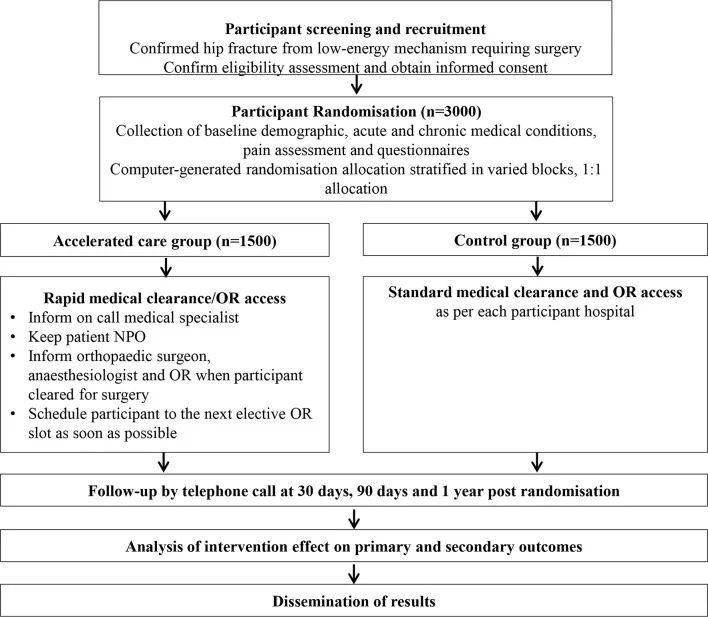
Accelerated hip fracture surgery within 6 hours is evaluated against standard care for 90-day mortality.
Does not yet alter hip fracture surgery timing; leaves open benefit of 6-hour acceleration pending HIP ATTACK results.
Review
OCT 2018AlhifziThe Journal of Knee Surgery
All-Polyethylene Tibial Components in Total Knee Replacement: Early Failures
In total primary knee replacement surgery, the use of all-polyethylene tibial (APT) components has many advantages, including no backside wear and no linear dissociation. In addition, the greater polyethylene thickness permits more conservative bone resection compared with that for metal-backed components, with a lower unit cost and similar functional results. Thus, the use of an APT in primary total knee arthroplasty remains an attractive option. This is a review of 158 patients who underwent primary knee replacement using APT components from a single manufacturer. Data collection included age, American Society of Anesthesiology physical status classification, body mass index (BMI), type of deformity, the presence of diabetes mellitus, rate of revision, and characteristics associated with early failure of the components. Average follow-up time was 40 months. The revision rate for any reason was 5.6%, and the average BMI in revision cases was 37.6. Patients with a higher BMI (≥ 37.6) were significantly more likely to require revision surgery than patients with a lower BMI (p = 0.04). In our sample, high BMI was a contributing factor for early failures in total knee replacements using an APT component. Generally, polyethylene tibial components used for primary knee replacements are safe and effective, with good outcomes and subsequent lower costs to the health care system.
Cohort Study
OCT 2018WoodCanadian Journal of Surgery
Outcomes of hip and knee total joint arthroplasty in a Canadian inmate population over a 10-year period
Background: Little information exists regarding the risk of complications in inmates who receive total hip or knee arthroplasties in Canada. Inmates tend to be less healthy owing to socioeconomic factors and an increased number of medical and psychiatric comorbidities. We compared revision and complication rates of total joint replacements in a cohort of incarcerated Canadians versus a cohort of non-inmates. Methods: We obtained a list of all Canadian inmate inpatient hospital visits with diagnostic/procedure codes of primary hip or knee arthroplasty within the last 10 years from our institution’s discharge abstract database. Demographic data and information related to the perioperative course, along with any data related to postoperative complications/readmissions, were obtained through manual chart review. Results: The inmate group consisted of 20 men (mean age 58 yr) with a total of 24 primary total joint arthroplasties; the comparison group included 171 men (mean age 62 yr). Postoperatively, the inmates had a 4-fold increased risk of major complication compared with non-inmates (33.3% v. 7.6%; odds ratio 4.21, p = 0.01). The inmates’ revision rate was 20.8% compared with 5.8% in the comparison group (p = 0.03). The most common cause for revision in the inmate group was infection, with a rate of 16.7% compared with 3.5% in the comparison group (p = 0.03). Conclusion: Patients requiring total joint arthroplasty who are inmates in the Canadian penitentiary system are at increased risk of complication and revision surgeries following total joint arthroplasty.
Original Research
JAN 2017WoodJournal of Anesthesia and Surgery
Exploring Patients Perceptions of Their Surgeon Based on Attire
Background: Physician attire is an important factor in the patient’s first impression of their doctor. The purpose of this study is to determine how different forms of attire impact patient perceptions of their physicians within our orthopaedic clinics.Methods: A survey was distributed to new patients visiting an orthopedic surgery clinic within a 9 month span at a Canadian outpatient hospital. Each participant also received either a male or female photo sheet depicting 6 different forms of physician attire: Surgical scrubs and white coat, surgical scrubs alone, formal wear with white coat, formal wear alone, business suit and casual wear. Demographic data and general questions related to surgeon’s attire as well as specific questions pertaining to the pictures provided were collected.Results: 100 patients responded to the survey. Most respondents agreed that physician attire was important and they expected their surgeon to be dressed professionally. Respondents felt strongly that there was an association between how a physician dressed and their perceived ability to dispense care. There was a significant preference for the surgeons wearing a white coat. The least favored surgeon attire overall was casual wear.Discussion: The results from our survey identify the importance of surgeon’s attire in the patient’s perception of their surgeon as a health care provider. Attire was identified as influencing patient confidence and possible likelihood of compliance/follow-up.Conclusion: We have identified the white coat as being an important adjunct to the surgeon’s attire that embodies professionalism and inspires confidence in a surgeon.