
JAMA CardiolOstrominski et al.RCT

Valsartan reduces myocardial intracellular volume progression by ~5 mL/m² vs. placebo in early HCM.
Supports early valsartan in sarcomeric HCM; extends VANISH to CMR tissue remodeling.

Christine E. Seidman works in Heart Failure / Cardiomyopathy affiliated with Brigham and Women's Hospital.
Christine E. Seidman is the Thomas W. Smith Professor of Medicine and Genetics at Harvard Medical School and director of the Cardiovascular Genetics Center at Brigham and Women's Hospital. She is a cardiologist whose laboratory studies genetic causes of hypertrophic and dilated cardiomyopathy and congenital heart defects. She received her MD from George Washington University School of Medicine in 1978, completed internal medicine residency at Johns Hopkins Hospital, and completed cardiology fellowship training at Massachusetts General Hospital.
705 pubs · 89,338 cites · h-index 150
MD
George Washington University School of Medicine
1978
BS in Biochemistry
Harvard University
Thomas W. Smith Professor of Medicine and Genetics
Harvard Medical School / Brigham and Women's Hospital · 2005 - Present
Director, Cardiovascular Genetics Center
Brigham and Women's Hospital · 1992 - Present
Investigator
Howard Hughes Medical Institute · 1994 - 2024
Attending physician, Cardiovascular Division
Brigham and Women's Hospital · 1987 - Present
Professor of Medicine and Genetics
Harvard Medical School / Brigham and Women's Hospital · 1998 - 2005
JAMA CardiolOstrominski et al.RCT
Supports early valsartan in sarcomeric HCM; extends VANISH to CMR tissue remodeling.
Cardiac electrophysiology and arrhythmias · Edgewise Therapeutics (United States)
cardiac myosin inhibitors such as Camzyos and aficamten may be on-off switches for myosin, while EDG-7500, which is a cardiac sarcomere modulator, is more about controlling the rate of interaction. With the company's more controlled approach, there may be fewer side effects
JCI InsightEmter et al.
Cardiologist and CEO, Ottawa Heart Institute · University of Ottawa Heart Institute
The clinical picture was interesting, manifesting an age-dependent bimodal whereby individuals developing DCM in childhood had severe disease (often ending in death), whereas those who developed the phenotype in adulthood tended to have a less severe form of disease. Previously, several mutations in tropomyosin have been identified to be associated with HCM rather than DCM.
Journal of the American College of CardiologyLakdawala et al.
JACC Basic to Translational ScienceGreen et al.preclinical
A novel transgenic porcine model of MYH7 R403Q accurately recapitulates the structural, physiological, and multi-omic characteristics of human hypertrophic cardiomyopathy, offering a valuable platform for translational studies.
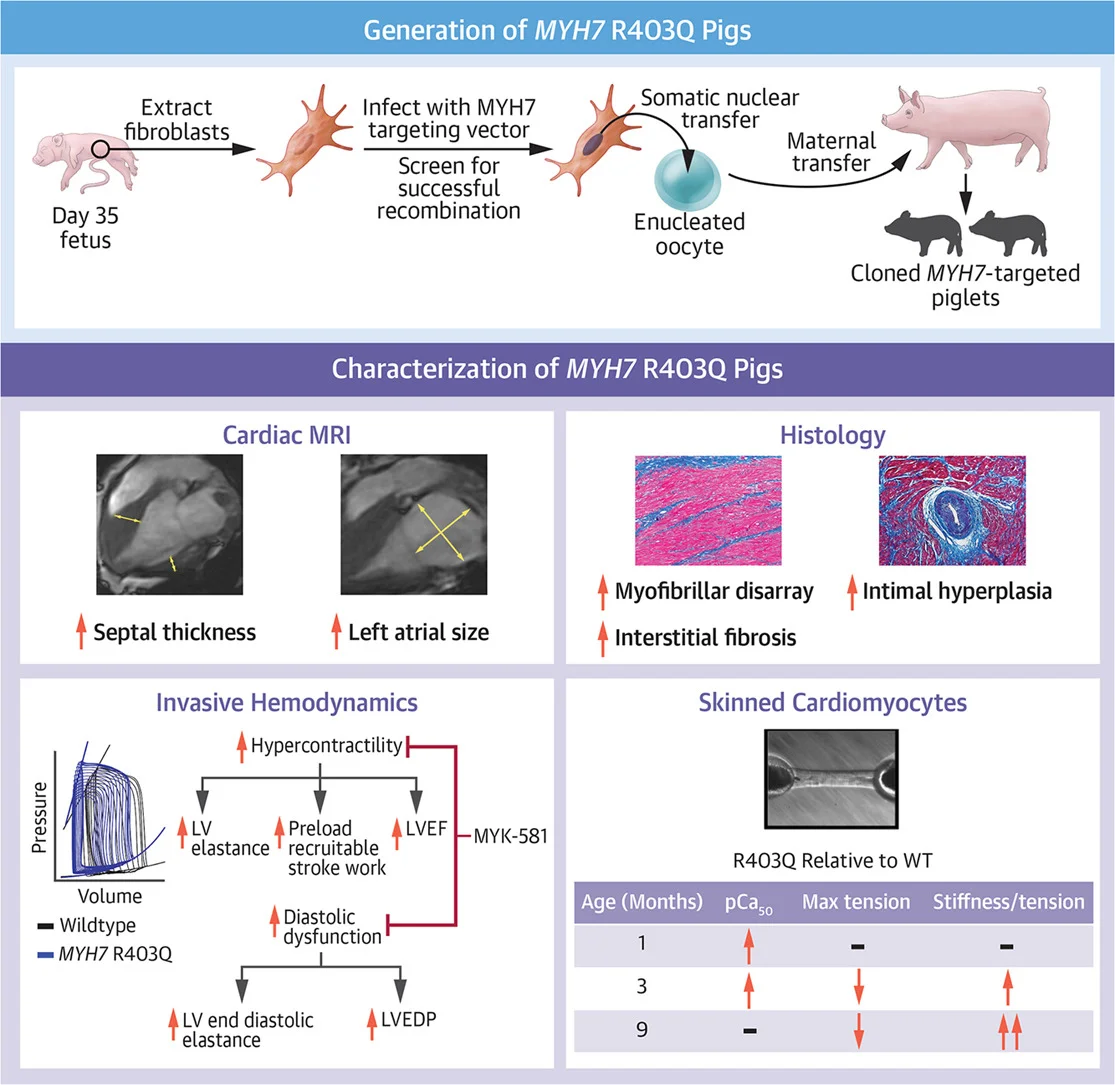
JACC Heart FailureBowen et al.editorial
Because clinical and imaging biomarkers explain only 25% of the variability in right ventricular function in repaired tetralogy of Fallot, genetic variants in cardiomyopathy genes are explored as unidentified contributing factors.

Heart Failure / Cardiomyopathy · Chonnam National University
This was interesting, because cardiomyopathies are usually thought of as diseases of heart muscle cells only.
Science Translational MedicineAdami et al.
Circulation Heart FailureBalakrishnan et al.cohort
The SHaRe registry tracked 3,117 genotyped patients with dilated cardiomyopathy to see how genetic subtypes affect atrial fibrillation risk. Over a median of 4.5 years, the cumulative prevalence of atrial fibrillation was 56.7% for patients with the LMNA genotype, compared to 24.4% for the TTN genotype and 23.6% overall. The authors conclude this supports genotype guided monitoring for the arrhythmia.

Heart Failure / Cardiomyopathy · Brigham and Women's Hospital
Only this level of resolution allows us to see that cardiomyopathies do not uniformly trigger the same pathological pathways. Rather, different mutations evoked specific and some shared responses that lead to heart failure. These genotype-specific responses point to the importance of genotyping.
European Heart JournalReichart et al.
CirculationTsoutsman et al.preclinical
Double-mutant mice develop severe HF and early death; leaves open whether compound mutations worsen human FHC prognosis.
JACCMoolman et al.Prognostic Study
Uncovers genetic variants linked to sudden death in cardiovascular conditions, suggesting targeted screenings.
JACCGersh et al.Guideline
JACCFatkin et al.Original Research
May support precision medicine in dilated cardiomyopathy; leaves open confirmation in larger trials before practice change.
Proceedings of the National Academy of SciencesDutta et al.cohort
May support refined HCM risk stratification for MYH7 carriers; extends structural interface mapping to outcomes but leaves prospective validation open.
JCI InsightVu et al.Original Research
Reveals apelin analog reverses pulmonary arterial hypertension and right ventricular failure, indicating its therapeutic potential.
JACC Basic to Translational SciencePfaller et al.preclinical
R-pioglitazone demonstrates potential as a disease-modifying therapy for hypertrophic cardiomyopathy by reversing fibrosis and hypertrophy in a murine model.
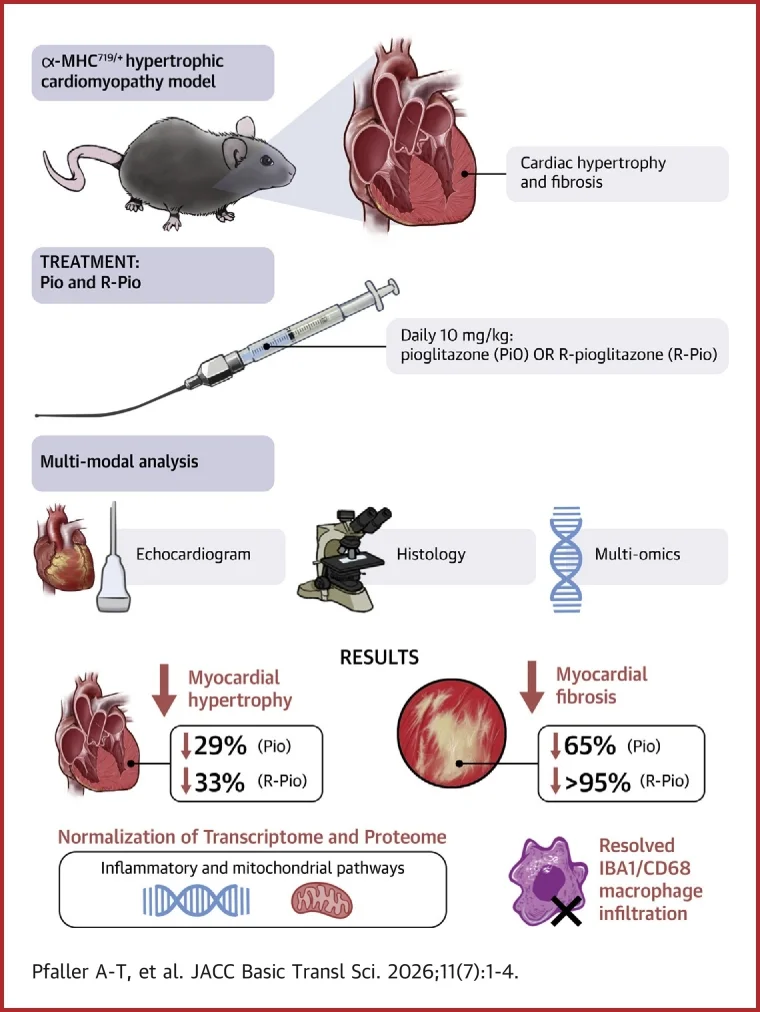
CirculationNeyazi et al.Animal Study
Should not yet change cardiac sarcoidosis management; leaves open whether targeting periplakin autoantibodies improves outcomes.
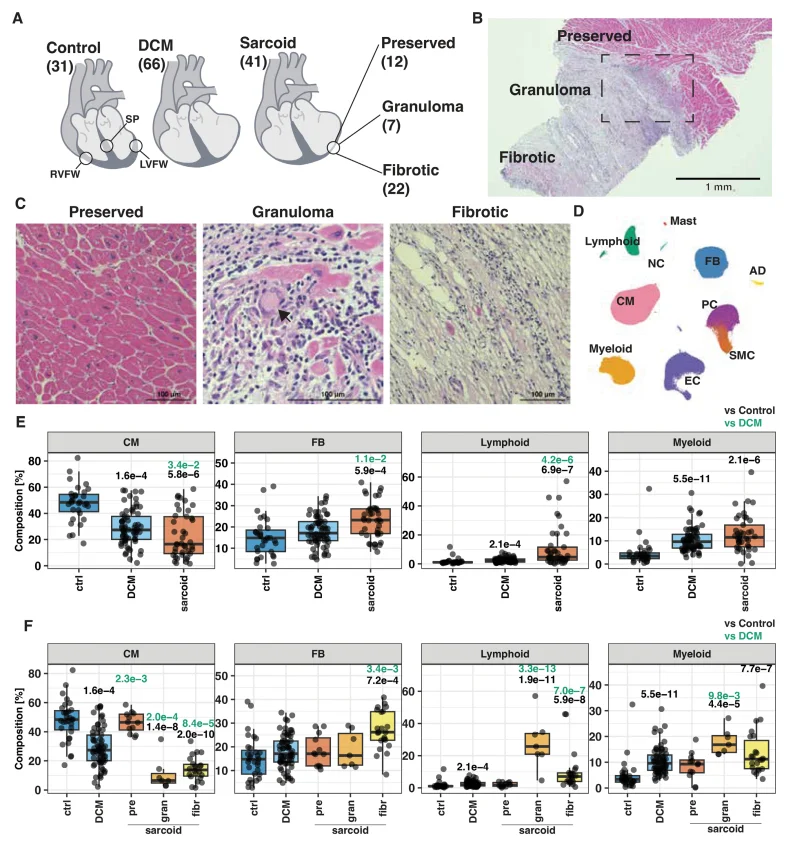
Dutta et al.Original Research
Analysis reveals critical molecular interfaces in hypertrophic and dilated cardiomyopathy variants, suggesting implications for patient risk stratification.
Circulation ResearchXiao et al.preclinical
A novel genetically barcoded iPSC platform enables scalable and reliable functional assessment of variants of unknown significance in congenital heart disease.


