GeroScienceOsawa et al.Cohort Study
SB
Stefania Bandinelli
Nutrition and Health in Aging
Azienda Sanitaria di Firenze
About
Research focus
Nutrition and Health in Aging
Impact
743 pubs · 91,828 cites · h-index 141
Affiliations
Publications
Cell ReportsOlinger et al.Longitudinal Study
Circulating cell type senescence signatures track distinct dimensions of health status and trajectories in human longitudinal cohorts
Examines health status indicators in longitudinal cohorts, suggesting senescence biomarkers track health trajectories.
Nature AgingKuo et al.Longitudinal Study
Longitudinal changes in epigenetic clocks predict survival in the InCHIANTI cohort
Longitudinal study reveals mortality risk linked to biological aging markers in older adults, suggesting health status changes matter.
Olinger et al.Longitudinal Study
Circulating Cell Type Senescence Signatures Reveal High-Resolution Health Status and Trajectories in Human Longitudinal Studies
SUMMARY Cellular senescence increases in frequency with age and is implicated in age-related pathologies, and identifying circulating biomarkers of senescence holds great diagnostic potential. Circulating senescence signatures are predictive of many age-related traits and diseases, though cell type-specific senescence signatures have not been comprehensively explored. In this study, senescence signatures from the Senescence Catalog (SenCat), including 14 human cell types such as peripheral blood mononuclear cells, renal epithelial cells, vascular smooth muscle cells, among others, are examined for their clinical relevance in circulation in two longitudinal studies: 1,275 participants of the Baltimore Longitudinal Study of Aging (BLSA) and 997 participants of the Invecchiare in Chianti (InCHIANTI) study. Notably, pooled senescence proteins outperformed non-senescence proteins in predicting many clinical parameters such as age and hypertension, and in many instances cell type senescence signatures mapped most strongly to their corresponding health domain. Importantly, the immune cell senescence signature is associated with future onset of several diseases such as diabetes. This study demonstrates that circulating cell type-specific biomarkers of senescence can reveal higher resolution health status than previously attained. HIGHLIGHTS Circulating senescence associated proteins tend to outperform non-senescence proteins as biomarkers of clinical phenotypes in two independent longitudinal studies. A core senescence signature developed from 14 human cell types predicted a range of clinical phenotypes during aging. Cell type senescence signatures more strongly associated with their corresponding health domains. The immune cell senescence signature and others were associated with mortality and diabetes onset, highlighting relevance for assessing health trajectories.
Experimental GerontologyIorio et al.Cohort Study
The skeletal muscle function deficit: From an operational definition to clinic results from the InCHIANTI longitudinal study
Age-related muscle dysfunction is a major contributor to disability, frailty, and poor clinical outcomes in older adults. Skeletal Muscle Function Deficit (SMFD) framework integrates multiple domains as: muscle mass, muscle density, strength, and power to capture a broader spectrum of age-related muscle dysfunction. The primary aims of these analyses are to develop and validate a composite SMFD score and evaluate its association with key geriatric outcome. This study used data from the InCHIANTI follow-up study, involving an initial cohort of 1035 older participants, with a total of 3196 assessments. The SMFD score was computed by assigning quintile-based values of muscle area, density, strength, and lower limb power. Associations with adverse health outcomes, and major chronic diseases were analyzed using mixed-effects models. The SMFD score declined over time from baseline to the third follow-up was: β ± SE:-0.64 ± 0.12 ( p -value < 0.001), β ± SE:-1.94 ± 0.13 (p-value < 0.001), and β ± SE:-4.43 ± 0.14 (p-value < 0.001), respectively, and was associated with: BADL (OR = 0.57; 95 %CI: 0.46–0.69), IADL (OR = 0.70; 95 %CI: 0.66–0.75), poor physical performance (SPPB < 7) (OR = 0.68; 95 %CI: 0.64–0.73), Fried's frailty phenotype (OR = 0.72; 95 % CI: 0.68–0.76), hospitalization (OR = 0.96; 95 %CI: 0.93–0.99), and falls' number (OR = 0.96; 95 %CI: 0.92–0.99). Whereas higher SMFD scores were negatively associated with Parkinson's disease, stroke, and hip osteoarthritis. The SMFD score is a valid, multidimensional measure that predicts adverse outcomes in older adults. It holds promise for use in clinical assessment, risk stratification, and targeted interventions. • Proposal of SMFD operational score integrating muscle mass, density, strength, and power. • The SMFD score declines with aging, reflecting both functional and structural muscle deterioration. • Changes in SMFD scores predict disability, frailty phenotype, poor physical performance, hospitalization, and falls. • SMFD score represents a tool for screening, risk stratification, and interventions in geriatric care and research.
The Journals of Gerontology Series AIuorio et al.Cohort Study
PhenoAge and PhenoAgeAccel do not outperform chronological age in predicting physical performance decline or mortality in community-dwelling older adults
BACKGROUND: Chronological age inadequately captures interindividual variability in aging-related functional decline. Biological age metrics such as PhenoAge and PhenoAgeAccel, based on clinical biomarkers, have shown associations with frailty and mortality in clinical populations, but their utility in predicting physical performance decline in community-dwelling older adults remains uncertain. METHODS: We used data from 979 participants aged ≥65 years in the InCHIANTI (Invecchiare in Chianti) study, with complete baseline biomarker and physical performance data. Associations of standardized (z-scores) chronological age, phenotypic age (PhenoAge), and Phenotypic Age Acceleration (PhenoAgeAccel) with longitudinal changes in physical function (rescaled SPPB [rSPPB], continuous rescaled Short Physical Performance Battery) and 10-year all-cause mortality were analyzed using linear mixed and Cox models, respectively. A secondary analysis in 504 participants with normal baseline physical performance (Short Physical Performance Battery [SPPB] ≥ 10) assessed the predictive value of each rescaled metric for the onset of compromised function (SPPB ≤ 9) at 6 years. Model performance was evaluated using Akaike information criterion (AIC) and area under the receiver operating characteristic curve (AUC). RESULTS: All 3 metrics showed statistically significant positive associations with physical function decline and mortality. Chronological age showed the strongest associations with rSPPB decline (β = -0.41, AIC = 3793) and mortality (hazard ratio [HR] = 2.78). PhenoAge (β = -0. 32, AIC = 4338, HR = 2.57) and PhenoAgeAccel (β = -0.14, AIC = 4642, HR = 1.71) showed weaker effects. Chronological age also outperformed PhenoAge and PhenoAgeAccel in predicting SPPB decline (AUC = 0.71 vs 0.69 and 0.55, respectively). CONCLUSION: While PhenoAge and PhenoAgeAccel are associated with adverse functional outcomes, they do not outperform chronological age in a general older population.
Osteoporosis InternationalBrandi et al.Cross-Sectional Study

Evolving our understanding of vitamin D, periostin levels and cardiovascular risk in the elderly: a cross sectional study
Cross-sectional analysis reveals significant links between periostin, vitamin D, and cardiovascular risk in the elderly, suggesting implications for cardiovascular disease management.
Iorio et al.Longitudinal Study
Skeletal Muscle Function Deficit: An Operational Definition. Results from the InCHIANTI Longitudinal Study
Longitudinal study reports that higher skeletal muscle function deficit scores improve predictions of geriatric outcomes, suggesting better clinical assessment tools.
NutrientsIuorio et al.Cohort Study
Total Cholesterol and Mortality in Older Adults: A Sex-Stratified Cohort Study
Cohort study finds low total cholesterol is linked to higher mortality in older adults, particularly women, suggesting underlying health issues.
GeriatricsLi et al.Original Research
Association Between Ultra-Processed Food Consumption Frequency and Frailty: Findings from the InCHIANTI Study of Aging
Observational analysis shows increased frailty associated with higher ultra-processed food consumption, indicating dietary impact on aging health.
European Journal of Investigation in Health Psychology and EducationLi et al.Original Research
Cardiovascular Health, Assessed by Life’s Essential 8, Is Associated with Lower Risk of Disability Among Older, Community-Dwelling Men and Women
Observational analysis found higher cardiovascular health decreases disability risk in older adults, suggesting public health strategies are vital.
Provost et al.Original Research
No winners or losers: clinical chemistry-based biological aging metrics perform similarly across cohorts and health outcomes.
Analysis reveals that biological aging metrics correlate with health outcomes in diverse cohorts, suggesting similar effectiveness among methods.
Albites-Sanabria et al.Original Research
Can Motor Outcomes Extracted from Wearables Inform on Non-Motor Clinical Outcomes? The Case of Sensor-Derived Turning Information
This study investigated the relationship between sensor-derived real-world turning behavior and nonmotor clinical outcomes in community-dwelling older adults. Two hundred participants wore smartphones with a tri-axial accelerometer and gyroscope on their lower back during daily activities for one week. Thirteen turn digital mobility outcomes (DMOs) were derived and subsequently expanded into 52 metrics by categorizing turns as small (50-100∘), medium (100-150∘), and large (150-200∘). Clinical assessments included fear of falling, self-perceived health, depression (CES-D), living situation, cognitive function (MMSE), and happiness. Results revealed significant associations between turning behavior and multiple nonmotor outcomes. Participants without fear of falling performed more turns per day (799 ± 421 vs. 580 ± 357, p=0.004) with shorter duration, greater angle, and higher angular velocity compared to those with fear. Similarly, individuals reporting good health demonstrated more numerous (774 ± 418 vs. 499 ± 343, p=0.019) and more dynamic turns than those with poor health. Depression correlated predominantly with reduced variability in turning parameters ($r=-0.281$ to 0.221, p< 0.002), while cognitive function showed positive associations with turn angle (r=0.260, p< 0.001) and velocity metrics, and negative correlations with turn duration. Happiness was positively associated with turn velocity (r=0.154-0.195, p< 0.05) and variability measures (r=0.212, p=0.003). These findings suggest that sensor-derived turning behavior may serve as a digital biomarker reflecting psychological, mental, and emotional well-being in older adults, potentially offering new avenues for monitoring and intervention in geriatric care.
npj AgingAlbites-Sanabria et al.Original Research
Walking into aging: real-world mobility patterns and digital benchmarks from the InCHIANTI Study
Mobility is a cornerstone of health and quality of life, particularly in older adults. Digital mobility outcomes (DMOs) from real-world walking data offer crucial insights into the functional status and early markers of mobility decline. This study provides reference values for walking activity, pace, rhythm, and gait bout-to-bout variability in community-dwelling older adults and evaluates the effects of age, sex, height, and weight on these parameters. Using data from 200 older adults (aged 65-94 years) from the InCHIANTI Study and applying the Mobilise-D computational pipeline, we analyzed real-world walking over a week. Significant differences by sex and age were found, with males showing higher walking activity in younger age groups (65-74 and 75-84 years) but not in the oldest group (85-94 years). Additionally, we observed non-linear trends in mobility metrics with age, indicating an accelerated reduction in mobility at certain age ranges. These findings underscore the importance of monitoring real-world walking data to pinpoint critical periods of mobility decline and guide targeted interventions. This work offers valuable benchmarks for clinical assessments and future research.
Mechanisms of Ageing and DevelopmentPellegrino et al.cohort
In 866 subjects followed for up to 9 years, baseline Lgals3bp levels above the median were associated with incident diabetes, metabolic syndrome, chronic liver diseases, and high multimorbidity.
Elevated Lgals3bp levels are a potential biomarker for incident diabetes, metabolic syndrome, and chronic low-grade inflammation.
Frontiers in Public HealthSarma et al.cohort
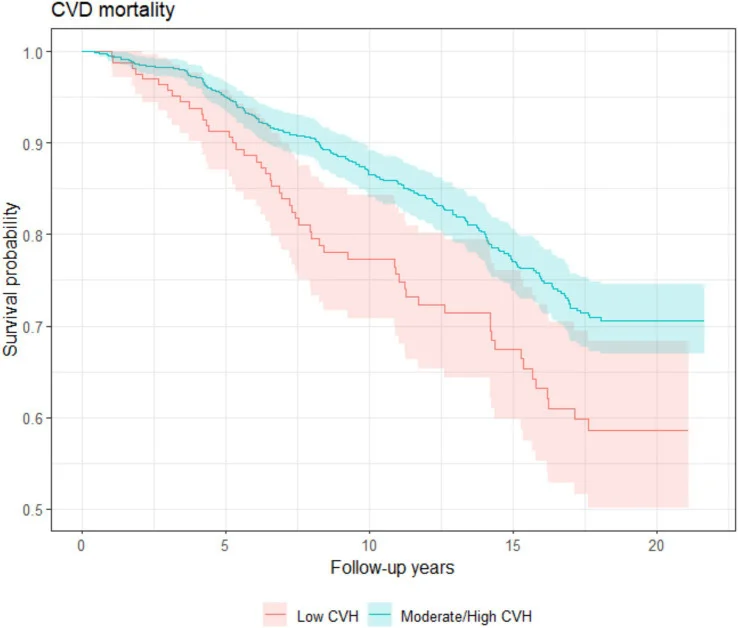
Higher Life's Essential 8 score linked to ~22% lower CVD mortality per SD.
Supports CV health promotion in older adults; hypothesis-generating pending RCTs to confirm mortality benefit.
GeroSciencePellegrino et al.Cohort Study
Role for neurological and immunological resilience in the pathway of the aging muscle powerpenia: InCHIANTI study longitudinal results
The neuromuscular junction shows several degenerative changes with aging, resulting in a reduction of transmission efficacy. These changes, paired with low-grade chronic inflammation, were considered triggers of the aging muscle processes. The main objective of this study is to assess the role of leukocyte count-derived ratios, nerve conduction velocity (NCV), and compound muscle action potential (CMAP) in determining time-dependent reduction in lower limb muscle explosive strength, a condition that has been defined as powerpenia. The InCHIANTI study enrolled a representative sample from the registry lists of two towns in Tuscany, Italy. Baseline data were collected in 1998, with follow-up visits every 3 years. For the purpose of this analysis, we used 1229 subjects and 3814 follow-up assessments. Subjects with lower values of monocyte-to-lymphocyte ratio (ML-ratio) had higher nerve conduction velocity and higher proximal and distal action potential values; moreover, considering the interaction between age for ML-ratio effect, a statistically significant direct association is found with all the electromyography-parameters. Lower limb muscle power shows a gender dimorphism, male subjects having higher values at baseline, but experiencing steeper decline rate during the follow-up, compared to females. Muscle power was inversely associated with ML-ratio, proximal CMAP, distal CMAP, and NCV. Moreover, we found a direct and statistically significant second-order interaction (age for ML-ratio), meaning that at the same age, increasing ML-ratio increases lower limb muscle power. Lastly, also body composition variation across aging is directly associated with lower limb muscle power. Reduced immunological and neurological homeostasis affects the powerpenia phenotype in a large representative sample of Italian men and women.
The journal of nutrition health & agingHidalgo‐Liberona et al.Cohort Study
Association between dairy products intake and frailty transitions in older adults: The InCHIANTI cohort study
To evaluate the association between dairy products consumption and the probability of frailty transitions in community-dwelling older adults. Longitudinal study. We included 863 community-dwelling participants ≥65 years from the Chianti region in Italy. Habitual dietary intake of dairy products ( i.e. , milk, yogurt, and cheese) was assessed in daily servings using a validated food frequency questionnaire (FFQ) at baseline, 3-, 6-, and 9-years of follow-up. Frailty status at each visit was defined using the Fried criteria, and the probability of transitions between different frailty status and death was assessed through multistate models. The associations between dairy product intakes and frailty transitions during the 9-year period were expressed as hazard ratios (HRs) derived from proportional intensity models. The mean age at baseline was 74 ± 7 years and 46% of the participants were male. There were no statistically significant associations between the consumption of total, fermented, or non-fermented dairy products and the probabilities of transition from robust or from pre-frail to any of the other frailty conditions or to death. Conversely, a direct association between the consumption of fermented dairy products and the probability of transition from frail to pre-frail was observed in a model adjusted for age, sex, and energy intake (HR per serving/day = 1.90, 95%CI 1.12−3.22). This association was primarily related to yogurt consumption (HR per serving/day = 4.07, 95%CI 1.38−12.02), as the association with cheese consumption was not significant (HR per serving/day = 1.57, 95%CI 0.91−2.71). In the fully adjusted model, only the association between yogurt consumption and frail to pre-frail transition remained statistically significant (HR per serving/day = 3.68, 95%CI 1.10−12.31). Dairy products, such as milk, yogurt, and cheese, are unlikely to play a predominant role in frailty development in an Italian community-dwelling older population. However, it is advisable to maintain a moderate consumption of dairy products, especially fermented ones, as part of a well-balanced diet to promote healthy aging.
The Journals of Gerontology Series ATravaglini et al.Diagnostic Study
Has Muscle Power Better Discriminative Capacity Compared to Muscle Strength in Predicting Worsening Disability in Older Adults?
BACKGROUND: Poor muscle strength is a risk factor for disability; nonetheless, its discriminative capacity in identifying people who will become disabled is poor. We evaluated whether muscle power, which also is a risk factor for disability, has better discriminative capacity compared to muscle strength. METHODS: We used data from the population-based InCHIANTI study. Our outcome measure was the loss of at least 1 basic or instrumental activity of daily living between baseline and 3-year follow-up visit. Body weight standardized knee isometric strength and leg power (power rig) were used as exposure variables. Discriminative capacity was estimated using the area under the receiver-operating curves. Both strength and power were dichotomized as below versus equal of above sex-specific first quartile. Sensitivity, specificity, and positive/negative predictive values (PPV, NPV) were calculated. RESULTS: We included 763 participants (415 women), with a mean age of 73.5 years (standard deviation: 6.4). In men, using muscle strength we obtained an area under the curve (AUC) of 0.70, with sensitivity = 0.45, specificity = 0.80, PPV = 0.27, and NPV = 0.90; using muscle power we obtained an AUC of 0.82, sensitivity = 0.73, specificity = 0.86, PPV = 0.46, and NPV = 0.95. In women, using muscle strength we obtained an AUC of 0.62, with sensitivity = 0.39, specificity = 0.81, PPV = 0.39, and NPV = 0.81; using muscle power we obtained an AUC = 0.69, sensitivity = 0.40, specificity = 0.83, PPV = 0.42, and NPV = 0.82. CONCLUSIONS: We found that in men muscle power had better discriminative capacity, especially higher sensitivity, compared to muscle strength for prediction of worsening disability. No meaningful difference in overall discriminative capacity was found in women.
Työväentutkimus VuosikirjaAllara et al.GWAS
Novel loci and biomedical consequences of iron homoeostasis variation
Iron homoeostasis is tightly regulated, with hepcidin and soluble transferrin receptor (sTfR) playing significant roles. However, the genetic determinants of these traits and the biomedical consequences of iron homoeostasis variation are unclear. In a meta-analysis of 12 cohorts involving 91,675 participants, we found 43 genomic loci associated with either hepcidin or sTfR concentration, of which 15 previously unreported. Mapping to putative genes indicated involvement in iron-trait expression, erythropoiesis, immune response and cellular trafficking. Mendelian randomisation of 292 disease outcomes in 1,492,717 participants revealed associations of iron-related loci and iron status with selected health outcomes across multiple domains. These associations were largely driven by HFE, which was associated with the largest iron variation. Our findings enhance understanding of iron homoeostasis and its biomedical consequences, suggesting that lifelong exposure to higher iron levels is likely associated with lower risk of anaemia-related disorders and higher risk of genitourinary, musculoskeletal, infectious and neoplastic diseases.