Ulrik Wisløff
General / Preventive / Lipids
Norwegian University of Science and Technology
About
Ulrik Wisløff works in General / Preventive / Lipids affiliated with Norwegian University of Science and Technology.
Ulrik Wisløff is Professor and Head of the Cardiac Exercise Research Group (CERG) and K.G. Jebsen Centre for Exercise in Medicine at the Norwegian University of Science and Technology (NTNU). He holds an honorary professorship at the University of Queensland. He has a Master's in Exercise Physiology and a PhD in Cardiovascular Physiology from NTNU.
Research focus
High-intensity interval training (HIIT) in cardiovascular diseaseCardiorespiratory fitness as a clinical vital signExercise physiology in heart failure and metabolic syndromePersonalized Activity Intelligence (PAI) and physical activity metricsCardiovascular effects of exercise and autonomic control
Impact
500 pubs · 33,647 cites · h-index 93
Training
PhD in Cardiovascular Physiology
Norwegian University of Science and Technology (NTNU)
2001
Master in Exercise Physiology
Norwegian University of Science and Technology (NTNU)
1995
Affiliations
Work Experience
Professor and Head of CERG
Norwegian University of Science and Technology (NTNU) · 2008 - Present
Honorary Professor
University of Queensland
Publications
Clinical Trial
NOV 6ReitloFrontiers in Physiology
Trajectories of odor identification during and after a 5-year exercise intervention in older adults
Background This study examined the effect of a 5-year randomized controlled exercise intervention on OI over 10 years in older adults. To test the cardiorespiratory fitness (CRF) hypothesis, which proposes that CRF, preferably measured as peak oxygen uptake (VO 2peak ), is a key mediator linking exercise to brain health, we examined the association between exercise group and OI, and VO 2peak across all participants and OI. Methods Participants (70–77 years) were randomized to 5 years of moderate-intensity continuous training (MICT), high-intensity interval training (HIIT), or a control group asked to follow national physical activity guidelines. A longitudinal cohort of 106 participants underwent OI testing (Sniffin’ Sticks) and brain MRI at baseline and after 1, 3, 5, and 10 years. At 10 years, cross-sectional OI and MRI data were collected from an additional 326 participants, resulting in a cross-sectional cohort of 388 participants when combined with those remaining in the longitudinal cohort at 10 years. Health, exercise characteristics and VO 2peak were assessed at all timepoints in all participants. Linear mixed models assessed the effect of intervention on OI over time in the longitudinal cohort, while linear regressions examined group differences in OI at 10 years in the cross-sectional cohort. Associations between VO 2peak , self-reported exercise characteristics, and hippocampal volume with OI were assessed in both cohorts. Sensitivity analyses addressed loss to follow-up and potential selection bias. Results OI performance decreased significantly over time, with no differences between the exercise groups over 10 years or at the 10-year follow-up. There were no significant group differences in VO 2peak over time. Higher VO 2peak at baseline and 10 years was associated with better OI performance at 10 years. Hippocampal volume was positively associated with OI at the 10-year follow-up. Self-reported exercise intensity was not associated with OI, but self-reported exercise duration was significantly associated with OI up to 3-year follow-up, but not thereafter. Conclusion OI decline did not differ between the MICT, HIIT, and control groups. However, higher VO 2peak at baseline and 10 years later was associated with better OI performance. These findings suggest a direct link between VO 2peak and reduced age-related OI decline in older adults. Clinical trial registration www.clinicaltrials.gov , identifier NCT01666340.
Randomized Controlled Trial
OCT 8EriksenMedicine & Science in Sports & Exercise
eHealth-Guided Exercise Improves Peak Oxygen Uptake and Health-Related Quality of Life After COVID-19: A Randomized Controlled Trial
Purpose: Physical activity (PA) levels declined during the COVID-19 pandemic, contributing to reduced fitness and quality of life. eHealth tools may help increase PA. In a six-month randomized controlled trial, we evaluated Activity Quotient (AQ), an innovative eHealth tool designed to promote PA and improve peak oxygen uptake (V̇O 2 peak), compared with standard advice on national PA recommendations in physically inactive adults recovering from COVID-19. Methods: Seventy-seven participants with previous COVID-19 infection were randomized 1:1 to either receive: 1) an eHealth-guided exercise intervention (n=38), using AQ to motivate for a PA dose that led to > 100 weekly AQs, or 2) a control group (n=39) advised to follow standard PA recommendations. V̇O 2 peak scaled for fat-free mass (FFM) was the primary outcome, assessed in a subsample of participants who completed clinical assessment (n=33; eHealth group n=16, control n=17), while secondary outcomes included physical and mental scores of health-related quality of life (HRQoL). Linear mixed-effects models were used to analyze the effects of the intervention. Results: Participants (79% women) were 41.4±10.0 years and had a BMI of 28.8±5.9 kg/m². Among 33 participants who completed clinical assessment, V̇O 2 peak increased 4.9 mL•kgFFM -1 •min -1 (95%CI 1.2 to 8.7, p =0.0134) more in the eHealth group compared with controls. Mental HRQoL increased by 9.8 points (95% CI 2.5 to 17.0, p =0.009) more in the eHealth group compared with controls. No between-group difference was observed in physical score of HRQoL. Conclusions: A six-month eHealth-guided exercise intervention using AQ was more effective than standard PA advice in improving V̇O 2 peak and mental HRQoL among physically inactive adults recovering from COVID-19. These findings highlight the potential of AQ as an effective and feasible approach for post-COVID rehabilitation.
Original Research
AUG 25MidttunEuropean Journal of Preventive Cardiology
Fitness does not retire: cardiorespiratory fitness and risk of major adverse cardiovascular events in older adults
AIMS: To evaluate the association between cardiorespiratory fitness (CRF), directly measured as peak oxygen uptake (VO2peak), and the risk of major adverse cardiovascular events (MACE) in older Norwegian adults. METHODS: A total of 1547 individuals aged 70-77 years (784 women) from the Generation 100 Study, examined in 2012 and 2013, were studied. We defined MACE as the first occurrence of acute myocardial infarction, stroke, heart failure, or cardiovascular death. Sex- and cohort-specific VO2peak categories (20% least fit, 80% fit) were established based on baseline VO2peak and changes over one year. Associations between baseline VO2peak, one-year fitness trajectories, and MACE were assessed using competing risk regression to estimate subdistribution hazard ratios (sHRs) and 95% confidence intervals (CIs). RESULTS: During follow-up (median, 10.0 years; IQR, 9.2-10.0 years), 294 individuals experienced MACE (185 men, 109 women). Higher baseline VO2peak was inversely associated with MACE in both sexes. Compared with unfit participants, those with a VO2peak ≥26.0 mL/kg/min in men and ≥22.2 mL/kg/min in women had lower risk of MACE (men: sHR, 0.76; 95% CI, 0.54-0.99; women: sHR, 0.59; 95% CI, 0.39-0.90). Compared with those who remained unfit over one year, men and women who remained fit had 36% (sHR, 0.64; 95% CI, 0.42-0.99) and 42% lower risk (sHR, 0.58; 95% CI, 0.33-0.99), respectively. CONCLUSION: In older Norwegian adults, higher CRF was inversely associated with long-term risk of MACE. Although external validation is needed, the cohort-specific lowest quintile VO2peak cut-points of 26.0 mL/kg/min in men and 22.2 mL/kg/min in women may aid cardiovascular risk stratification in older adults.
Pilot Study19 mentionsJACC Highlight
OCT 2014Hollekim-StrandJournal of the American College of Cardiology
High-Intensity Interval Exercise Effectively Improves Cardiac Function in Patients With Type 2 Diabetes Mellitus and Diastolic Dysfunction
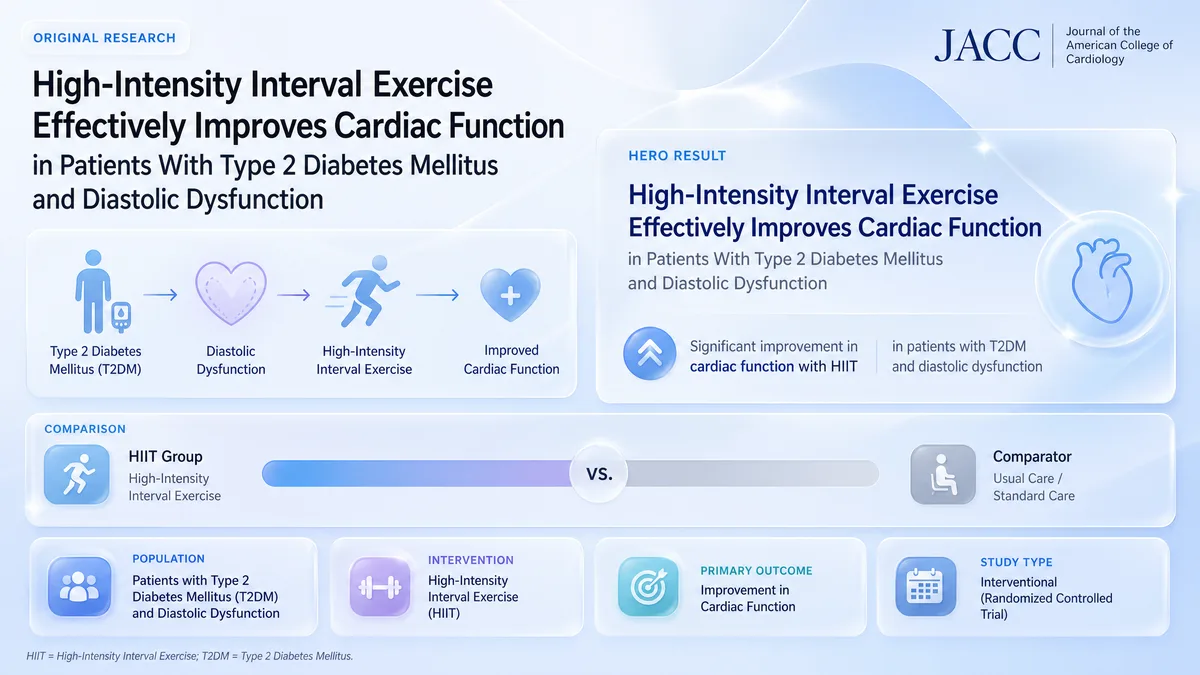
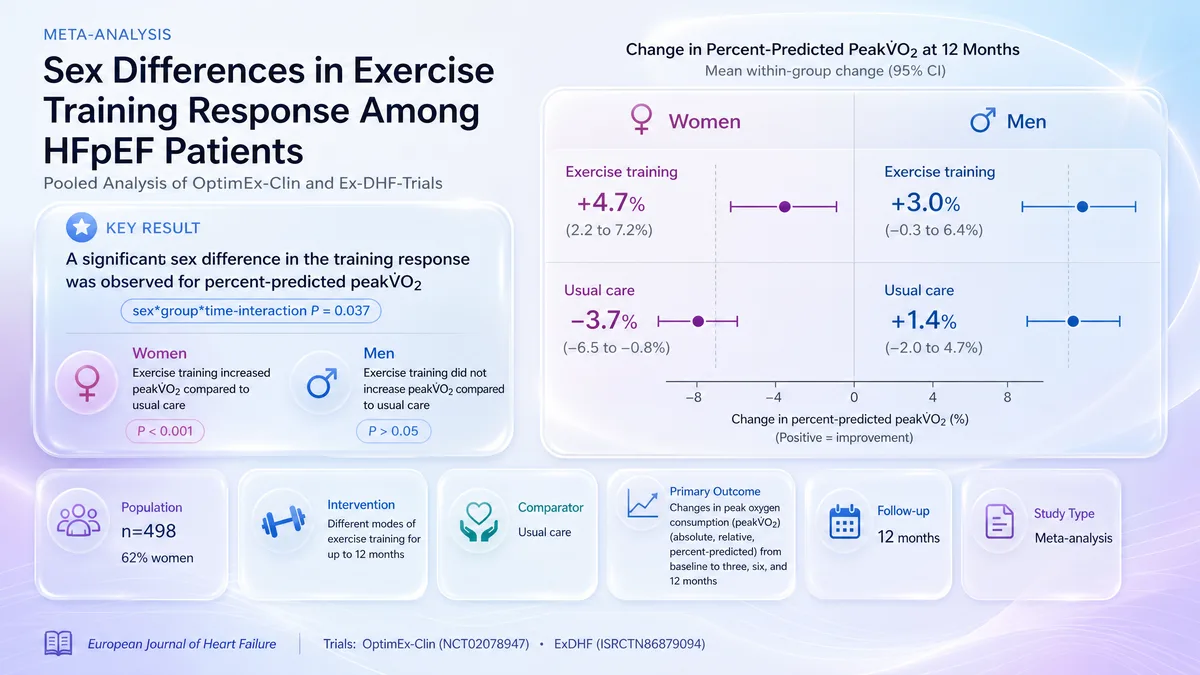
meta-analysis · n=498
JUL 28Fegers‐WustrowEuropean Journal of Heart Failure
Exercise training improves percent-predicted peakV̇O2 over usual care in women with HFpEF but not men.
Supports equitable exercise prescriptions for HFpEF patients; extends prior RCTs by confirming comparable peakVO2 gains across sexes.
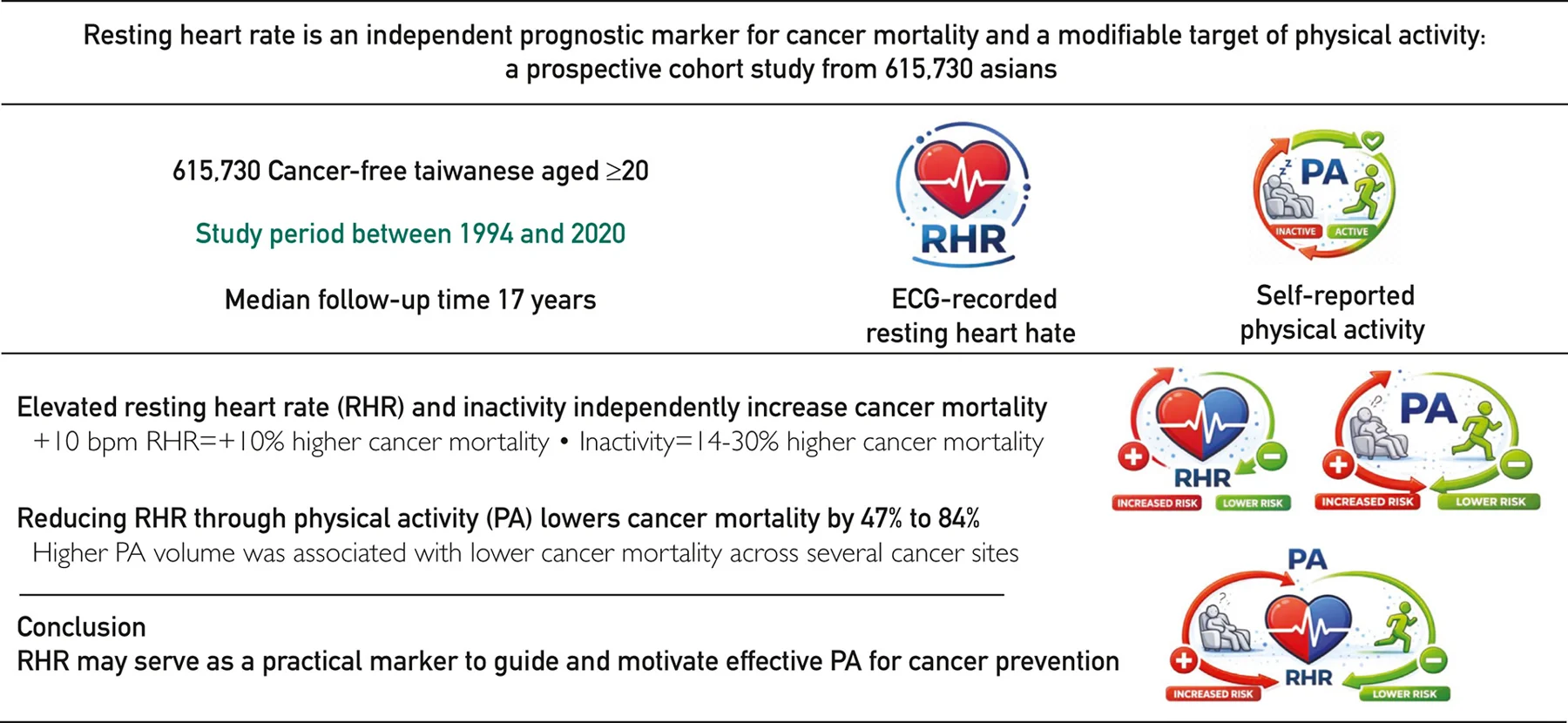
cohort · n=615,730
APR 30WenUniversity of California, Irvine
, no (), no new claims.
Higher RHR may flag cancer mortality risk but should not change practice; leaves open causality and intervention benefit.
RCT
APR 1SteneJournal of Cachexia Sarcopenia and Muscle
Effects of 5 Years of Aerobic Exercise on Sarcopenia in Older Adults—Secondary Outcomes of the Generation 100 Study
Secondary outcomes reveal that high intensity interval training improves muscle strength in older adults, suggesting long-term benefits of exercise.
Narrative Review
APR 7DunnProgress in Cardiovascular Diseases
Digital care in your pocket: The role of technology in exercise, fitness, prevention, and rehabilitation
The digital transformation of healthcare is creating new opportunities to enhance access, engagement, and outcomes in exercise, fitness, cardiovascular disease (CVD) prevention, and rehabilitation. This review synthesizes current evidence on digital health technologies across the cardiovascular care continuum, emphasizing their role in promoting physical activity in both primary and secondary prevention. A narrative review was conducted examining mobile health applications, wearable devices, artificial intelligence, remote monitoring platforms, and emerging technologies including virtual reality, 5G connectivity, and large language models. Applications were evaluated in the context of CVD prevention, rehabilitation, and behavior change. Digital tools can personalize exercise prescriptions, monitor physiologic metrics, and support remote supervision in clinical and community settings. Wearables and mobile platforms demonstrate utility in improving adherence, fitness, and CVD risk. AI-driven systems enable adaptive programming, patient monitoring, and predictive modeling, while virtual and augmented reality offer immersive options for home-based rehabilitation. Persistent barriers include digital literacy, inequitable access, and data privacy concerns. Digital health technologies are reshaping exercise-based cardiovascular care. When coupled with behavior change strategies and ethical implementation, they can extend the reach and impact of physical activity interventions. Further research is needed to guide clinical integration, long-term evaluation, and equitable adoption. • Digital health technologies are reshaping cardiovascular prevention and rehabilitation by enabling scalable, exercise-based interventions beyond traditional clinical settings. • Wearables, mobile health applications, and remote monitoring platforms support personalized exercise prescription, adherence tracking, and risk reduction across primary and secondary prevention. • Artificial intelligence and data-driven systems enhance cardiovascular care by integrating physiologic and behavioral data to inform adaptive exercise guidance and clinical decision support. • Effective implementation of digital cardiovascular care requires attention to clinical integration, equity, data quality, and long-term outcomes.
cohort · n=151,799
DEC 2025ØvretveitScientific Reports
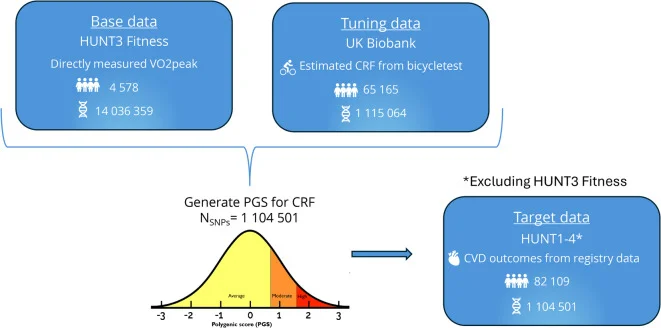
Higher cardiorespiratory fitness polygenic score links to ~1.6 mL/kg/min higher fitness and lower mortality.
Supports polygenic fitness scoring in research cohorts; hypothesis-generating for clinical risk prediction and requires prospective validation.
Original Research
DEC 2025NaumanSports Medicine
Running from Death: Can Fitness Outpace Alcohol’s Harm? Changes in Alcohol Intake, Fitness and All-Cause Mortality in the HUNT Study, Norway
Analysis shows increased alcohol intake raises mortality risk in adults, highlighting cardiorespiratory fitness's protective role.
Original Research
SEP 2025NasserEuropean Journal of Preventive Cardiology
Effect of Structured Exercise Training on Chronotropic Incompetence in Patients with Heart Failure with preserved Ejection Fraction
Randomized trial found no changes in chronotropic index in heart failure patients after exercise training, suggesting limited impact of high-intensity and moderate training.
cohort · n=82,109
JUL 2025ØvretveitNorwegian University of Science and Technology
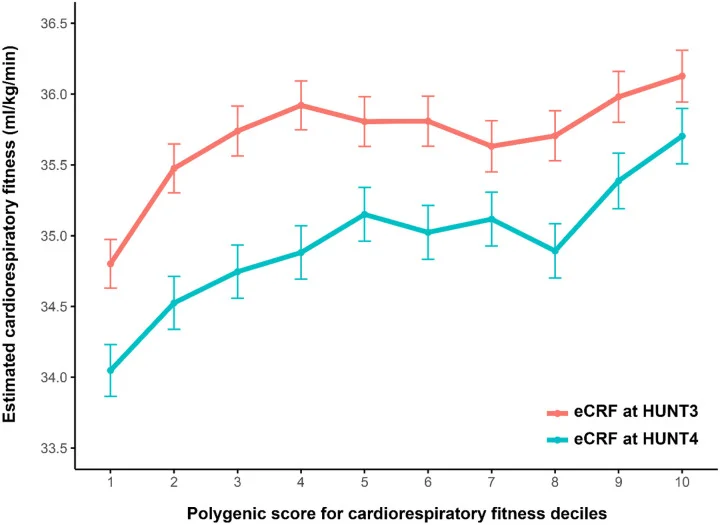
A PGS for CRF is associated with reduced risk of cardiovascular morbidity and mortality, including lower risk of heart failure and hypertrophic cardiomyopathy in women.
A polygenic score for cardiorespiratory fitness can capture clinically meaningful variations and is associated with reduced cardiovascular risk.
Original Research
JUN 2025VahleInternational Journal of Molecular Sciences
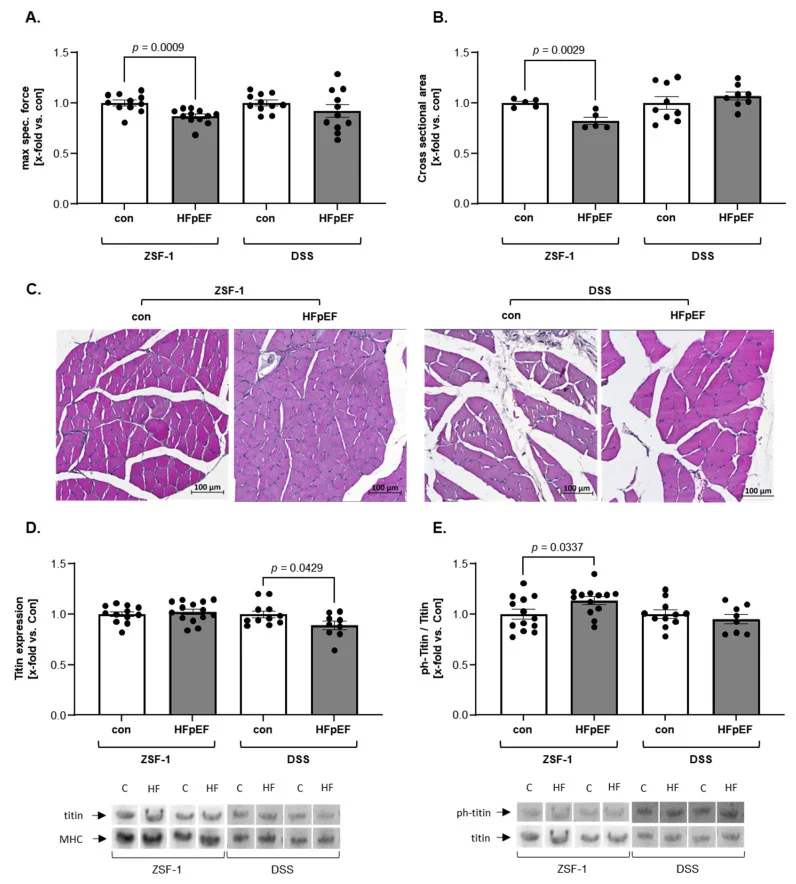
Obese HFpEF rats show skeletal muscle atrophy and titin phosphorylation absent in hypertensive models.
Findings in ZSF-1 and DSS HFpEF rat models do not inform practice; leaves open titin phosphorylation differences in human skeletal muscle.
cohort · n=288,252
JUN 2025JoensuuNorwegian University of Science and Technology
Higher PGS CRF was associated with lower risk of lung cancer (HR 0.95, 95% CI 0.93–0.98), chronic obstructive pulmonary disease (HR 0.98, 0.96–1.00), T2D (HR 0.98, 0.96–0.99), and all-cause mortality (HR 0.98, 0.98–0.99) in the most adjusted model per each standard deviation increase in PGS.
Supports genetic CRF predisposition lowering T2D and mortality risks; leaves open whether acquired fitness yields comparable benefits.
preclinical · n=132
JUN 2025ParvanESC Heart Failure

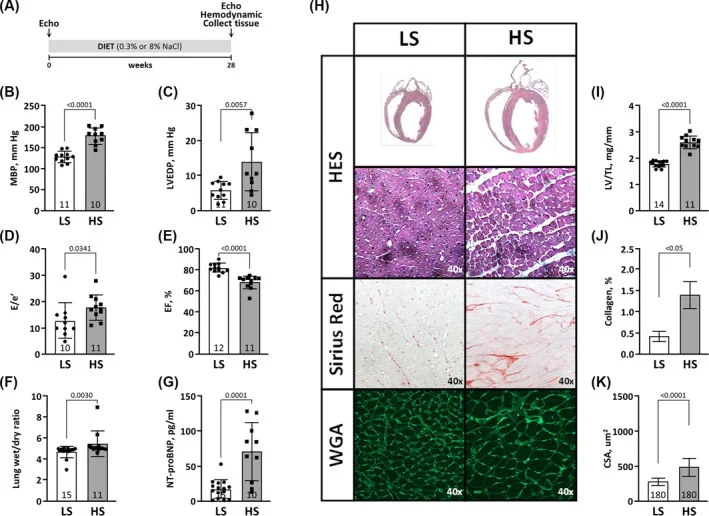
Novel four-miRNA panel discriminates HFpEF from HFrEF and healthy controls with ~0.81 AUC.
A cross-species four-miRNA circulating panel (let-7b-5p, let-7e-5p, miR-21-5p, miR-140-3p) combined via linear discriminant analysis shows promise as a blood-based diagnostic biomarker to differentiate HFpEF from HFrEF and healthy controls.
Original Research
MAY 2025JacquesCell Reports
Molecular landscape of sex- and modality-specific exercise adaptation in human skeletal muscle through large-scale multi-omics integration
We investigated the molecular mechanisms of exercise adaptations in human muscle by integrating genome, methylome, transcriptome, and proteome data from over 1,000 participants (2,340 muscle samples). We identified distinctive signatures associated with maximal oxygen consumption (VO 2max ), and multi-omics integration uncovered five key genes as robust exercise markers across layers, with transcription factors functioning as activators, synergizing with DNA methylation to regulate gene expression. Minimal sex differences were observed, while modality-specific analysis highlighted distinct pathways for aerobic and resistance exercise, contrasting with muscle disuse patterns. Finally, we created a webtool, OMAx, featuring our individual omics and integration analysis. These findings provide a comprehensive multi-omics framework for understanding exercise-induced molecular adaptations, offering insights into muscle health, cardiorespiratory fitness, and their roles in aging and disease prevention.
Original Research
MAY 2025MuellerEuropean Journal of Preventive Cardiology
Association between comorbidities and the effects of exercise training among patients with heart failure with preserved ejection fraction
Background Patients with heart failure with preserved ejection fraction (HFpEF) often have multiple cardiac and/or non-cardiac comorbidities that may contribute to exercise intolerance, the hallmark symptom in HFpEF. Exercise training is one of the most effective treatments to improve exercise tolerance but it is unclear whether individual comorbidities or the comorbidity burden are associated with altered exercise training effects in HFpEF. Purpose To evaluate the association between baseline comorbidities and the change in peak oxygen consumption (VO2) in patients with HFpEF. Methods This is a pooled analysis of the two largest randomized controlled exercise training trials performed in HFpEF to date. In the OptimEx-Clin trial, 180 patients were randomized (1:1:1) to 12 months of high-intensity interval training (3× per week), moderate continuous training (5× per week) or usual care (UC). In the Ex-DHF trial, 322 patients were randomized (1:1) to 12 months of endurance and resistance training (3× per week) or UC. For the present analysis, all exercise training groups and both UC groups were combined into one exercise and one UC group. Peak V̇O2 was defined as the highest 30-sec average during symptom-limited incremental cardiopulmonary exercise testing. Comorbidity burden was evaluated by a simple score assigning 1 point to each assessed comorbidity (arterial hypertension, hyperlipidaemia, obesity, coronary heart disease, atrial fibrillation, diabetes mellitus, chronic kidney disease, cancer, anaemia, sleep apnoea, cerebrovascular disease, depression, chronic obstructive pulmonary disease, primary valve disease, peripheral vascular disease, congenital heart disease). The associations between baseline comorbidities and change in peak VO2 after 12 months were analysed using linear regression analyses adjusted for sex, age at inclusion and baseline peak VO2. All analyses were performed using R Statistical Software with significant levels of α=0.05. Results A total of 400 patients with available peak VO2 measurements at baseline and 12 months (60.7% women; mean age: 70 years; median no. of comorbidities: 4 [range: 0-10; IQR: 2-5]) were included in this analysis. Change in peak VO2 at 12 months was significantly higher following exercise training vs. UC (mean difference, 1.22 mL/kg/min [95% CI, 0.58-1.86], P<0.001). There was no significant interaction between any of the investigated comorbidities and treatment group for the change in peak VO2 (Figure 1). Comorbidity burden was also not significantly associated with the change in peak VO2 (P-interaction = 0.99) with mean between-group differences of 1.26 mL/kg/min (95%CI, -0.25-2.77) for ≤2 comorbidities, 1.37 mL/kg/min (95%CI, 0.44-2.31) for 3-4 comorbidities and 1.27 mL/kg/min (95%CI, 0.19-2.36) for ≥5 comorbidities. Conclusions In patients with HFpEF, exercise training significantly improved peak VO2 over 12 months, regardless of individual comorbidities and overall comorbidity burden.
Original Research
APR 2025SolbergJournal of Physical Activity and Health
Effect of a 5-Year Exercise Intervention on Objectively Measured Physical Activity and Sedentary Time in Older Adults—The Generation 100 Study
BACKGROUND: Interventions promoting increased physical activity (PA) and limited sedentary time in older adults are urgently required. This study examines how 5 years of supervised high-intensity interval training (HIIT), or moderate-intensity continuous training (MICT) affects PA and sedentary time measured objectively, during, and 5 years after the intervention, compared to an unsupervised control group. METHODS: In total, 1405 participants with a mean age of 72.8 years, consisting of 51% females, were randomized 1:1:2 to 5 years of 2 weekly sessions of HIIT (90% of peak heart rate), MICT (70% of peak heart rate), or as controls asked to follow national PA recommendations. Total PA, number of steps, sedentary time, light PA, moderate PA, and vigorous PA were measured with ActiGraph GT3X+ monitors at baseline, years 1, 3, 5, and 10. RESULTS: There were no significant between-group differences throughout the study. However, HIIT, MICT, and control demonstrated significant changes after 1 year, including decreased total PA (-10%, -9%, and -9%, respectively), increased sedentary time (164, 163, and 163 min/d, respectively), and increased moderate PA (21, 21, and 19 min/d, respectively). Furthermore, after 10 years, pooled moderate to vigorous PA was maintained or increased in all groups (5.7, 1.9, and 1.5 min/d in HIIT, MICT, and control, respectively). CONCLUSION: HIIT, MICT, and control exhibited a similar long-term effect on objective PA and sedentary time in a general population of older adults. Notably, both supervised and unsupervised exercise combined with regular follow-up hindered the expected age-related decline in moderate to vigorous PA over 10 years.
cohort · n=368,301
MAR 2025JoensuuBritish Journal of Sports Medicine
Genetic liability to sedentary behaviour is linked to ~5% higher CVD risk per SD.
Genetic liability to sedentary behavior is an under-recognized driver of common cardiovascular diseases, independent of traditional risk factors.
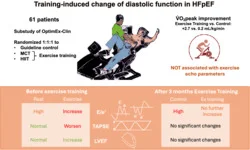
RCT · n=180
FEB 2025GevaertESC Heart Failure
Exercise training slightly improves HFpEF diastolic function but fails to explain improved aerobic capacity.
Exercise training improves aerobic capacity in HFpEF independently of diastolic function changes; extends evidence for multifactorial mechanisms.