

Xavier Jeunemaı̂tre
Vascular Medicine
Inserm
About
Xavier Jeunemaı̂tre works in Vascular Medicine affiliated with Inserm.
Xavier Jeunemaitre is a Professor of Genetics at Université Paris Cité and Head of the Department of Genetics at Hôpital Européen Georges Pompidou, part of Assistance Publique – Hôpitaux de Paris. He directs an INSERM research team focused on the molecular pathophysiology of cardiovascular diseases since 1997. He also heads the National Referral Centre for Rare Vascular Diseases at the hospital, providing care for over 1000 patients annually.
Research focus
Vascular Ehlers-Danlos SyndromeArterial Fibromuscular DysplasiaGenetic Determinants of Arterial HypertensionThoracic Aortic Aneurysm and DissectionPheochromocytoma and Paraganglioma Genetics
Impact
597 pubs · 33,815 cites · h-index 92
Affiliations
Work Experience
Director of the Genetics Department
Hôpital Européen Georges Pompidou · 2000 - Present
Head of INSERM Research Team
INSERM · 1997 - Present
Head of the National Referral Centre for Rare Vascular Diseases
Hôpital Européen Georges Pompidou · 2000 - Present
Dean of the Faculty of Health
Université Paris Cité · 2019 - 2023
Advisor
Ministry of Education and Research · 2011 - 2012
Publications
cohort · n=246European Heart Journal Highlight
AUG 2017TourneauEuropean Heart Journal

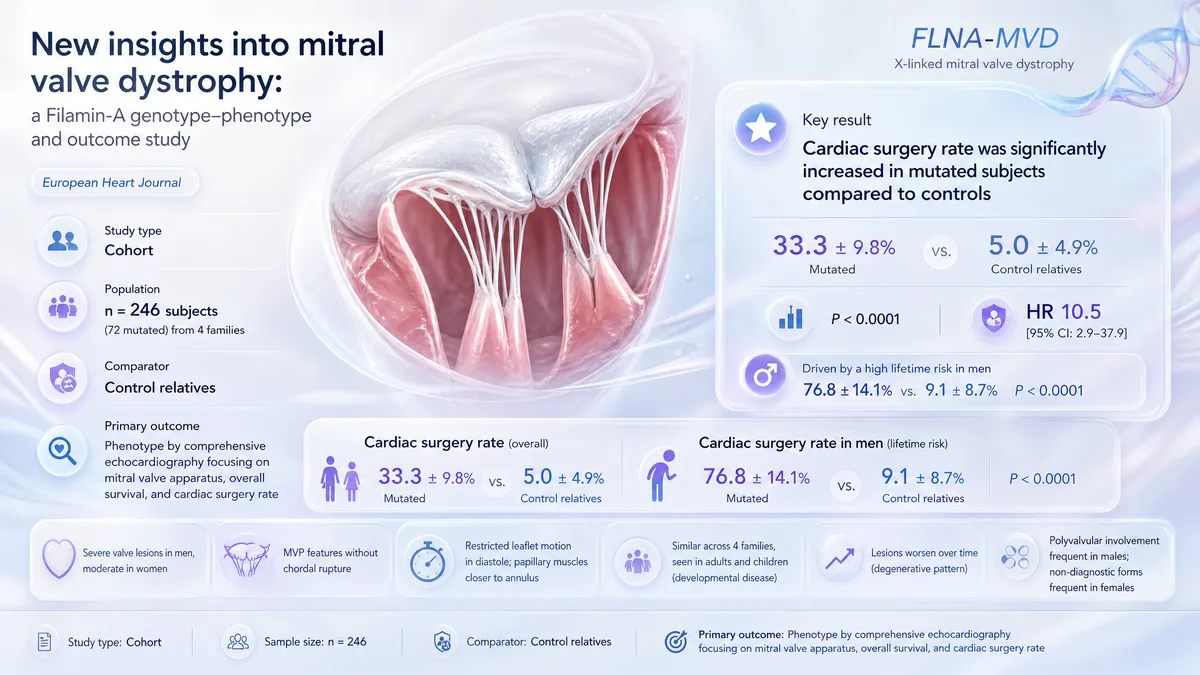
Cardiac surgery rate was significantly increased in mutated subjects compared to controls (33.3 ± 9.8 vs. 5.0 ± 4.9%, P < 0.0001; HR 10.5 [95% CI: 2.9-37.9]), driven by a high lifetime risk in men (76.8 ± 14.1 vs. 9.1 ± 8.7%, P < 0.0001).
FLNA-MVD is an X-linked developmental and degenerative disease characterized by unique mitral valve features and a substantially increased lifetime risk of valve surgery in men.
meta-analysis · n=439,5332 mentionsTrending on XEuropean Heart Journal Highlight
FEB 2022RoselliEuropean Heart Journal
Identified 14 loci associated with MVP in primary analysis and 2 additional loci in a surgical subset, and developed a polygenic risk score that improved MVP risk prediction beyond age, sex, and clinical risk factors.
MVP management remains unchanged; leaves open therapeutic target discovery from expanded genetic insights.
RCT · n=57
FEB 2025Jeunemaı̂treCirculation

Irbesartan reduces arterial events and lesions ~58% vs placebo in vascular Ehlers-Danlos syndrome.
The addition of irbesartan to background celiprolol therapy significantly reduces the risk of severe symptomatic and asymptomatic arterial events in patients with vascular Ehlers-Danlos syndrome.
preclinical
OCT 2024RimbertCentre National de la Recherche Scientifique
Variants in the gene encoding the FilGAP protein cause progressive Post MVP in familial cases by impairing cell adhesion and mechano-transduction capacities.
Genetic variants in the FilGAP gene impair cell adhesion and mechano-transduction, driving the pathogenesis of familial isolated posterior mitral valve prolapse.
cohort · n=748
SEP 2024HagègeInternational Journal of Cardiology
Systematic genetic screening identifies pathogenic variants in ~40% of adults with HCM.
Systematic genetic screening in adults with hypertrophic cardiomyopathy yields a genetic diagnosis in nearly 40% of patients, with higher success rates in younger patients and those with a family history.
Original Research
AUG 2024QuelquejayCirculation Research
L-Wnk1 Deletion in Smooth Muscle Cells Causes Aortitis and Inflammatory Shift
Experimental murine study demonstrates smooth muscle Wnk1 deletion drives spontaneous aortitis and aneurysm progression in mice, highlighting kinase control over vascular inflammation.
Original Research
SEP 2023Viora‐DupontAmerican Journal of Medical Genetics Part A
Identification of the first homozygous intragenic deletion in the YY1AP1 gene in a consanguineous family: New insights into the phenotypic variability associated with Grange syndrome
Grange syndrome (GRNG-MIM#135580) is a rare recessive disorder associating variable features including diffuse vascular stenosis, brachysyndactyly, osteopenia with increased bone fragility, cardiac malformations, and variable developmental delay. Since its first description in 1998, only 15 individuals from 10 families have been reported, carrying homozygous or compound heterozygous frameshift or nonsense variants in YY1AP1. In a patient with cutaneous and bone syndactyly and a hemorrhagic stroke at the age of 16 months, consistent with a clinical diagnosis of GRNG, we performed exome sequencing after negative array-CGH and congenital limb malformation panel results. Copy number variant analysis from exome data identified a homozygous intragenic out-of-frame deletion of 1.84 kb encompassing exons seven and eight of YY1AP1, confirming a molecular diagnosis of GRNG. Genetic counseling led to the identification of additional family members compatible with GRNG. Here, we provide new insights into the phenotypic variability associated with GRNG and highlight the utility of the detection of small copy number variants to identify the molecular causes of heterogeneous malformative genetic disorders.
Genetic Association Study
JUL 2023TesslerJAMA Cardiology
Novel Association of the NOTCH Pathway Regulator MIB1 Gene With the Development of Bicuspid Aortic Valve
Importance: Nonsyndromic bicuspid aortic valve (nsBAV) is the most common congenital heart valve malformation. BAV has a heritable component, yet only a few causative genes have been identified; understanding BAV genetics is a key point in developing personalized medicine. Objective: To identify a new gene for nsBAV. Design, Setting, and Participants: This was a comprehensive, multicenter, genetic association study based on candidate gene prioritization in a familial cohort followed by rare and common association studies in replication cohorts. Further validation was done using in vivo mice models. Study data were analyzed from October 2019 to October 2022. Three cohorts of patients with BAV were included in the study: (1) the discovery cohort was a large cohort of inherited cases from 29 pedigrees of French and Israeli origin; (2) the replication cohort 1 for rare variants included unrelated sporadic cases from various European ancestries; and (3) replication cohort 2 was a second validation cohort for common variants in unrelated sporadic cases from Europe and the US. Main Outcomes and Measures: To identify a candidate gene for nsBAV through analysis of familial cases exome sequencing and gene prioritization tools. Replication cohort 1 was searched for rare and predicted deleterious variants and genetic association. Replication cohort 2 was used to investigate the association of common variants with BAV. Results: A total of 938 patients with BAV were included in this study: 69 (7.4%) in the discovery cohort, 417 (44.5%) in replication cohort 1, and 452 (48.2%) in replication cohort 2. A novel human nsBAV gene, MINDBOMB1 homologue MIB1, was identified. MINDBOMB1 homologue (MIB1) is an E3-ubiquitin ligase essential for NOTCH-signal activation during heart development. In approximately 2% of nsBAV index cases from the discovery and replication 1 cohorts, rare MIB1 variants were detected, predicted to be damaging, and were significantly enriched compared with population-based controls (2% cases vs 0.9% controls; P = .03). In replication cohort 2, MIB1 risk haplotypes significantly associated with nsBAV were identified (permutation test, 1000 repeats; P = .02). Two genetically modified mice models carrying Mib1 variants identified in our cohort showed BAV on a NOTCH1-sensitized genetic background. Conclusions and Relevance: This genetic association study identified the MIB1 gene as associated with nsBAV. This underscores the crucial role of the NOTCH pathway in the pathophysiology of BAV and its potential as a target for future diagnostic and therapeutic intervention.
Case Report
FEB 2023FoyClinical Case Reports
A severe case of PLOD1 ‐related kyphoscoliotic Ehlers–Danlos syndrome associated with several arterial and venous complications: A case report
Kyphoscoliotic Ehlers-Danlos syndrome (kEDS) is a rare genetic disorder combining congenital hypotonia, congenital/early onset and progressive kyphoscoliosis, and generalized joint hypermobility. Vascular fragility is another characteristic of the disease rarely described. We report a severe case of kEDS-PLOD1 with several vascular complications leading to difficulties in disease management.
Original Research
OCT 2022AdhamFrontiers in Cardiovascular Medicine
Assessment of arterial damage in vascular Ehlers-Danlos syndrome: A retrospective multicentric cohort
Background Vascular Ehlers-Danlos syndrome (vEDS) is a rare inherited connective tissue disorder due to pathogenic variants in COL3A1 leading to medium-size-artery (MSA) dissection, aneurysm, rupture. Aortic lesions are rarer and less investigated. The objective was to describe the distribution of MSA and aortic lesions and the type of COL3A1 variants in a multicentric cohort of 330 adult vEDS patients. Methods At the time of the study, 87% were alive, 60.3% were index cases, and 60.0% were women. COL3A1 variants were identified using NGS and/or Sanger sequencing and classified according to functional consequences: 80.6% leading to dominant-negative (DN) and 19.4% leading to haploinsufficiency (HI). Imaging was systematically performed during the initial workup. Carotid mechanics were assessed by echo tracking in a subgroup of patients. Results Arterial lesions were reported in 82.4% of the patients ( N = 272): 83.5% had MSA lesions alone, 3.3% had aortic lesions alone, and 13.2% both. DN variants were associated with a higher prevalence of arterial lesions ( P < 0.044), especially in supra-aortic trunks and renal arteries. The prevalence of aortic lesions in HI patients with arterial lesions was higher than that in patients with DN ( P 0.027), but not anymore when adjusted for age ( P < 0.559). Carotid Young’s modulus was lower in patients with DN, in association with the higher incidence of MSA lesions in this group. Conclusion The prevalence of aortic lesions is not influenced by the COL3A1 genotype when adjusted for age. Patients with DN variant vEDS have a higher frequency of MSA lesions, especially in supra-aortic trunks associated with lower carotid stiffness. These results support optimized care and follow-up for these vulnerable patients.
GWAS
SEP 2022FlochSHILAP Revista de lepidopterología
Identification of risk loci for primary aldosteronism in genome-wide association studies
Primary aldosteronism affects up to 10% of hypertensive patients and is responsible for treatment resistance and increased cardiovascular risk. Here we perform a genome-wide association study in a discovery cohort of 562 cases and 950 controls and identify three main loci on chromosomes 1, 13 and X; associations on chromosome 1 and 13 are replicated in a second cohort and confirmed by a meta-analysis involving 1162 cases and 3296 controls. The association on chromosome 13 is specific to men and stronger in bilateral adrenal hyperplasia than aldosterone producing adenoma. Candidate genes located within the two loci, CASZ1 and RXFP2, are expressed in human and mouse adrenals in different cell clusters. Their overexpression in adrenocortical cells suppresses mineralocorticoid output under basal and stimulated conditions, without affecting cortisol biosynthesis. Our study identifies the first risk loci for primary aldosteronism and highlights new mechanisms for the development of aldosterone excess.
Original Research
MAY 2022KourantiInternational Journal of Molecular Sciences
Cullin 3 Exon 9 Deletion in Familial Hyperkalemic Hypertension Impairs Cullin3-Ring-E3 Ligase (CRL3) Dynamic Regulation and Cycling
mutations, responsible for a severe form of familial hyperkalemia and hypertension (FHHt), all result in a deletion of exon 9 (amino-acids 403-459) (CUL3-∆9). Surprisingly, while CUL3-∆9 is hyperneddylated, a post-translational modification that typically activates CRL complexes, it is unable to ubiquitinate its substrates. In order to understand the mechanisms behind this loss-of function, we performed comparative label-free quantitative analyses of CUL3 and CUL3-∆9 interactome by mass spectrometry. It was observed that CUL3-∆9 interactions with COP9 and CAND1, both involved in CRL3 complexes' dynamic assembly, were disrupted. These defects result in a reduction in the dynamic cycling of the CRL3 complexes, making the CRL3-∆9 complex an inactive BTB-adaptor trap, as demonstrated by SILAC experiments. Collectively, the data indicated that the hyperneddylated CUL3-∆9 protein is inactive as a consequence of several structural changes disrupting its dynamic interactions with key regulatory partners.
Original Research
MAR 2022LegrandPLoS Genetics
Comparative therapeutic strategies for preventing aortic rupture in a mouse model of vascular Ehlers-Danlos syndrome
Vascular Ehlers-Danlos syndrome is a rare inherited disorder caused by genetic variants in type III collagen. Its prognosis is especially hampered by unpredictable arterial ruptures and there is no therapeutic consensus. We created a knock-in Col3a1+/G182R mouse model and performed a complete genetic, molecular and biochemical characterization. Several therapeutic strategies were also tested. Col3a1+/G182R mice showed a spontaneous mortality caused by thoracic aortic rupture that recapitulates the vascular Ehlers-Danlos syndrome with a lower survival rate in males, thin non-inflammatory arteries and an altered arterial collagen. Transcriptomic analysis of aortas showed upregulation of genes related to inflammation and cell stress response. Compared to water, survival rate of Col3a1+/G182R mice was not affected by beta-blockers (propranolol or celiprolol). Two other vasodilating anti-hypertensive agents (hydralazine, amlodipine) gave opposite results on aortic rupture and mortality rate. There was a spectacular beneficial effect of losartan, reversed by the cessation of its administration, and a marked deleterious effect of exogenous angiotensin II. These results suggest that blockade of the renin angiotensin system should be tested as a first-line medical therapy in patients with vascular Ehlers-Danlos syndrome.
cohort · n=92
DEC 2021BillonOrphanet Journal of Rare Diseases
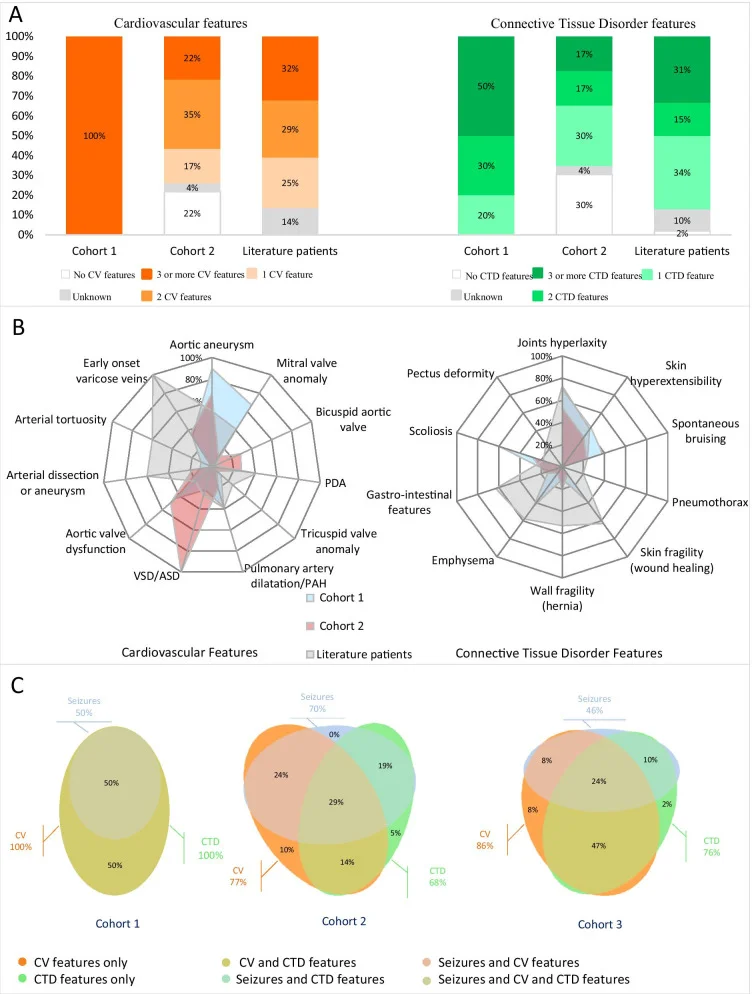
FLNA loss-of-function variants were associated with cardiovascular anomalies and connective tissue disorder features in 75% of patients, demonstrating a multisystemic syndrome where half of the patients did not present neurological symptoms.
Patients with FLNA loss-of-function variants frequently present with cardiovascular and connective tissue anomalies, such as aortic aneurysms, even in the absence of neurological symptoms, warranting systematic cardiovascular assessment.
GWAS
OCT 2021GeorgesNature Communications
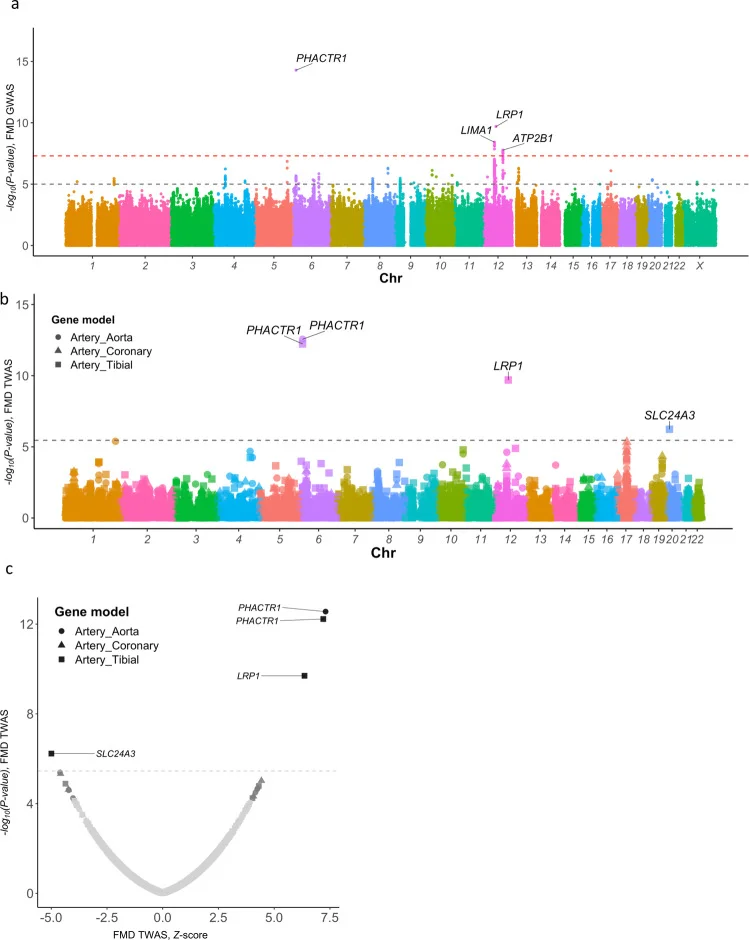
A genome-wide association meta-analysis identified four risk loci for fibromuscular dysplasia, with the strongest association at the PHACTR1 locus (OR 1.44), and demonstrated shared genetics with common cardiovascular diseases.
Should not yet change FMD diagnosis or management; leaves open functional and translational studies of shared vascular genetics.
meta-analysis · n=4,961
AUG 2021YuCirculation Genomic and Precision Medicine
A genome-wide association meta-analysis identified an additional risk locus on Chr1 (SYT2) and two suggestive risk loci on chr8 and chr19 associated with mitral valve prolapse.
This updated GWAS meta-analysis identifies new genetic risk loci for mitral valve prolapse, highlighting genes involved in cardiac and valve development.
Original Research
AUG 2021HureauxKidney International Reports
The variety of genetic defects explains the phenotypic heterogeneity of Familial Hyperkalemic Hypertension
Introduction Familial hyperkalemic hypertension is a rare inherited form of arterial hypertension. Four genes are responsible for this disease, the variants of these genes cause disruption in the regulation of ion transport in the distal renal tubule. Whether the genotype explains the large phenotypic heterogeneity has not been fully explored. Methods We retrospectively analyzed clinical and genetic data of 153 cases (84 probands, 69 relatives) with familial hyperkalemic hypertension. Results Pathogenic variants (25 novel variants) were identified as follows: KLHL3 (n = 50), CUL3 (n = 16), WNK1 acidic motif (n = 11), WNK4 acidic motif (n = 4) and WNK1 intron 1 deletions (n = 3). De novo cases were mainly observed in the CUL3 -related cases (9 of 12) and recessive cases were only observed in KLHL3 -related cases (14 of 50). More severe forms were observed in recessive KLHL3 and CUL3 cases that were also associated with growth retardation. Patients with WNK1 acidic motif variants had a typical biological phenotype and lower frequency of hypertension conversely to WNK4 variants affecting the same motif. Patients with heterozygous KLHL3 and WNK1 deletions had milder forms. Familial screening in 178 relatives allowed detection and care for 69 positive cases. Blood pressure and hyperkalemia were improved by hydrochlorothiazide in all groups. Conclusions This study confirms the phenotypic variability ranging from the severe and early forms associated with CUL3 and recessive KLHL3 genotypes through intermediate forms associated with KLHL3 dominant, WNK4 and WNK1 deletion to mild form associated with WNK1 acidic motif genotype and reinforces the interest of genetic screening to better orientate medical care and genetic counseling.
Original Research
JUN 2021LegrandInserm
Comparative therapeutic strategies for preventing aortic rupture in a mouse model of vascular Ehlers Danlos syndrome
We created a knock-in Col3a1 +/G182R mouse model with spontaneous mortality caused by thoracic aortic rupture that recapitulates a rare vascular genetic disease of type III collagen, the vascular Ehlers-Danlos syndrome (vEDS). Investigation of this model showed lower survival rate in males caused by aortic rupture, thin non-inflammatory arteries and altered arterial collagen. Transcriptomic analysis of aortas showed upregulation of genes related to inflammation and cell stress response. Compared to water, survival rate of Col3a1 +/G182R mice was not affected by beta-blockers (propranolol or celiprolol). Two other vasodilating anti-hypertensive agents (hydralazine, amlodipine) gave opposite results on aortic rupture and mortality rate. There was a spectacular beneficial effect of losartan, reversed by the cessation of its administration, and a marked deleterious effect of exogenous angiotensin II. These results suggest that blockade of the renin angiotensin system should be tested as a first-line medical therapy in patients with vEDS.
cohort · n=469
MAY 2021ArnaudJournal of the American Heart Association
Male sex is linked to ~104% greater cervical artery dissection risk in fibromuscular dysplasia.
Supports incorporating sex into fibromuscular dysplasia risk models; leaves open prospective validation before altering screening.
Original Research
APR 2021HarmáčekNephrology Dialysis Transplantation
Acute decrease of urine calcium by amiloride in healthy volunteers under high-sodium diet
BACKGROUND: Amiloride is a competitive blocker of the epithelial sodium (Na) channel in the renal collecting duct. It is a less potent diuretic than thiazides or loop diuretics, but is often used in association with its potassium (K)-sparing profile. Whether amiloride has a hypocalciuric effect similar to thiazides remains unclear. Animal studies and experiments on cell lines suggested that amiloride increases calcium (Ca) reabsorption in the distal nephron, but human studies are scarce. METHODS: We performed a post hoc analysis of a study with 48 healthy males (mean ± standard deviation age, 23.2 ± 3.9 years) who were assigned to a high-Na/low-K diet for 7 days before receiving 20 mg of amiloride orally. Urinary excretions of electrolytes were measured at 3 and 6 h afterwards; we calculated the relative changes in urinary excretion rates after amiloride administration. RESULTS: The high-Na/low-K diet led to an expected suppression of plasma renin and aldosterone. Amiloride showed a mild natriuretic effect associated with a decreased kaliuresis. Urinary Ca excretion dropped substantially (by 80%) 3 h after amiloride administration and remained low at the sixth hour. At the same time, fractional excretion of lithium decreased by a third, reflecting an increased proximal tubular reabsorption. CONCLUSIONS: During a high-Na/low-K diet, amiloride had a strong acute hypocalciuric effect, most probably mediated by increased proximal Ca reabsorption, even though a distal effect cannot be excluded. Further studies should establish if chronic amiloride or combined amiloride/thiazide treatment may decrease calciuria more efficiently and be useful in preventing kidney stones.