Cardiology
Cardiovascular effects of cancer therapy
Synthesized from 201 evidence-backed clinical questions linked to this topic — 34 supporting the intervention, 53 against the intervention, 7 still contested.
The placed evidence leans toward harm
34
Favor benefit
17% of all
53
Favor harm
26% of all
107 more (53%) still untested — not placed on the axis.
Insufficient certainty on 57% of questions
Does aspirin vs placebo improve outcomes in Malignant Neoplasms?
Low Certainty+ Favors benefitaspirin vs placebo · All-Cause Mortality
10 studies (3,518,238 patients) provide low-certainty evidence for benefit of aspirin for All-Cause Mortality in Malignant Neoplasms.
Does history of cancer vs placebo improve outcomes in Malignant Neoplasms?
Low Certainty− Favors harmhistory of cancer vs placebo
2 studies (3,420,385 patients) provide low-certainty evidence against benefit of history of cancer for the outcome in Malignant Neoplasms.
Does sglt2 inhibitors vs placebo improve outcomes in Malignant Neoplasms?
Low Certainty+ Favors benefitsglt2 inhibitors vs placebo
5 studies (2,804,050 patients) provide low-certainty evidence for benefit of sglt2 inhibitors for the outcome in Malignant Neoplasms.
Does immune checkpoint inhibitors vs placebo improve outcomes in Malignant Neoplasms?
Low Certainty− Favors harmimmune checkpoint inhibitors vs placebo
31 studies (526,448 patients) provide low-certainty evidence against benefit of immune checkpoint inhibitors for the outcome in Malignant Neoplasms.
Does apixaban vs placebo improve outcomes in Venous Thromboembolism?
Low Certainty+ Favors benefitapixaban vs placebo
13 studies (521,153 patients) provide low-certainty evidence for benefit of apixaban for the outcome in Venous Thromboembolism.
Does immune checkpoint inhibitors vs placebo improve outcomes in cancer therapy-related cardiovascular toxicity?
Low Certainty+ Favors benefitimmune checkpoint inhibitors vs placebo · Cardiac Index
25 studies (460,637 patients) provide low-certainty evidence for benefit of immune checkpoint inhibitors for Cardiac Index in cancer therapy-related cardiovascular toxicity.
Does doxorubicin vs placebo improve outcomes in Cardiotoxicity?
Insufficient~ Mixed resultsdoxorubicin vs placebo · Cardiac Index
73 studies (500,645 patients) provide insufficient evidence with mixed findings regarding doxorubicin for Cardiac Index in Cardiotoxicity.
Does doxorubicin vs placebo improve outcomes in Cardiomyopathies?
Low Certainty− Favors harmdoxorubicin vs placebo
10 studies (40 patients) provide low-certainty evidence against benefit of doxorubicin for the outcome in Cardiomyopathies.
Does immune checkpoint inhibitors vs pd-1 inhibitors improve outcomes in Malignant Neoplasms?
Insufficient~ Mixed resultsimmune checkpoint inhibitors vs pd-1 inhibitors
8 studies (1,000 patients) provide insufficient evidence with mixed findings regarding immune checkpoint inhibitors for the outcome in Malignant Neoplasms.
Does chemotherapy vs placebo improve Cardiac Output in Osteosarcoma?
Insufficient~ Mixed resultschemotherapy vs placebo · Cardiac Output
3 studies (222 patients) provide insufficient evidence with mixed findings regarding chemotherapy for Cardiac Output in Osteosarcoma.
Emerging evidence with 100 primary claims
Specific, answerable questions in this area — each with its own synthesized evidence and consensus. Open one to see the forest plot, source trials, and how the consensus has changed over time.
Does immune checkpoint inhibitors vs placebo improve outcomes in cancer therapy-related cardiovascular toxicity?
Low Certainty+ Favors benefitimmune checkpoint inhibitors vs placebo · Cardiac Index
Does anticoagulants vs placebo improve outcomes in Malignant Neoplasms?
Low Certainty+ Favors benefitanticoagulants vs placebo · Myocardial Infarction Hospitalization
Does sodium-glucose cotransporter-2 inhibitors vs immune checkpoint inhibitors improve All-Cause Mortality in Malignant Neoplasms?
Low Certainty+ Favors benefitsodium-glucose cotransporter-2 inhibitors vs immune checkpoint inhibitors · All-Cause Mortality
Does carvedilol vs doxorubicin improve Cardiac Index in Malignant neoplasm of breast?
Low Certainty− Favors harmcarvedilol vs doxorubicin · Cardiac Index
Does candesartan vs doxorubicin improve Cardiac Index in Malignant neoplasm of breast?
Low Certainty− Favors harmcandesartan vs doxorubicin · Cardiac Index
Does dalteparin vs coumarin improve outcomes in Malignant Neoplasms?
Low Certainty− Favors harmdalteparin vs coumarin · Left Ventricular Ejection Fraction
Long-term bleeding events post-percutaneous coronary intervention in patients with malignancy with and without anticoagulant therapy
Cardiovascular Intervention and Therapeutics — Otsuka Y — Jun 2025
Preoperative Exercise Echocardiography and Perioperative Cardiovascular Outcomes in Elderly Patients Undergoing Cancer Surgery
The American Journal of Geriatric Cardiology — Shoyeb A — Nov 2006
Cardiac adverse events of PD-1 and PD-L1 inhibitors in cancer protocol for a systematic review and network meta-analysis
Medicine — Han D — Jan 2020
Everolimus as cancer therapy: Cardiotoxic or an unexpected antiatherogenic agent? A narrative review
Hellenic Journal of Cardiology — Karvelas G — Mar 2018
Targeting the Angiopoietin/Tie2 Pathway: Cutting Tumor Vessels With a Double-Edged Sword?
Journal of Clinical Oncology — Cascone T — Dec 2011
Cardiovascular drugs and cancer: of competing risk, smallpox, Bernoulli, and d'Alembert
European Heart Journal — Messerli F — Jul 2012
Takotsubo Cardiomyopathy as Epiphenomenon of Cardiotoxicity in Patients With Cancer: A Meta-summary of Case Reports
Journal of Cardiovascular Pharmacology — Carbone A — May 2021
Pegylated liposomal doxorubicin: Pharmacologic and clinical evidence of potent antitumor activity with reduced anthracycline-induced cardiotoxicity (Review)
Oncology Reports — Orditura M — Sep 2004
Thrombosis and Cancer: Emerging Data for the Practicing Oncologist
American Society of Clinical Oncology Educational Book — Lyman G — Jan 2013
Exercise Effects on HRV in Cancer Patients
International Journal of Sports Medicine — Niederer D — Aug 2012
Corrected QT interval prolongation in anthracycline-treated survivors of childhood cancer.
Journal of Clinical Oncology — Schwartz C — Oct 1993
Heart of the matter: reverse takotsubo syndrome in an anthracycline-exposed oncology patient
BMJ Case Reports — Voit J — Oct 2018
Follow this topic to get a weekly “what changed” evidence digest and alerts when journal clubs schedule sessions on it.
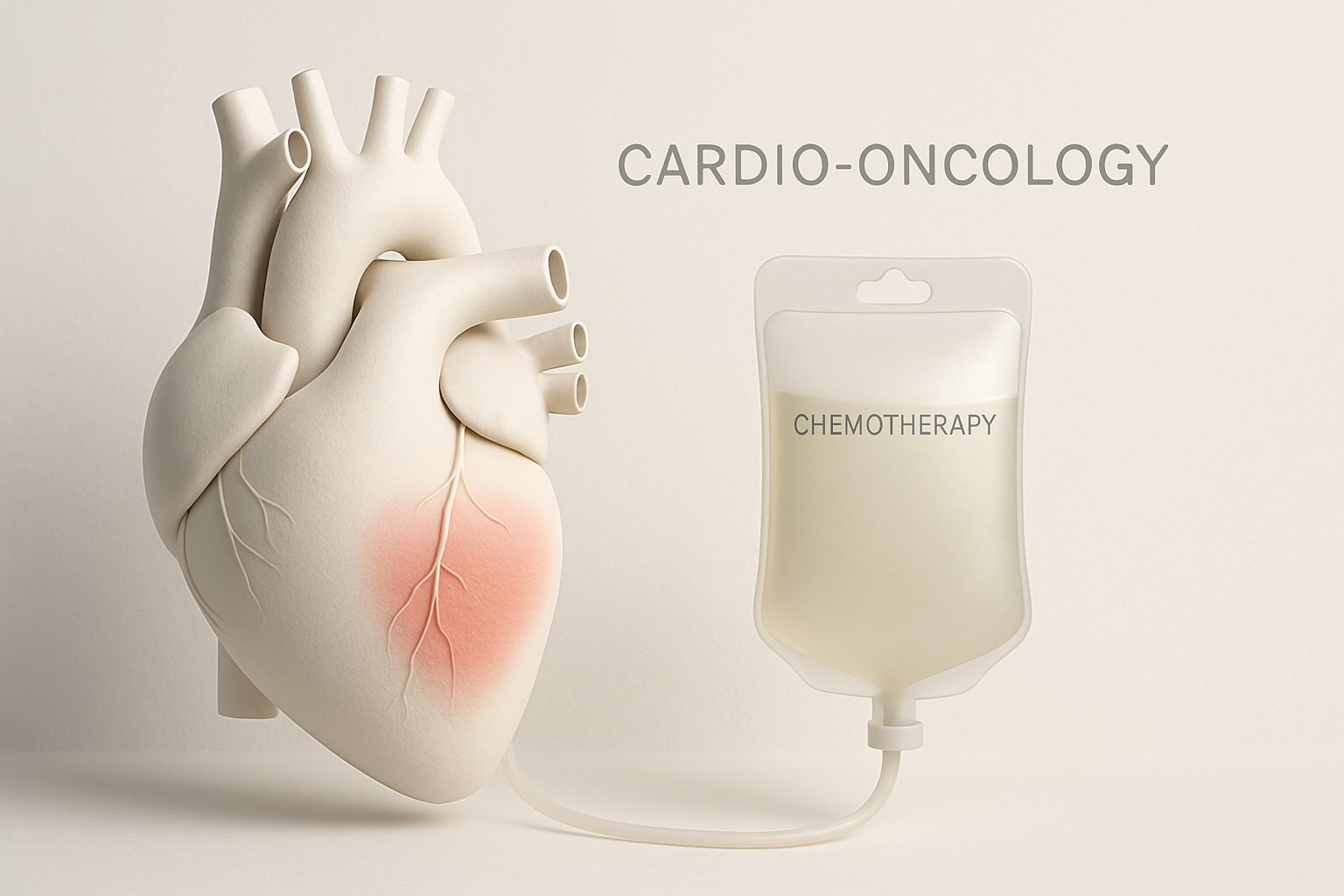
Cardio-oncology (also known as onco-cardiology, cancer cardiotoxicity, chemotherapy heart). Cardiovascular effects of cancer therapy
Synapse tracks 6 specific clinical questions in Cardio-oncology, each synthesized independently from its own trial evidence. They include: "Does immune checkpoint inhibitors vs placebo improve outcomes in cancer therapy-related cardiovascular toxicity?"; "Does anticoagulants vs placebo improve outcomes in Malignant Neoplasms?"; "Does sodium-glucose cotransporter-2 inhibitors vs immune checkpoint inhibitors improve All-Cause Mortality in Malignant Neoplasms?"; "Does carvedilol vs doxorubicin improve Cardiac Index in Malignant neoplasm of breast?"; "Does candesartan vs doxorubicin improve Cardiac Index in Malignant neoplasm of breast?".
As of 2026-09-08, the scientific consensus on Cardio-oncology is emerging. Emerging evidence with 100 primary claims Based on 100 analyzed claims across Synapse's enriched corpus, the evidence shows.
This evidence brief synthesizes Synapse's enriched cardiology corpus; cite as synapsesocial.com/topics/cardio-oncology.
Deterministic synthesis from Synapse's enriched corpus — 131 words. No AI-generated novel content; every figure is sourced from the underlying paper, guideline, or trial record linked on this page.
Explore every Cardio-oncology paper on Synapse with AI-enriched clinical evidence, PICO analysis, and methodology classification.
Search Cardio-oncology papersPowered by Synapse — AI-enriched analysis of 600,000+ peer-reviewed papers