This research is Trending!
September 15, 2026Circulation
State of Cardiovascular Disease and Stroke in Hispanic/Latino Adults in the United States: A Scientific Statement From the American Heart Association
Why the study?
Cardiovascular disease became the leading cause of death among Hispanic individuals in the United States in 2022, alongside widening cardiometabolic disparities across heterogeneous Hispanic heritage groups.
Key Points
- Cardiovascular disease became the leading cause of death among Hispanic individuals in 2022, driven by severe disparities in cardiometabolic risk factors across groups.
- Disaggregated epidemiological assessment reveals widening disparities in hypertension and dyslipidemia, challenging the validity of a uniform Hispanic paradox.
- Addressing these inequities requires equitable implementation of precision medicine and genomics, alongside policies targeting structural determinants of health.
Structured PICO
P
Population
Hispanic/Latino adults in the United States
This AHA scientific statement highlights the growing burden of cardiovascular disease and widening risk factor disparities among diverse Hispanic/Latino populations in the US, emphasizing the need for disaggregated data and culturally tailored interventions.
Key expert perspectives
Captured external expert commentary on this paper, strongest first. Original sources are linked where available.

“Hispanic populations in the U.S. are incredibly diverse even within their own communities with differences in genetic ancestry, language, cultural traditions and social experiences that can significantly influence cardiovascular health. Yet Hispanic people remain underrepresented overall in the research that guides prevention and treatment strategies. More detailed data collection and reporting across Hispanic heritage backgrounds will be essential to better understand community-specific risks, strengths and healthcare needs. Without better representation and more detailed data, we risk overlooking important differences that can help us improve care and save lives.”
“Cardiovascular disease has replaced cancer as the leading cause of death among Hispanic adults in the U.S. Hispanic people experience health risk factors at younger ages than other populations and they face many social conditions that influence health, including access to care, language services, healthy foods and safe places to be physically active. The statement highlights the urgent need for culturally relevant prevention strategies, equitable access to care and greater representation of Hispanic populations in cardiovascular research.”
Implication
Mandates heritage-specific screening and interventions for Hispanic adults; challenges the Hispanic paradox as an oversimplification requiring disaggregated data.
Abstract
Cardiovascular disease became the leading cause of death among Hispanic individuals in the United States in 2022. Hispanic adults experience a disproportionate burden of cardiometabolic risk factors, including obesity, diabetes, and dyslipidemia. Hispanic populations are highly heterogeneous, with substantial variations in genetic ancestry and sociocultural influences that shape cardiovascular disease risk and outcomes. The "Hispanic paradox," describing lower cardiovascular disease mortality despite higher risk factor burden, is increasingly recognized as an oversimplification that does not apply uniformly across Hispanic heritage groups, sexes, or disease types. Disaggregated data reveal substantial differences in risk profiles and disease burden among Hispanic heritage groups, emphasizing the limitations of treating this population as a monolithic unit. Recent evidence demonstrates widening disparities in hypertension control, obesity, diabetes, and metabolic diseases among Hispanic populations, threatening this prior mortality advantage. Advancing cardiovascular and equitable health will require developing a deeper understanding of the unique drivers of cardiovascular disease within diverse Hispanic communities, addressing barriers such as language and insurance access, and implementing culturally tailored interventions and policies. This scientific statement summarizes current cardiovascular disease epidemiology in Hispanic populations, emphasizing heritage group variation and social and structural determinants of health, and presents strategies to improve prevention and healthcare delivery. Key priorities for advancing cardiovascular health in Hispanic adults include expanding disaggregated data collection, increasing representation in research, and ensuring equitable implementation of precision medicine approaches, including genomics, multi-omics, and artificial intelligence, while addressing environmental exposures, psychosocial stressors, and policy-related drivers of risk in order to achieve the American Heart Association's 2028 Impact Goals to advancing health and hope for everyone, everywhere.
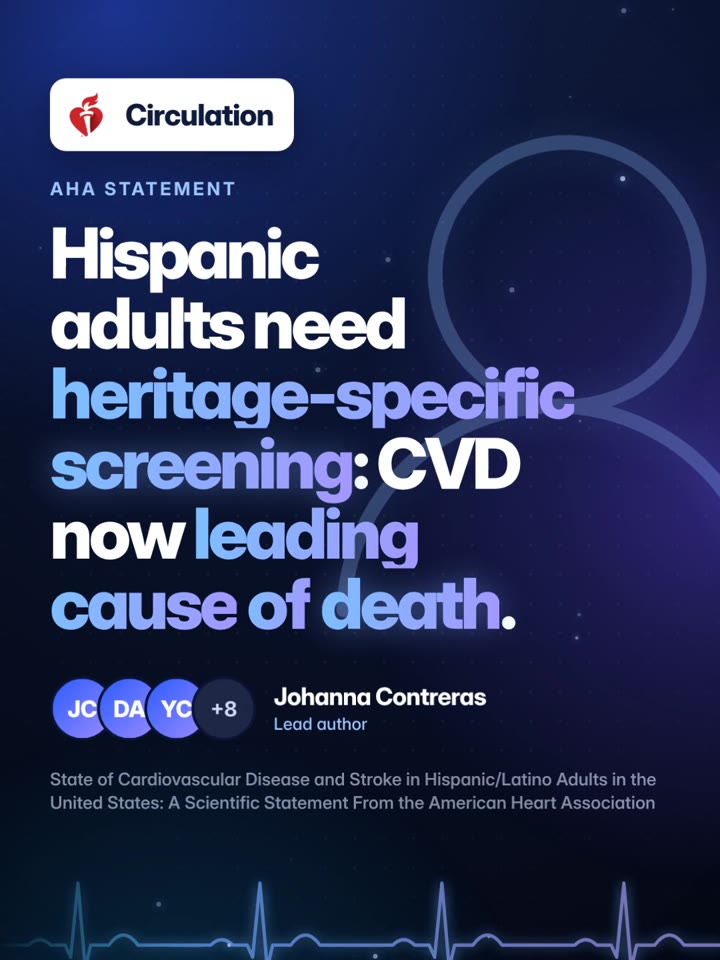
Circulation · AHA statement. Hispanic adults need heritage-specific screening: CVD now leading cause of death. State of Cardiovascular Disease and Stroke in Hispanic/Latino Adults in the United States: A Scientific Statement From the American Heart Association 2022 year: CVD replaced cancer as top cause of death. Does the 'Hispanic paradox' still hold as risk factors worsen? Diverse heritage, different cardiovascular risk: Genetic ancestry, Language, Cultural traditions, Social experiences. Johanna Contreras (Director, Division of Heart Failure, Mount Sinai · Mount Sinai Health System): “Hispanic populations in the U.S. are incredibly diverse even within their own communities” From their public comments on the paper Bottom line: Statement calls for heritage-specific care and disaggregated data beyond the paradox.
Discussion
No takes yet. Share an insight, caveat, or question.
Cite This Study
Contreras et al. (2026) conducted a review in Cardiovascular disease and stroke. Hispanic adults in the United States face widening disparities in cardiometabolic risk factors, making cardiovascular disease the leading cause of death for this population in 2022.