LW
Lee W. Jones
Cardio-Oncology
Memorial Sloan Kettering Cancer Center
About
Lee W. Jones works in Cardio-Oncology affiliated with Memorial Sloan Kettering Cancer Center.
Lee W. Jones is a professor in the Division of Outcomes Research within the Department of Population Sciences at City of Hope Cancer Center Duarte. He serves as the director of the Exercise-Oncology Program at City of Hope’s Beckman Research Institute. He previously held the position of head of the Exercise-Oncology Program at Memorial Sloan Kettering Cancer Center from 2014 to 2025.
Research focus
Chemotherapy-induced cardiotoxicity mitigationExercise interventions for cardiovascular health in cancer survivorsCardio-oncology rehabilitationCardiorespiratory fitness preservation in oncologyPrevention of cardiac dysfunction in adult cancer survivors
Impact
619 pubs · 27,699 cites · h-index 94
Training
PhD
University of Alberta
2002
MSc
Lakehead University
1998
BSc
Brighton University
1995
Affiliations
Work Experience
Professor and Head, Exercise-Oncology Program
City of Hope · 2025 - Present
Member (Attending Physiologist) and Head, Exercise-Oncology Program
Memorial Sloan Kettering Cancer Center · 2014 - 2025
Professor
Weill Cornell Medical College · 2014 - 2025
Associate Professor and Scientific Director, Duke Center for Cancer Survivorship
Duke Cancer Institute · 2009 - 2014
Assistant Professor
Duke University Medical Center · 2005 - 2009
Publications
Original Research
NOV 4ClarkeMemorial Sloan Kettering Cancer Center
Aging activates latent enhancers that can be reversed with exercise
Aging profoundly alters the genome's regulatory landscape, but the properties of age-acquired enhancers, including how they are selected and sustained in aged animals are unclear. We used single-cell multiomics in the mouse heart to identify age-responsive cis-regulatory elements and endurance exercise to understand which of these elements can be attenuated. Aging increased AP-1 engagement at more than 100,000 regulatory loci across cardiac cell types. Exercise opposed most of these gains. Despite low endogenous accessibility, age-gained enhancer sequences drove reporter activity comparable to stable elements, revealing substantial latent transcriptional potential. Local sequence features distinguished responsiveness to aging and exercise. Reporter perturbations implicated sequence outside the AP-1 core, and mutagenesis localized informative positions to dispersed segments of dynamic enhancers. These enhancers were IL-1-sensitive and were preferentially responsive to neutralization of the cytokine in vivo. AP-1 inhibition further opposed age-associated transcription. Together, these findings support a model in which aging engages latent cell-type specific enhancers that are sustained in an active state by ongoing trans signaling. Aging therefore changes the deployment of existing regulatory information, while the acquired activity remains responsive to changes in signaling even in old age.
cross-sectional · n=1001 mentionsTrending on X
SEP 16BhandariPediatric Blood & Cancer
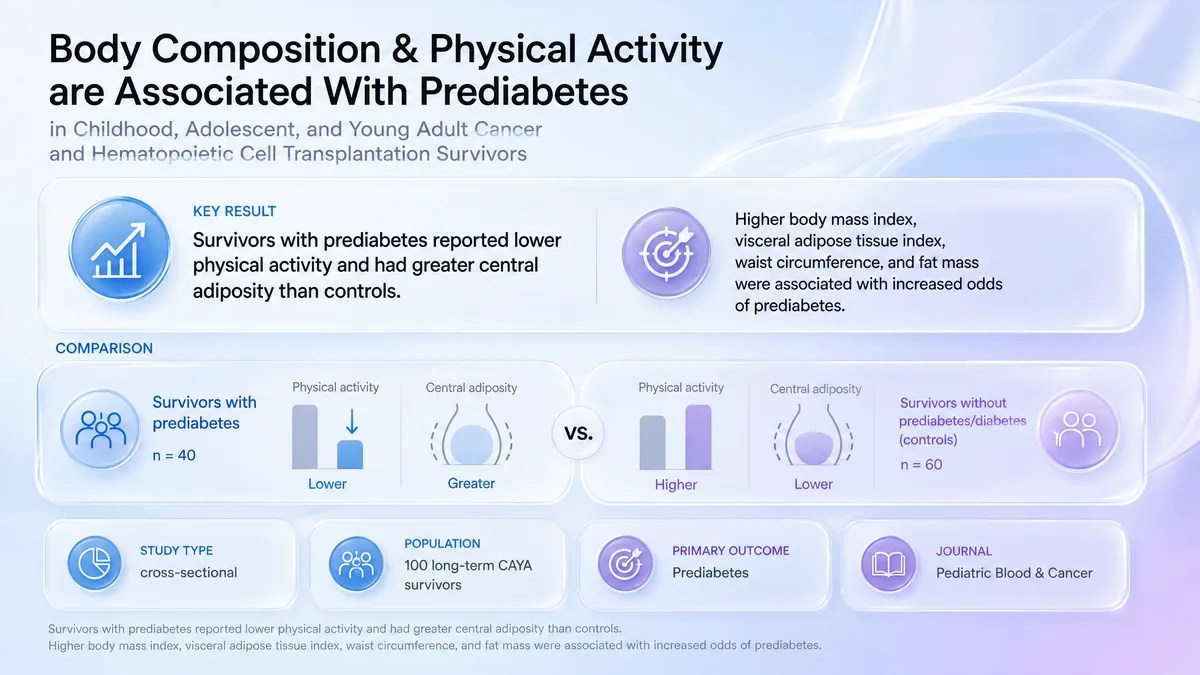
Higher adiposity and lower physical activity linked to increased prediabetes risk among CAYA cancer survivors.
Higher body mass index, central adiposity, and lower physical activity are associated with prediabetes in CAYA cancer survivors, identifying modifiable targets to reduce cardiometabolic risk.
Meta-Analysis6 mentionsJACC Highlight
JUN 2007HaykowskyJournal of the American College of Cardiology
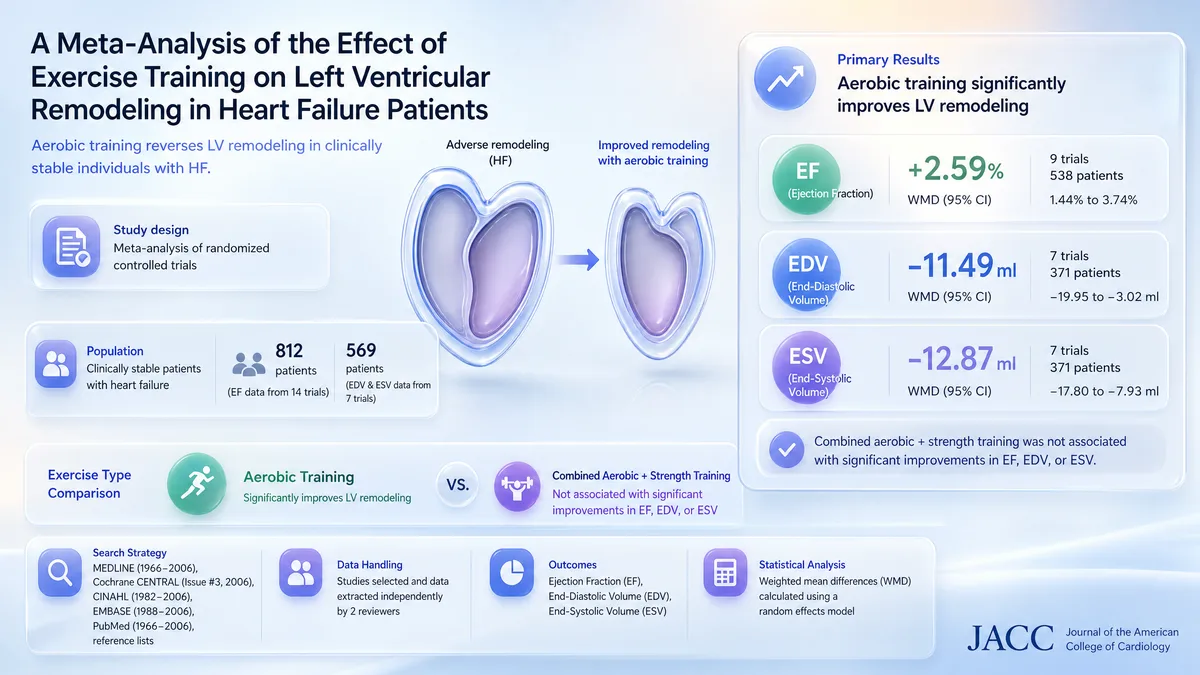
Aerobic training improves EF by ~3% and reverses LV remodeling in stable HF.
Meta-analysis demonstrates attenuated adverse left ventricular remodeling in heart failure patients, suggesting structured exercise programs promote beneficial cardiac reverse remodeling.
RCT
AUG 11LaveryCancer Epidemiology Biomarkers & Prevention
A Pan-Cancer Target Trial Emulation of Exercise and Distant Disease-Free Recurrence
Randomized trial emulates exercise effects on distant disease-free survival in a pan-cancer cohort, suggesting potential benefits.
reviewJACC Highlight
JUL 2019LibbyJournal of the American College of Cardiology

CHIP is linked to ~2-fold higher risk of CAD and ischemic stroke independent of traditional factors.
CHIP is a novel, potent non-traditional cardiovascular risk factor that doubles the risk of coronary heart disease and ischemic stroke, necessitating multidisciplinary management strategies.
review14 mentionsJACC Highlight
SEP 2007JonesJournal of the American College of Cardiology
Breast cancer adjuvant therapy linked to higher long-term cardiovascular mortality, potentially mitigated by exercise.
Warrants CV monitoring in breast cancer survivors; leaves open exercise mitigation of long-term mortality risk.
RCT
APR 9D'SilvaDiabetic Medicine
Evaluation of a novel eating disorder prevention programme (Australian diabetes body project) for young women with type 1 diabetes in a clinic setting: A randomized controlled trial protocol
This randomized controlled trial tests a cognitive dissonance-based program's effect on eating disorder symptoms in young women with type 1 diabetes, suggesting new prevention strategies.
RCT · n=51
APR 3GraffCancer Research
Home-based walking fails to significantly alter overall metabolic profiles in men with prostate cancer.
Unlikely to alter practice in active surveillance prostate cancer; leaves open sphingomyelin reduction for future exercise trials.
Cohort Study
FEB 20JiCancer
Evaluating the feasibility and efficacy of exercise interventions for older survivors of cancer
Findings demonstrate improved health outcomes in older cancer survivors through structured exercise interventions, suggesting future research directions.
Cohort Study
FEB 15BhandariCancer
From survival to longevity: Healthy dietary patterns and risk of premature aging in survivors of childhood cancer
Cohort analysis reveals that healthier diets reduce premature aging risk in childhood cancer survivors, suggesting dietary improvements may enhance their health outcomes.
Systematic Review
JAN 3D’SilvaJournal of Eating Disorders
Efficacy of interventions to prevent eating disorders in people with type 1 diabetes: a systematic review
BACKGROUND: Individuals with type 1 diabetes (T1D) are at increased risk of developing disordered eating (DE) and eating disorders (ED). Diabetes self-management focuses on food and insulin administration, which may contribute to development of EDs. The dual diagnosis may contribute to suboptimal glycemia, early diabetes-related complications and mortality. Evidence for ED prevention programs for this high-risk population remains limited. This systematic review aims to evaluate the feasibility and efficacy of available interventions to prevent EDs and improve glycemia in people with T1D. METHODS: A literature search of PubMed, Embase, PsycINFO, CINAHL and Web of Science was conducted on 25 January 2025. Studies using randomized controlled, quasi-experimental or cohort design that targeted ED prevention in T1D population were included. RESULTS: Nine studies met the inclusion criteria, featuring interventions such as cognitive dissonance based programs, psychoeducation and self-compassion programs. Cognitive dissonance based programs demonstrated the most consistent reduction in ED risks and symptoms. However, most studies showed negligible improvement in glycemia. Common limitations were small sample sizes, high drop-out rates and short follow-ups. CONCLUSION: Future research should focus on well-powered RCTs to evaluate interventions over longer timeframes, younger age groups, both genders, carer involvement and additional modifications to improve glycemia concurrently.
Retrospective Study
OCT 2025LooFrontiers in Immunology
Association between exercise and clinical outcomes in patients treated with immunotherapy for solid tumors
Immune checkpoint inhibitors (ICI) have revolutionized the treatment of advanced cancers, but overall response rates remain modest and adjunct therapies to enhance efficacy of ICI are of great interest. This retrospective study examines the association between exercise and clinical outcomes in 258 patients with advanced solid tumors receiving ICI. The results suggest an association between exercise and better clinical outcomes, particularly in patients with high tumor mutation burden, though improvements in clinical benefit rate (58% vs. 51% for exercisers and non-exercisers, respectively) and one-year overall survival (67% vs. 58% for exercisers and non-exercisers, respectively) are not statistically significant. Our discovery-based findings in conjunction with preclinical evidence create a strong rationale for translational studies to formally investigate the effects of structured exercise therapy in combination with ICI in patients with solid tumors.
Original Research
OCT 2025ScottJACC Advances

Impact of Exercise on Clonal Hematopoiesis
BACKGROUND: Clonal hematopoiesis (CH) is more prevalent in cancer patients and is associated with excess all-cause mortality (ACM) risk compared to patients without CH. Interventions to mitigate risk are not available. OBJECTIVES: The objective of the study was to investigate whether exercise reduces CH prevalence and excess ACM risk of CH in cancer patients. METHODS: We integrated genomic sequencing data with detailed exercise and clinical annotation from 2 retrospective studies: 3,539 patients with solid tumors from the MSK-IMPACT (Memorial Sloan Kettering-Integrated Mutation Profiling of Actionable Cancer Targets) and 1,142 patients with primary breast cancer from CANTO (CANcer TOxicities). Patients were classified as nonexercisers (ie, 0 metabolic equivalent of task-h/week) or exercisers (ie, >0 metabolic equivalent of task-h/week). We then conducted a remotely-supervised structured exercise therapy study in 4 patients with cancer and CH. RESULTS: In multivariable analysis, CH prevalence was not different between exercisers and nonexercisers in MSK-IMPACT (OR: 0.95; 95% CI: 0.8 to 1.13; adjusted Firth's logistic regression) or CANTO (OR: 1.28; 95% CI: 0.89-1.84; adjusted Firth's logistic regression). Patients with CH had a higher unadjusted hazard of ACM relative to patients without CH (HR: 1.41; 95% CI: 1.23-1.62). Relative to non-CH nonexercisers, CH-exercisers had a lower adjusted hazard of ACM (HR: 0.69; 95% CI: 0.55-0.87). In the prospective exercise study, cardiovascular risk factors were improved; no changes in peripheral blood somatic variant allele frequency were observed. CONCLUSIONS: Exercise was not associated with CH burden but does reduce excess ACM of CH in patients with cancer. Further research is needed to investigate the exercise-CH relationship in cancer and other populations. (Researching the Effect of Aerobic Exercise on Cancer; NCT039962390).
Systematic Review
JUN 2025EdvardsenMayo Clinic Proceedings Innovations Quality & Outcomes
Exercise Testing Characteristics, Safety, and Quality in Patients with Cancer: A Systematic Review
Abstract Objective To evaluate exercise testing (ExT) characteristics, safety, and methodological quality in oncology settings. Patients and Methods In this systematic review, we searched electronic databases (PubMed, Embase, CINAHL, and Cochrane Library) from inception to March 2024. Studies using ExT to evaluate cardiorespiratory fitness or functional capacity in adults with a history of cancer were included. Summary data including ExT characteristics (eg, modality, cardiorespiratory fitness, and functional capacity results), safety (eg, adverse events [AE]), and methodological quality (eg, guideline adherence) was evaluated. Results A total of 642 unique studies with 94,960 patients (58.6±9.9 years; 49% women) were included. Among the 26 ExT modalities used, the maximal cardiopulmonary exercise test (CPET) with measurement of gas exchange (n=284, 40%) and the 6-minute walk test (6MWT) (n=240, 34%) were the most frequently performed. Of the 284 studies that conducted CPET, n=204 (72%) studies reported peak oxygen consumption in mL·kg⁻¹·min⁻¹; average peak oxygen consumption was 21.8±5.8 mL·kg⁻¹·min⁻¹. Of the 237 studies that conducted 6MWT, 155 (65%) reported distance in meters (m); average distance was 445m±79 m. A total of n=36 (23%) studies reported an average distance above 500 meter. The AEs were monitored in 58 (9.0%) studies wherein a total of 120 non-serious AEs were reported among n=5699 patients (0.02%). Methodological quality and reporting varied considerably. Conclusion The findings of this systematic review indicate that CPET with gas exchange and field-based tests such as the 6MWT are widely used; however, future research should prioritize improving safety monitoring, appropriate test selection, and methodological consistency to enhance the applicability of ExT in oncology care.
Cohort Study
APR 2025ScottFrontiers in Immunology
Case Report: Decentralized trial of tolerability-adapted exercise therapy after severe Covid-19
We assessed the safety, tolerability, and effects of exercise therapy in three patients with cancer and hospitalization for SARS-CoV-2 infection in an early-phase prospective trial. All study assessments and exercise sessions were conducted remotely (decentralized) in patient's homes. Patients received five escalated doses of aerobic exercise therapy (range, 90 to 375 minutes per week) following a tolerability-based adapted schedule over 30 consecutive weeks. Exercise therapy was safe (i.e., no serious adverse events), tolerable (i.e., all exercise therapy doses were completed, with an overall average relative exercise dose intensity of 89%), and associated with improvements in patient physiology (e.g., exercise capacity) and patient-reported outcomes (e.g., quality of life). Correlative proteomic and single-cell immune sequencing of peripheral blood samples revealed marked alterations in protein and immune phenotypes implicated in post COVID-19 condition. (ClinicalTrials.gov number, NCT04824443).
cohort · n=69
OCT 2024Underwoodnpj Digital Medicine
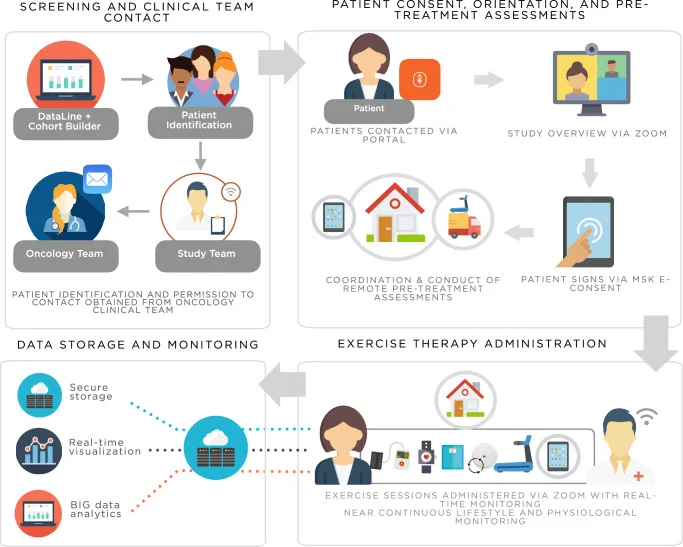
Across all cohorts, two-way video connectivity success was 100%, mean exercise therapy adherence ranged from 87% to 94%, and no serious adverse events were observed.
Supports decentralized digital exercise in cancer; hypothesis-generating for reduced burden pending randomized trials.
Case Report
OCT 2024BlissFrontiers in Oncology
Case report: dynamic personalized physiological monitoring in lung cancer using wearable data
Pretreatment prognostication, on-treatment monitoring, and early detection of physiological symptoms are considerable challenges in cancer. We describe the feasibility of high-resolution wearable data (steps per day, walking speed) to longitudinally profile physiological trajectories extracted from Apple Health data in three patients with lung cancer from diagnosis through cancer treatment after obtaining informed consent. We used descriptive statistics to describe our approach of building longitudinal physiological profiles. The wearable data monitoring period ranged from 58 to 135 weeks, with between 34,319 and 103,535 distinct digital physiological measures collected during this period—the equivalent to 41 measures per day/patient. Longitudinal profiling revealed that wearable data accurately captured physiological changes linked with clinical events such as surgery and hospitalizations as well as initiation (and cessation) of systemic cancer treatment in all three patients. These findings suggest that wearable devices could play a critical role in the management of lung cancer, although larger studies are needed to confirm these preliminary observations and validate their generalizability. Wearable devices hold significant promise for the development of personalized “digital biomarkers,” which may enhance risk stratification and management in oncology.
Original Research
SEP 2024NovoJCO Clinical Cancer Informatics
Machine Learning–Driven Phenogrouping and Cardiorespiratory Fitness Response in Metastatic Breast Cancer
PURPOSE The magnitude of cardiorespiratory fitness (CRF) impairment during anticancer treatment and CRF response to aerobic exercise training (AT) are highly variable. The aim of this ancillary analysis was to leverage machine learning approaches to identify patients at high risk of impaired CRF and poor CRF response to AT. METHODS We evaluated heterogeneity in CRF among 64 women with metastatic breast cancer randomly assigned to 12 weeks of highly structured AT (n = 33) or control (n = 31). Unsupervised hierarchical cluster analyses were used to identify representative variables from multidimensional prerandomization (baseline) data, and to categorize patients into mutually exclusive subgroups (ie, phenogroups). Logistic and linear regression evaluated the association between phenogroups and impaired CRF (ie, ≤16 mL O 2 ·kg –1 ·min –1 ) and CRF response. RESULTS Baseline CRF ranged from 10.2 to 38.8 mL O 2 ·kg –1 ·min –1 ; CRF response ranged from –15.7 to 4.1 mL O 2 ·kg –1 ·min –1 . Of the n = 120 candidate baseline variables, n = 32 representative variables were identified. Patients were categorized into two phenogroups. Compared with phenogroup 1 (n = 27), phenogroup 2 (n = 37) contained a higher number of patients with none or >three lines of previous anticancer therapy for metastatic disease and had lower resting left ventricular systolic and diastolic function, cardiac output reserve, hematocrit, lymphocyte count, patient-reported outcomes, and CRF ( P < .05) at baseline. Among patients allocated to AT (phenogroup 1, n = 12; 44%; phenogroup 2, n = 21; 57%), CRF response (–1.94 ± 3.80 mL O 2 ·kg –1 ·min –1 v 0.70 ± 2.22 mL O 2 ·kg –1 ·min –1 ) was blunted in phenogroup 2 compared with phenogroup 1. CONCLUSION Phenotypic clustering identified two subgroups with unique baseline characteristics and CRF outcomes. The identification of CRF phenogroups could help improve cardiovascular risk stratification and guide investigation of targeted exercise interventions among patients with cancer.
Feasibility Study
JUL 2024JonesJAMA Oncology
Neoadjuvant Exercise Therapy in Prostate Cancer
Importance: Observational data have shown that postdiagnosis exercise is associated with reduced risk of prostate cancer death. The feasibility and tumor biological activity of exercise therapy is not known. Objective: To identify recommended phase 2 dose of exercise therapy for patients with prostate cancer. Design, Setting, and Participants: This single-center, phase 1a dose-finding trial was conducted at a tertiary cancer center using a patientcentric, decentralized platform and included 53 inactive men with treatment-naive localized prostate cancer scheduled to undergo surgical resection between June 2019 and January 2023. Data were analyzed in June 2024. Intervention: Six escalated exercise therapy dose levels ranging from 90 to 450 minutes per week of individualized, moderate-intensity treadmill walking, allocated using adaptive continual reassessment. All exercise therapy sessions were conducted remotely with real-time monitoring. Main Outcomes and Measures: Feasibility was evaluated by relative exercise dose intensity (REDI). A dose level was considered feasible if 70% or more of patients achieved an REDI of 75% or greater. Activity end points were changes in tumor cell proliferation (Ki67) and plasma prostate-specific antigen levels between pretreatment and postintervention. Safety and changes in patient physiology were also assessed. Results: A total of 53 men were enrolled (median [IQR] age, 61 [56-66] years). All dose levels were feasible (≥75% REDI). The mean (95% CI) changes in Ki67 were 5.0% (-4.3% to 14.0%) for 90 minutes per week, 2.4% (-1.3% to 6.2%) for 150 minutes per week, -1.3% (-5.8% to 3.3%) for 225 minutes per week, -0.2% (-4.0% to 3.7%) for 300 minutes per week, -2.6% (-9.2% to 4.1%) for 375 minutes per week, and 2.2% (-0.8% to 5.1%) for 450 minutes per week. Changes in prostate-specific antigen levels were 1.0 ng/mL (-1.8 to 3.8) for 90 minutes per week, 0.2 ng/mL (-1.1 to 1.5) for 150 minutes per week, -0.5 ng/mL (-1.2 to 0.3) for 225 minutes per week, -0.2 (-1.7 to 1.3) for 300 minutes per week, -0.7 ng/mL (-1.7 to 0.4) for 375 minutes per week, and -0.9 ng/mL (-2.4 to 0.7) for 450 minutes per week. No serious adverse events were observed. Overall, 225 minutes per week (approximately 45 minutes per treatment at 5 times weekly) was selected as the recommended phase 2 dose. Conclusions and Relevance: The results of this nonrandomized clinical trial suggest that neoadjuvant exercise therapy is feasible and safe with promising activity in localized prostate cancer. Trial Registration: ClinicalTrials.gov Identifier: NCT03813615.
Early-Phase Clinical Trial
JUN 2024BrownJournal of Cachexia Sarcopenia and Muscle
Effects of exercise or metformin on myokine concentrations in patients with breast and colorectal cancer: A phase II multi‐centre factorial randomized trial
Physical activity and metformin pharmacotherapy are associated with improved clinical outcomes in breast and colorectal cancer survivors. Myokines are cytokines secreted from skeletal muscle that may mediate these associations.