Vascular MedicinePolak et al.cohort
Manual-traced and edge-detected common carotid artery intima-media thickness were associated with incident PAD.
CCA IMT was associated with incident PAD; hypothesis-generating and should not yet change practice.
Daniel H. O’Leary works in Cardiac Imaging affiliated with Tufts Medical Center.
Daniel H. O'Leary is a board-certified radiologist practicing in Dorchester, Massachusetts, affiliated with Carney Hospital and Tufts Medical Center. He served as Chair of Radiology at Tufts-New England Medical Center from 1999 to 2006. His research includes studies on cardiovascular health, carotid artery diseases, and cardiac imaging.
160 pubs · 31,555 cites · h-index 76
MD
Tufts University School of Medicine
1969
Radiologist
Carney Hospital
Chair of Radiology
Tufts-New England Medical Center · 1999 - 2006
Vascular MedicinePolak et al.cohort
CCA IMT was associated with incident PAD; hypothesis-generating and should not yet change practice.
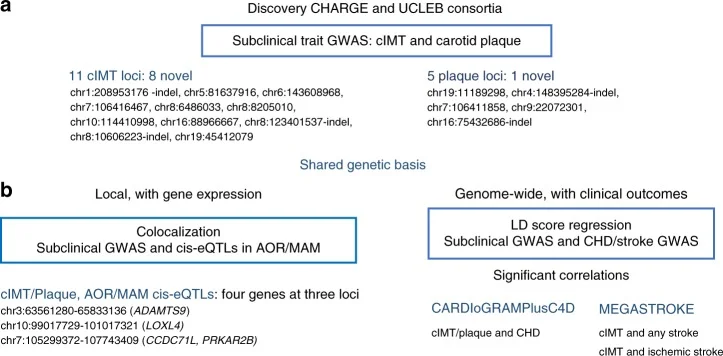
Nature CommunicationsFranceschini et al.meta-analysis
Novel loci do not alter clinical atherosclerosis management; extends genetic architecture of cIMT and plaque but remains hypothesis-generating.

Journal of the American Heart AssociationPolak et al.cohort
A carotid IMT score incrementally improves the prediction of first-time CHD events when added to Framingham risk factors and coronary artery calcium score.

Global HeartPolak et al.review
Carotid IMT is a valuable noninvasive ultrasound measurement that serves as a surrogate for subclinical cardiovascular disease and a strong predictor of future cardiovascular events.
PLoS ONEGijsberts et al.meta-analysis
The magnitude of associations between traditional cardiovascular risk factors and atherosclerotic disease varies significantly across racial and ethnic groups, highlighting the need for tailored primary prevention strategies.
Journal of the American Heart AssociationPolak et al.cohort
Automated edge-detected IMT may aid CHD risk stratification; leaves open validation before replacing manual tracing in practice.
HypertensionEikendal et al.meta-analysis
Supports CIMT for risk stratification in adults <45 years; extends prior associations to younger populations.
StrokeWeerd et al.Registry Study
Application of this clinical prediction rule may lead to a reduction in the number needed to screen for asymptomatic carotid artery stenosis.
StrokePolak et al.cohort
CCA interadventitial diameter independently predicts ischemic stroke; leaves open its added value for risk stratification beyond IMT.
HypertensionBots et al.meta-analysis
Does not support adding CIMT to Framingham Risk Score for CVD prediction in elevated BP; reinforces limited incremental value of imaging markers beyond traditional factors.
Circulation Cardiovascular GeneticsMelton et al.cross-sectional
Suggests ancestry-specific loci for carotid IMT; hypothesis-generating and requires replication before clinical or risk-stratification use.
Journal of the American Heart AssociationPolak et al.cohort
Ultrasound-derived carotid plaque metrics, particularly the mean of the maximum IMT, independently predict cardiovascular events and improve risk prediction beyond traditional Framingham risk factors.
JAMARuijter et al.Risk Assessment
Adding common CIMT measurements to the Framingham Risk Score provides only a small, clinically unimportant improvement in predicting 10-year risk of first-time MI or stroke.
Journal of HypertensionBots et al.review
Do not use CIMT changes to guide therapy; leaves open its validity as a cardiovascular risk surrogate.
Journal of the American Heart AssociationPolak et al.cross-sectional
Timing of carotid IMT measurement may affect risk classification; leaves open whether standardization improves outcomes in prospective studies.
Current Medical Research and OpinionPeters et al.RCT
CIMT trial endpoints show low sensitivity to implausible values; confirms robustness of primary outcomes in subclinical atherosclerosis RCTs.
Current Medical Research and OpinionPeters et al.Cohort Study
OBJECTIVE: Sample size calculations for clinical trials generally use expected changes between groups, and variances obtained from the literature. However, this approach neglects the impact of differences in trial design. We studied the effects of variations in trial design on the required sample size. METHODS: Data were used from the METEOR (Measuring Effects on Intima-Media Thickness: an Evaluation of Rosuvastatin) trial in which carotid intima-media thickness (CIMT) measurements were performed twice at baseline, at 6, 12 and 18 months, and twice at the end of 2-year study treatment. A sample size formula for continuous outcome measures that incorporates between- and within-individual variance components was used to evaluate the impact of differences in the length of follow-up, and the number of CIMT examinations. RESULTS: Trial designs with a shorter duration of follow-up have increased within-individual variance and require larger sample sizes to detect the same treatment effect. Reduction in the number of examinations within a trial with a given duration, i.e. by using single rather than duplicate baseline and end-of-study scans or by not performing intermediate scans, also increased the required sample size to maintain the same power. CONCLUSION: A longer trial duration and/or more frequent examinations within a trial which has repeated measures of an outcome variable substantially increase study power and reduce the required sample size. In situations where the costs of recruiting, retaining and examining individual participants are known, the sample size, study length and number of examinations can be balanced to optimize the trial design relative to costs or other study objectives.
Journal of Internal MedicinePeters et al.cross-sectional
Should not yet inform clinical risk assessment; hypothesis-generating for echolucent intima-media as a marker in prospective cohorts.
Journal of HypertensionDoğan et al.cohort
Ultrasound protocols measuring both near and far walls at multiple angles provide the most precise and reproducible estimates of CIMT progression and treatment effects in clinical trials.
StrokePolak et al.cohort
Supports IMT progression as stroke predictor in primary prevention; hypothesis-generating for serial monitoring in risk assessment.