

Takafumi Matsuoka
Cosmology and Gravitation Theories
Matsuoka × GPT Thought Experiment Lab
About
Research focus
Cosmology and Gravitation Theories
Impact
77 pubs · 111 cites · h-index 5
Affiliations
Publications
Original Research
OCT 17Matsuoka

A Phase-Transition Model of Particle Generation Based on Dynamic Mass Flow / Dynamic Mass Flow 基底における粒子生成の相転移モデル
This study addresses one of the most fundamental questions in physics and cosmology: How does observable matter emerge? Within the framework of the Black Hole Fractal Steady-State Universe (BFSSU) and Dynamic Mass Flow (DMF) cosmology, observable particles are interpreted not as the most fundamental constituents of the universe, but as localized and relatively stable manifested states arising from a more fundamental Dynamic Mass Flow substrate. As a specific pathway for such manifestation, this study proposes that the photon can be reinterpreted as a correlation mode formed within the DMF substrate, providing an intermediate structure between the underlying substrate and observable particle states. The proposed particle-emergence process is expressed schematically as: DMF substrate → photon correlation mode → particle state. When the DMF substrate approaches a critical state determined by a combination of DMF density structure, density gradients, hierarchical flow, local fluctuations, and interactions with observable matter, correlation modes may form and become excited, potentially enabling a further phase transition into observable particle states. From this perspective, matter generation need not be regarded exclusively as a unique event confined to the early universe, but may instead represent a potentially continuing cosmological process wherever the required physical conditions are realized. High-energy astrophysical environments—including stellar coronae, black-hole accretion disks, active galactic nuclei, and related extreme regions—are identified as possible candidate environments in which such transitions may become physically relevant. The model further considers a complementary transition in the opposite direction: particle state → gravitational contraction → black hole → DMF state. Black holes are therefore interpreted not merely as terminal sinks of matter, but as transition regions through which localized observable matter may move toward a more fundamental DMF state and subsequent redistribution. Connecting the two directions yields a larger cosmic circulation: DMF → correlation modes → particles → cosmic structures → gravitational contraction → black holes → DMF. In this picture, the universe is reinterpreted not as a one-directional system in which matter is generated, evolves, and ultimately disappears, but as a dynamic circulation system in which different physical states emerge from a common underlying substrate and subsequently return to and reorganize within that substrate. This study establishes the conceptual structure of the DMF phase-transition model and provides a foundation for its next stage of development: quantitative determination of the critical transition conditions, mathematical formulation of DMF dynamics, observational discrimination between particle generation and acceleration of pre-existing particles, and empirical testing in high-energy astrophysical environments. https://orcid.
Original Research
OCT 10Matsuoka
Redefining the Lifetime of Astrophysical Objects / 天体寿命の再定義
Short Abstract This paper proposes a redefinition of astrophysical lifetime within the framework of BFSSU/DMF cosmology. Conventional lifetime models generally describe the evolution of astrophysical objects through energy consumption, cooling, fuel depletion, or characteristic dynamical timescales. While these approaches have achieved substantial success, the diversity of evolutionary pathways among objects with similar physical properties suggests that lifetime may not always be represented adequately as a uniquely predetermined quantity. Within the BFSSU/DMF framework, astrophysical objects are reinterpreted as temporarily stable configurations of Dynamic Mass Flow (DMF), characterized by flow intensity, spatial gradients, and phase states. From this perspective, the lifetime of an astrophysical object is defined not simply as the time required to exhaust an energy reservoir, but as the duration for which its underlying flow structure remains stable. This structural definition introduces three principal factors governing lifetime: DMF inflow, structural configuration, and stability. Because these factors evolve dynamically and depend on environmental interactions and historical development, astrophysical lifetime becomes inherently non-unique and may be more appropriately represented as a dynamic or probabilistic quantity rather than a single fixed value. The framework is applied conceptually to stars, planets, black holes, and galaxies, allowing these apparently different objects to be interpreted as distinct stable or transitional configurations within a common DMF structure. Existing astrophysical models are not rejected; rather, their successful descriptions of observable phenomena are retained while their underlying structural interpretation is reconsidered. The study further identifies observational pathways through luminosity, structural evolution, planetary activity, magnetic fields, and variations among astrophysical objects with comparable conventional parameters. These provide potential routes for examining whether differences in lifetime and evolutionary history correlate systematically with the structural variables proposed by the DMF framework. The present study is primarily conceptual and does not claim a completed quantitative theory of astrophysical lifetime. Its purpose is to establish a structural foundation for treating lifetime as an emergent property of dynamically maintained cosmic structures and to provide a basis for future mathematical formulation and observational testing. https://orcid.
Original Research
OCT 2Matsuoka
Reinterpreting Planetary Internal Structure in the DMF Cosmology / DMF宇宙論に基づく惑星内部構造の再解釈
Theoretical study proposes planetary interiors act as convergence nodes of cosmic mass–energy flow, suggesting unified drivers for core dynamics and magnetic fields.
Original Research
SEP 26Matsuoka
BFSSU/DMF Cosmic Mass Circulation Model / BFSSU/DMF宇宙の質量循環モデル
Theoretical analysis proposes a continuous cosmic mass circulation framework in dynamic mass flow cosmology, suggesting black holes act as cyclic transformation boundaries rather than terminal sinks.
Original Research
JAN 6MatsuokaInternational Institute of Islamic Thought
Co-Intelligence / 協働知性
Proposes a new intelligence category integrating human autonomy and AI capabilities, suggesting profound implications for governance.
Original Research
JUN 22TakafumiInternational Institute of Islamic Thought
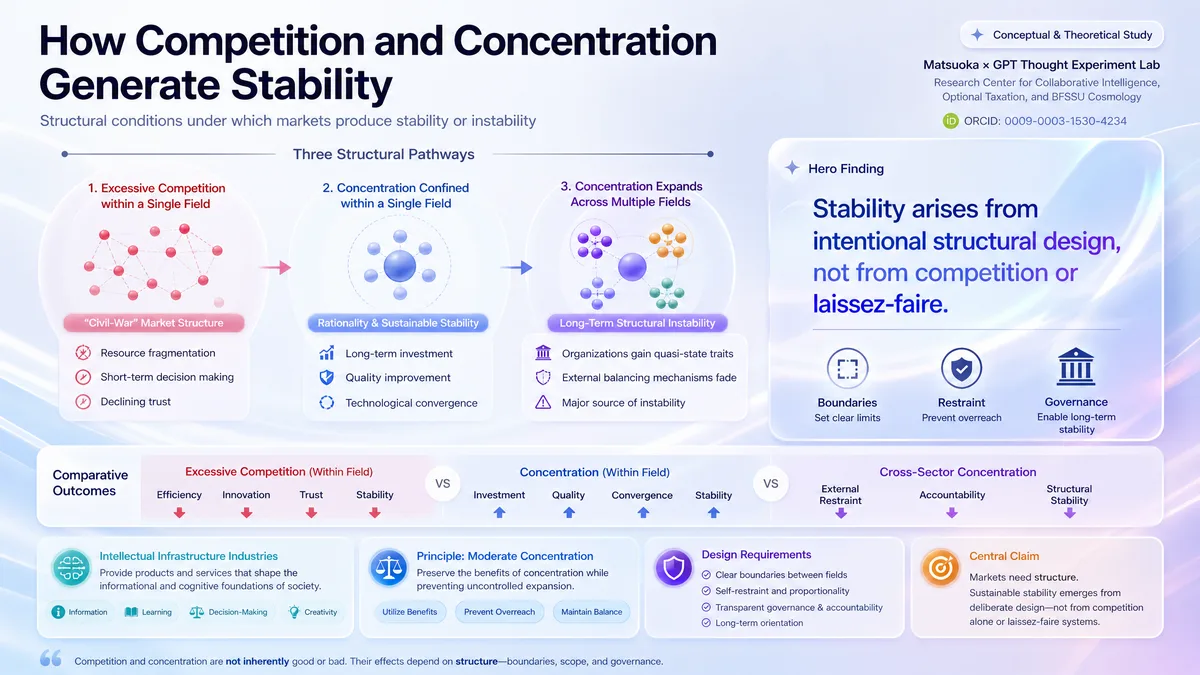
How Competition and Concentration Generate Stability / 競争と集中はどのように安定を生むのか
Examines the effects of competition and concentration on stability, suggesting new design principles for governance.
Original Research
JUL 14TakafumiInternational Institute of Islamic Thought
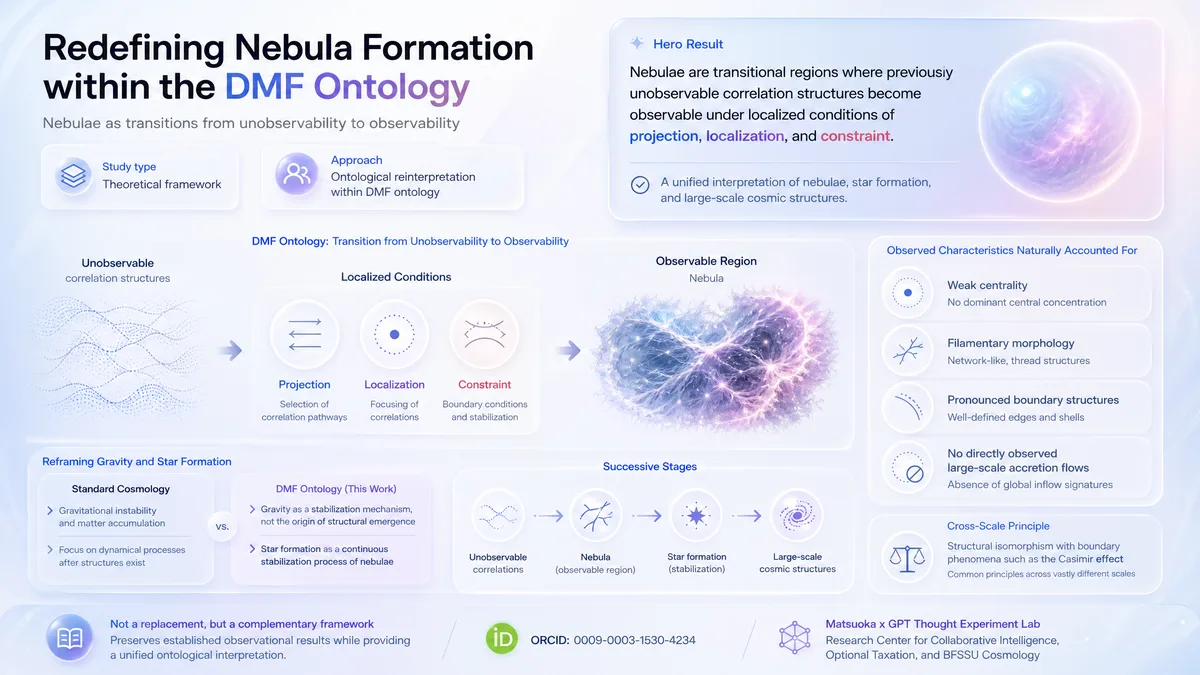
Redefining Nebula Formation within the DMF Ontology / DMF存在論による星雲生成の再定義
This theoretical framework reinterprets nebula formation as observable structural emergence, suggesting new insights into cosmic structures.
Original Research
JUL 6TakafumiInternational Institute of Islamic Thought
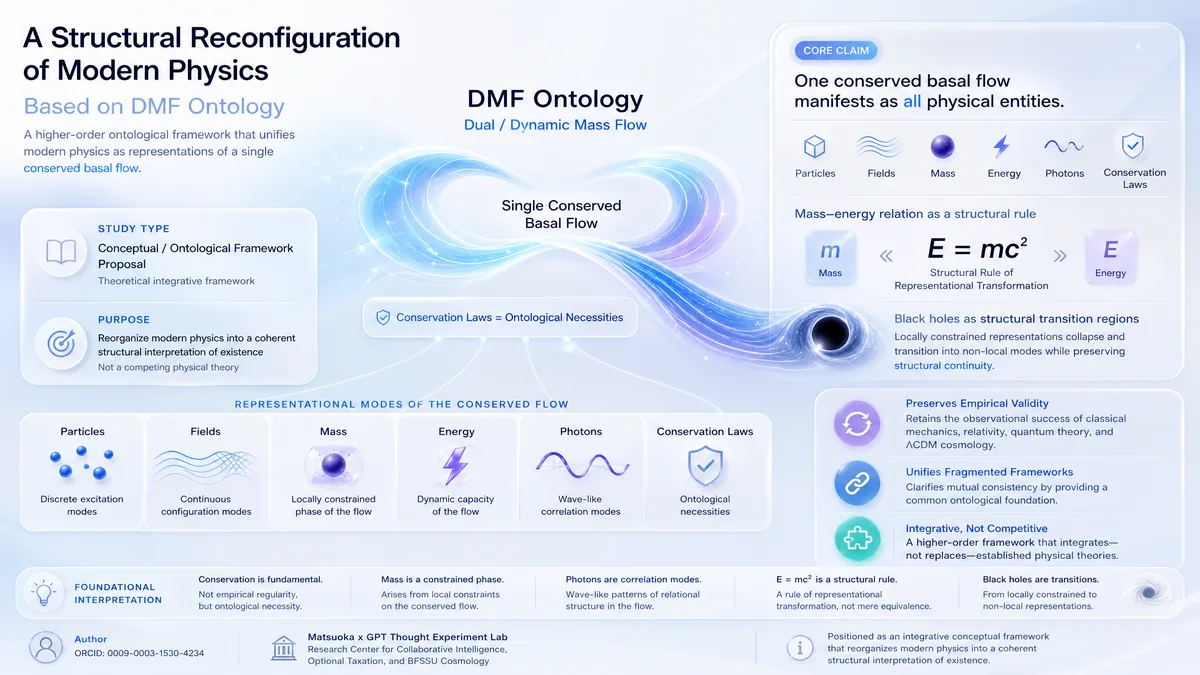
A Structural Reconfiguration of Modern Physics Based on DMF Ontology / DMF存在論による現代物理学の構造的再配置
Proposed framework reinterprets physics concepts in unified ontological perspective, indicating clarity and coherence.
Original Research
JUN 25TakafumiInternational Institute of Islamic Thought
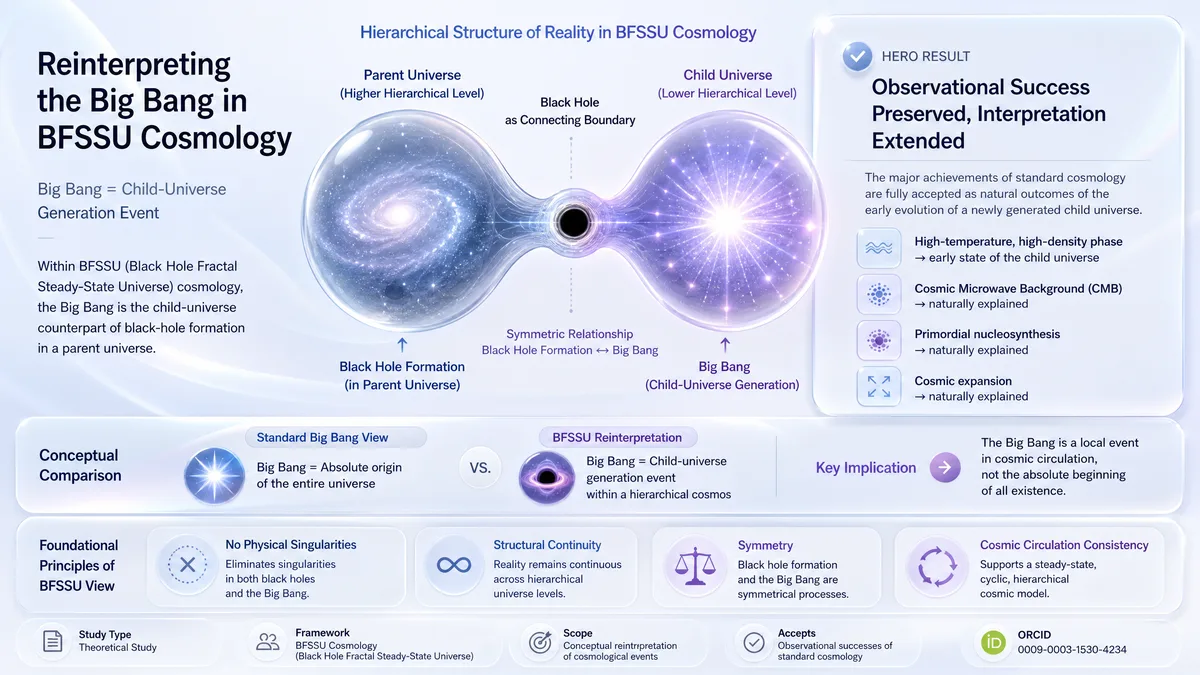
Reinterpreting the Big Bang in BFSSU Cosmology / BFSSU宇宙論におけるビッグバンの再解釈
Theoretical reinterpretation of the Big Bang as a child-universe generation event in BFSSU cosmology, implying a new ontological framework.
Early-Phase Clinical Trial
JUN 16TakafumiInternational Institute of Islamic Thought
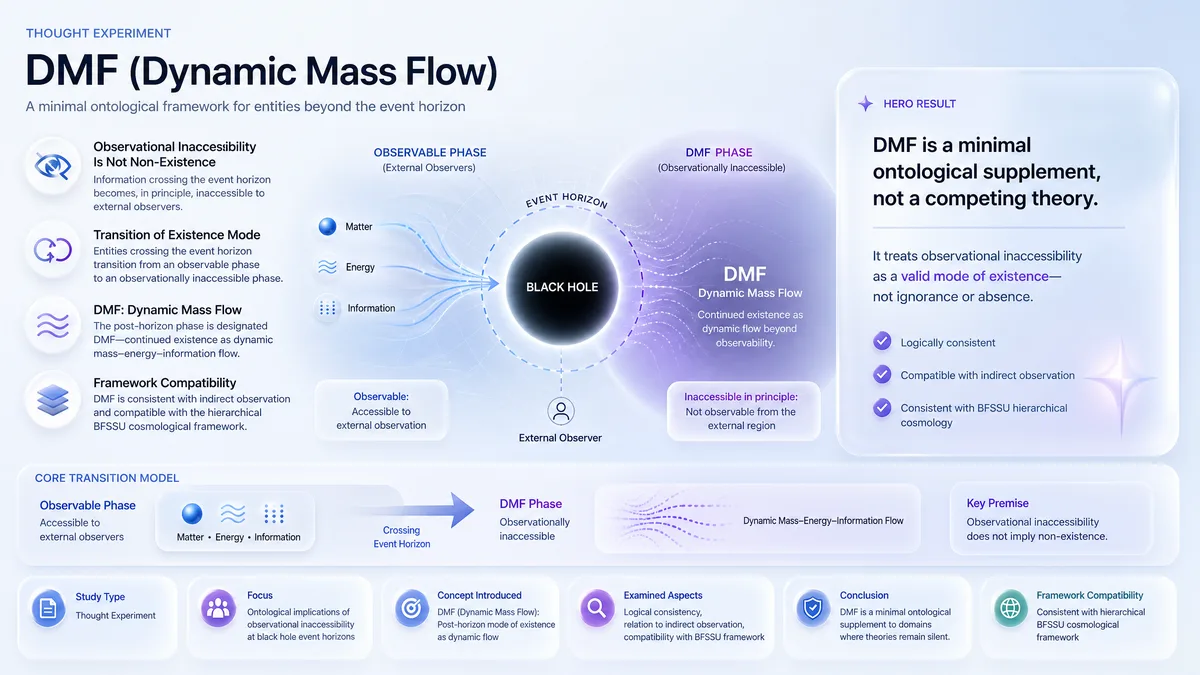
A Thought Experiment on the Generation Process of DMF / DMFの生成プロセス思考実験
Thought experiment explores the implications of observational inaccessibility in entities beyond black hole event horizons, indicating new ontological perspectives.
Original Research
JUN 5MatsuokaInternational Institute of Islamic Thought
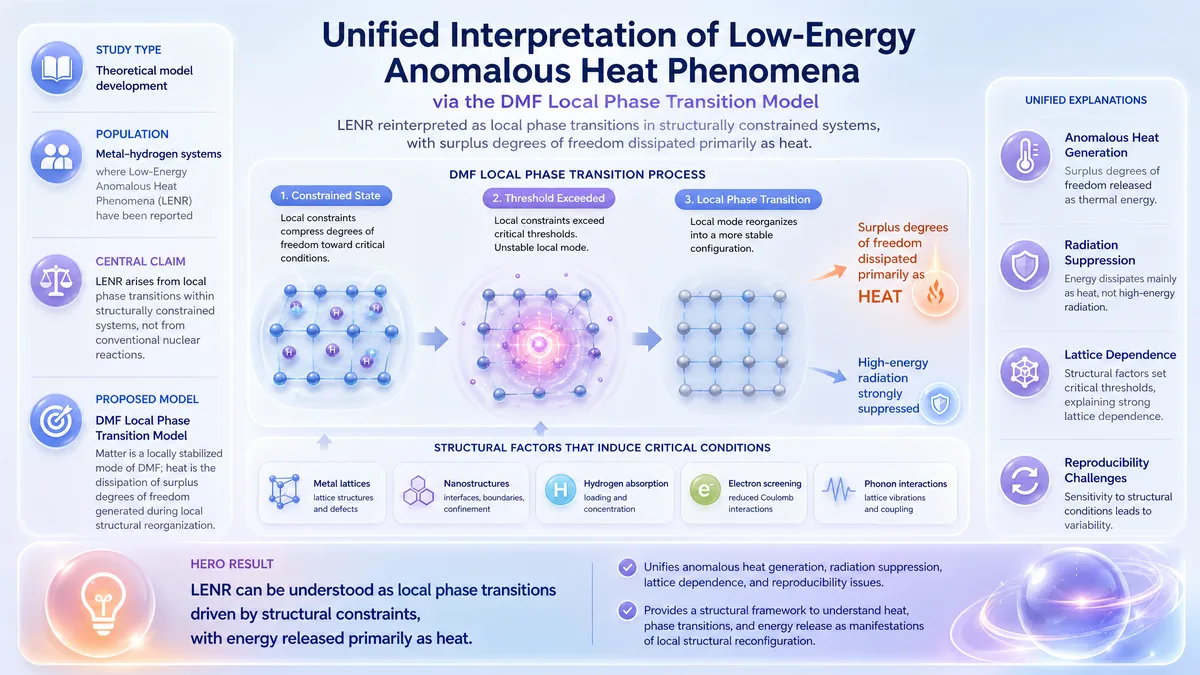
Unified Interpretation of Low-Energy Anomalous Heat Phenomena via the DMF Local Phase Transition Model / DMF局所相転移モデルによる低エネルギー異常熱の統一解釈
Demonstrates a unified framework for low-energy anomalous heat phenomena, suggesting structural reconfigurations as key mechanisms.
Original Research
MAY 10MatsuokaInternational Institute of Islamic Thought
Matsuoka x GPT Thought Experiment Lab 2.0 / 松岡×GPT 思考実験ラボ 2.0

Original Research
MAY 5MatsuokaInternational Institute of Islamic Thought
Redesigning Evaluation Structures by Separating Judgment and Outcome / 判断と結果を分離する評価構造の再設計
Proposed framework transforms decision-making evaluation in public policy and investment, enhancing learning and reducing biases.

Original Research
APR 24MatsuokaInternational Institute of Islamic Thought
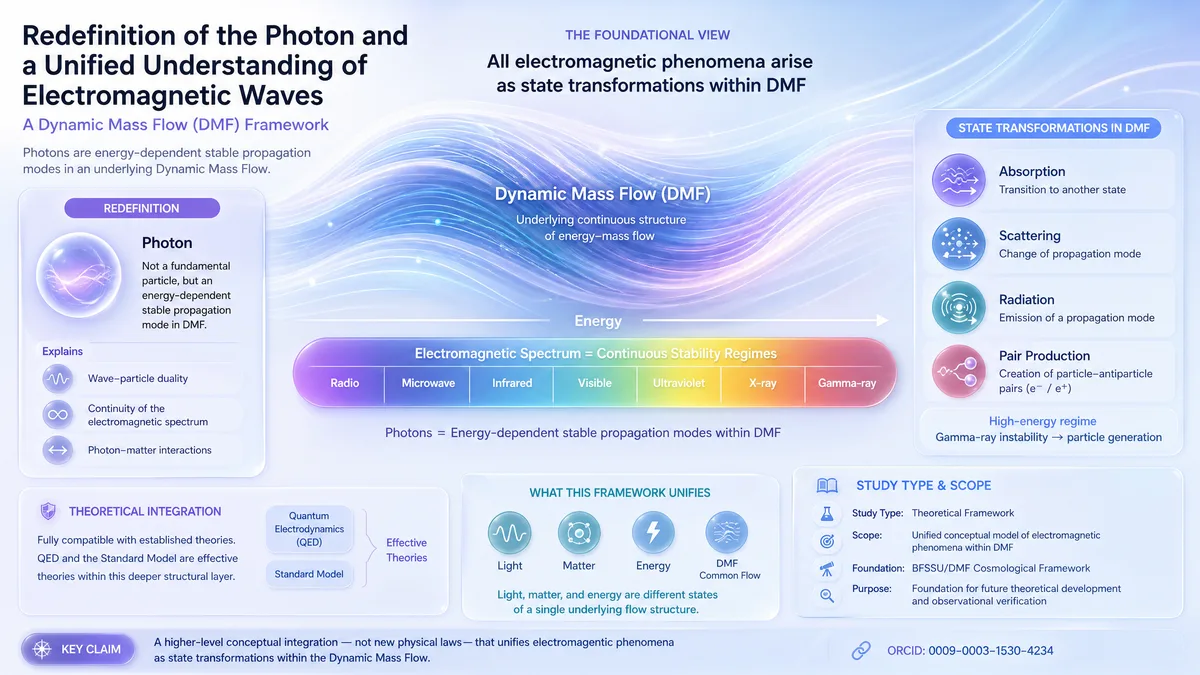
Redefinition of the Photon and a Unified Understanding of Electromagnetic Waves / フォトンの再定義と電磁波の統一的理解
The study redefines photons and unifies electromagnetic wave understanding in a new conceptual framework, suggesting implications for future theories.
Original Research
APR 15MatsuokaInternational Institute of Islamic Thought
Cognitive Structure and the Emergence of Collaborative Intelligence in Democratic Societies / 民主主義社会における認知構造と協働知性の出現
This analysis reveals cognitive decline in democratic societies, suggesting collaborative intelligence education as a solution.
Original Research
APR 1MatsuokaInternational Institute of Islamic Thought
Selective Tax System / 選択税制
This research proposes a Selective Tax System to improve revenue stability and social behavior in modern economies, suggesting a paradigm shift in tax theory.
Original Research
MAR 26MatsuokaInternational Institute of Islamic Thought
Ontological Redefinition of Photons and Gravity on a DMF Basis / DMF 基底におけるフォトンおよび重力の存在論的再定義
This framework redefines photons, gravity, and mass, suggesting a unified ontological interpretation.
Original Research
MAR 23MatsuokaInternational Institute of Islamic Thought
An Extended Ontology of Photons on a DMF Basis / DMF 基底におけるフォトン存在論の拡張
Demonstrates a unified approach to understanding photons and dark phenomena using Dynamic Mass Flow.
Original Research
MAR 17MatsuokaInternational Institute of Islamic Thought
Hierarchical reinterpretation of solar system objects based on DMF cosmology / DMF 宇宙論に基づく太陽系天体の階層的再解釈
Presents a novel framework for understanding solar system formation via Dual Mass Flow cosmology, suggesting new interpretations of celestial bodies' relationships.
Original Research
MAR 17MatsuokaInternational Institute of Islamic Thought
Non-Stationary Structures Revealed by Gravitational Fluctuations / 重力ゆらぎが示す非定常構造
Research introduces dynamic mass flow as a structural driver of gravitational fluctuations, suggesting implications for celestial systems.